
October 17, 2023

Creating a Safe and Fun Halloween for Children with Autism
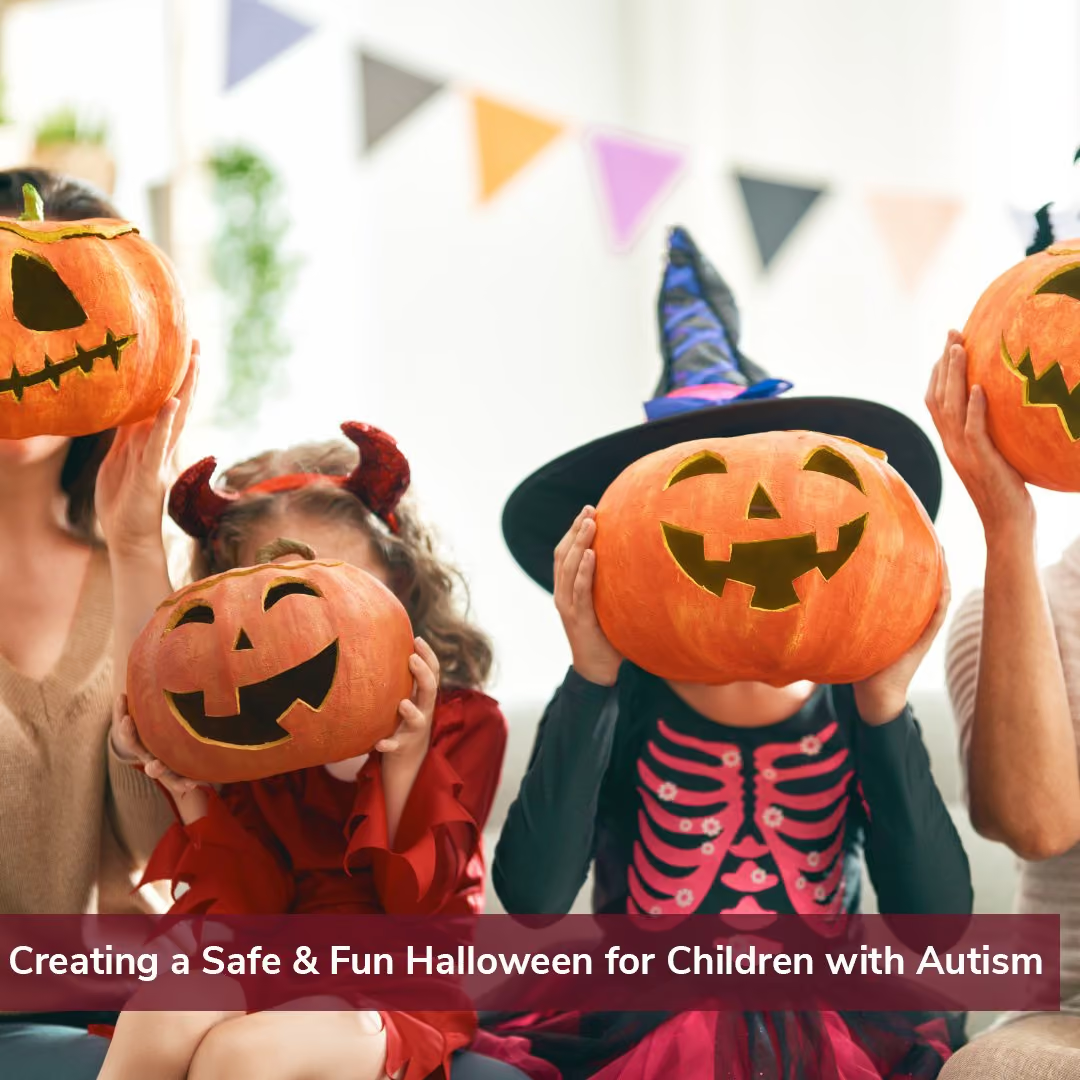
Creating a Safe and Fun Halloween for Children with Autism — Behavior Frontiers

Halloween is, for many people, a wonderful day of spooky costumes, fun decorations, and more candy than you know what to do with. However, for children with autism, the holiday can be overwhelming. Between sensory struggles, breaks from routine, and unfamiliar environments, Halloween festivities can be more stressful than enjoyable. In this article, we’ll explore some tips and tricks to help ensure that all children can join in on the seasonal fun!

  1. Choose the Right Costume: Selecting a costume for a child with autism is a critical first step. Consider the sensory preferences of your child. Opt for comfortable, non-restrictive clothing made from soft fabrics, and avoid costumes with scratchy or tight elements. If your child doesn't like wearing costumes, you can opt for themed clothing or accessories instead. Remember, it's all about their comfort and happiness.
  2. Prepare in Advance: Familiarize your child with Halloween traditions and decorations through books, videos, or stories. Create a visual schedule or a social story that outlines the Halloween activities they'll participate in. This can help reduce anxiety by providing predictability and a sense of control.
  3. Practice Trick-or-Treating: If your child is new to the concept of trick-or-treating, practice beforehand. Visit a friendly neighbor or relative's house to help them get used to the routine. If your child is verbal, teach them how to say "trick-or-treat" and "thank you." Make sure they understand the process, and ensure they are comfortable with it before heading out on Halloween night.
  4. Choose the Right Time: Consider the best time for your child to enjoy Halloween. For some, daytime activities may be preferable, while others might enjoy the spookier ambiance of the evening. Evaluate what works best for your child and plan your activities accordingly.
  5. Consider Alternative Celebrations: If traditional Halloween activities are too overwhelming, consider attending an activity specifically for children with sensory issues. Behavior Frontiers will be hosting several sensory-friendly Halloween celebrations at our Autism Treatment Centers, and we would love to see you there! Join us in Chelmsford, MA, Rocklin, CA, Centennial, CO, or Oxnard, CA.

Halloween can be a fantastic and memorable experience for children with autism when planned with their unique needs in mind. By focusing on sensory considerations, clear communication, and creating a supportive and understanding environment, you can ensure your child has a safe and fun Halloween. Remember that each child is unique, so tailor your approach to suit their specific preferences and sensitivities. With the right preparation, Halloween can become an enjoyable and inclusive holiday for all children.


View Our Previous Blog Posts

The 4 Functions of Behavior in ABA Therapy: Understanding Your Child’s Behavior
October 7, 2026

The 4 Functions of Behavior in ABA Therapy: Understanding Your Child’s Behavior

In ABA therapy, understanding the functions of behavior helps clinicians (and you) uncover what your child is trying to communicate through their behavior. And once we unlock the “why,” we also reveal the pathway to teaching new ways to communicate that same need (thus reducing challenging behaviors like tantrums, aggression, or throwing things) and setting up your child for success.
Differential Reinforcement in ABA: The Most Powerful Tool Behavior Therapists Use
October 7, 2026

Differential Reinforcement in ABA: The Most Powerful Tool Behavior Therapists Use

Differential reinforcement is a behavior-support strategy that strengthens one response while reducing another. It has two moving parts: reinforcing the behavior you want to see more of, and reducing reinforcement for the challenging behavior that isn’t meeting your child’s needs in the best way.
7 Famous People with Autism Who've Shared Their Diagnosis
September 8, 2026

7 Famous People with Autism Who've Shared Their Diagnosis

An autism diagnosis never determines your success. For many of the most creative, driven, and groundbreaking minds in history, it may have been the very thing that fueled it. An intense focus, pattern recognition, and a willingness to see the world differently are not limitations. They're superpowers. And when a person with autism is given the right support and space to grow, truly incredible things can happen.
What Is DRA in ABA Therapy? (Differential Reinforcement of Alternative Behavior)
September 8, 2026

What Is DRA in ABA Therapy? (Differential Reinforcement of Alternative Behavior)

Every time your child wants to play with a toy, they have big emotions until they get it. At school, when presented with difficult work, they might run away. These are all examples of behaviors your child might exhibit to serve a communicative purpose. They might need something or want your attention. Or maybe they just want access to an opportunity. Whatever the behavior might be—it works, so it continues. Sometimes, we as adults may reinforce these behaviors without realizing it.
The 7 Dimensions of ABA Therapy (Baer, Wolf & Risley, 1968)
September 8, 2026

The 7 Dimensions of ABA Therapy (Baer, Wolf & Risley, 1968)

What guides every intervention in Applied Behavior Analysis (ABA) therapy?The 7 dimensions of ABA.Think of ABA therapy like a multi-dimensional figure. It has many angles, perspectives, and ways to evaluate it. That is exactly what the dimensions do. They give clinicians and families a complete way to see how well an intervention is working, from every angle.
Errorless Learning in ABA: How and Why Behavior Therapists Use It
September 8, 2026

Errorless Learning in ABA: How and Why Behavior Therapists Use It

In Applied Behavior Analysis (ABA) therapy, errorless learning is a way to teach new skills by giving the right amount of support from the very beginning.When your child with autism is learning something new, mistakes are part of the process. But for some kiddos, too many mistakes too quickly can feel uncomfortable, frustrating, or discouraging. The last thing we want is for your child to shut down, guess, avoid the task, or lose confidence before the skill has a chance to grow. That's where errorless learning can help.
Find ABA Therapy Near Me