


Everything you need to navigate your child's autism journey, all in one place


Early signs, how ABA works, getting started with Behavior Frontiers, insurance support, at-home strategies, downloadable checklists, and answers to the questions parents ask us most. Built on 20+ years of clinical experience and research-backed care.

Is My Child Showing Signs of Autism?
Every child grows at their own pace - but some delays may signal autism or another developmental difference. Trust your instincts: the sooner you explore, the sooner support can begin.
6 Months
9 Months
12 Months
18 Months
24 Months
3 Years
4+ years
All Ages


Understanding Autism & ABA Therapy
ABA is the only autism treatment proven effective by science. Endorsed by the U.S. Surgeon General and the National Institutes of Health, ABA has 60+ years of research and numerous peer-reviewed studies behind it.

What is autism?

What is ABA therapy?

Skills ABA addresses

Why early intervention matters

What does ABA look like?

Benefits of ABA

The goal of ABA

How many hours per week?

What outcomes can we expect?

Science Says
Real numbers from peer-reviewed research on intensive ABA - and what our team delivers day in, day out.
+22
+9
-11
47%
ABA therapy is the most thoroughly researched method of autism therapy proven to work, backed by 60+ years of research.
Endorsed by the U.S. Surgeon General and the National Institutes of Health (NIH).
Evidence-based ABA approaches we use
DTT
NET
VB
PRT
Getting Started With Behavior Frontiers
Every evaluation is conducted by a licensed psychologist or neuropsychologist through our trusted partner network, and tailored to each child based on their age, developmental history, and presenting needs.
Intake Process
What is an FBA?
Your First Session
Progress Review & Plan Adjustment
Your Care Team
- BCBA - Board Certified Behavior Analyst who designs and supervises your child's plan
- Behavior Technician (BT) - delivers 1:1 sessions, builds rapport, runs the lessons
- Clinical Director - oversees quality of care across your team
- Caregiver Training - your partner through our 90-day Caregiver Training Program
PrioraCare™
%2013.avif)
Insurance & Coverage
125+ Plans Accepted




We're Here to Support Your Family
How insurance works for ABA
Have dual insurance?
Caregiver Training: Your Role is the Multiplier
Research is clear - children with autism have the best chance for a good outcome when family members are involved in treatment. That's why we built a structured program around you.

Our 90 Day Caregiver Guidance Program
Behavior Frontiers runs a 90-day Caregiver Training Program plus ongoing monthly meetings - so the skills your child learns in session show up at home, at school, and in everyday life.
Supporting Your Child At Home
Every evaluation is conducted by a licensed psychologist or neuropsychologist through our trusted partner network, and tailored to each child based on their age, developmental history, and presenting needs.

Reinforce skills everywhere
Keep routines consistent
Practice together
Use reinforcers
Celebrate small wins
Reinforcing ABA Therapy Skills at Home

Downloadable Resources
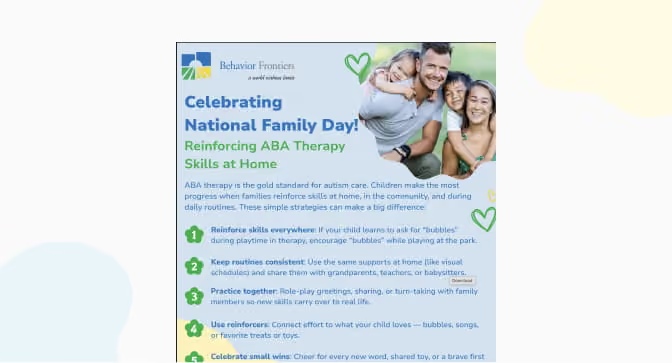
Reinforce ABA Skills at Home
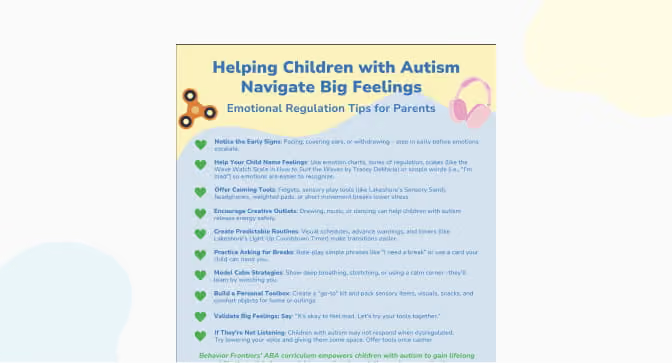
Emotional Regulation Tips

Insurance Coverage Coordination
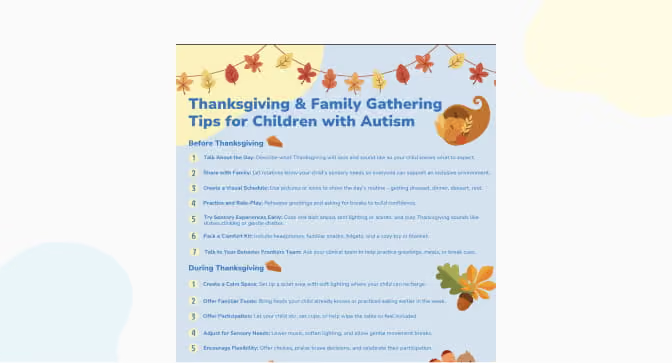
Thanksgiving Checklist
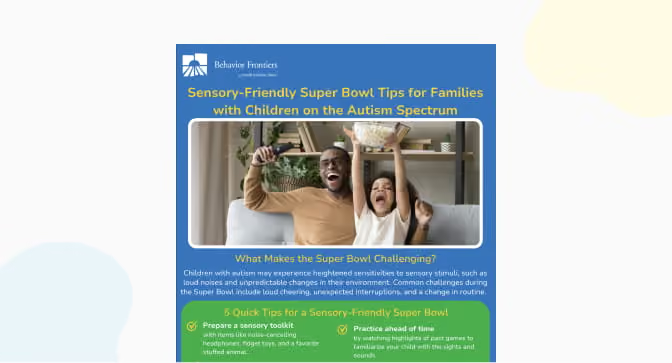
Sensory Friendly Superbowl
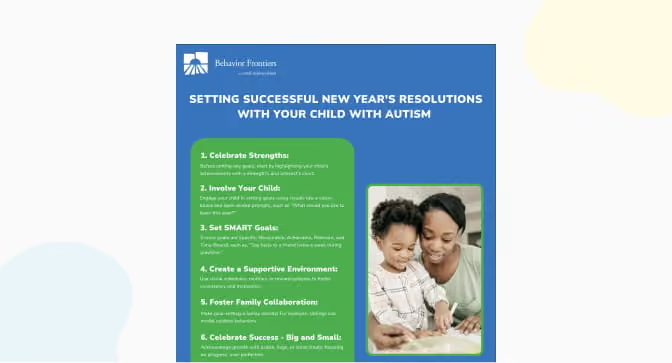
New Years Resolutions
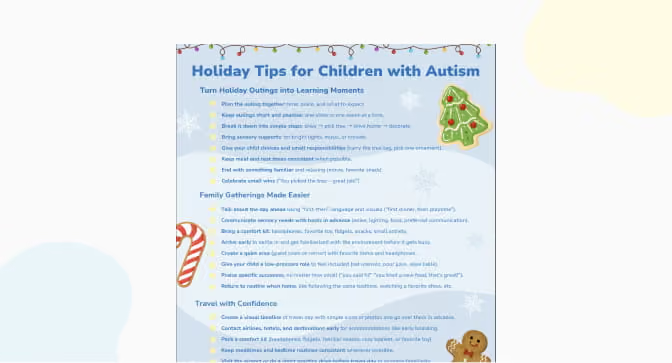
Holiday Tips

Halloween Checklist
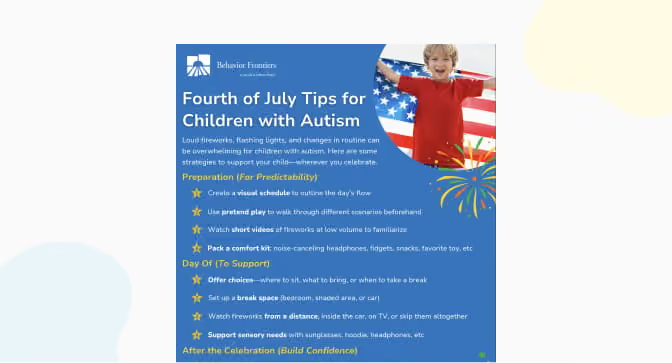
Fourth of July Tips
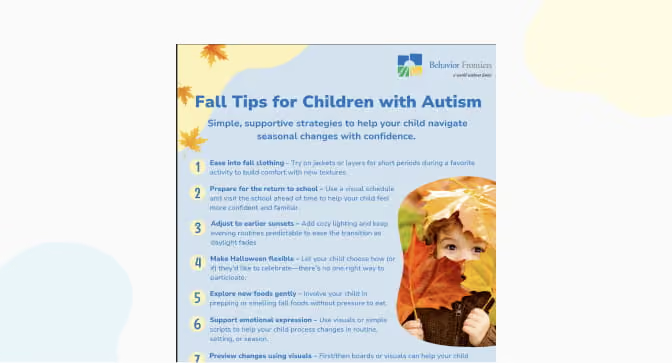
Fall activities
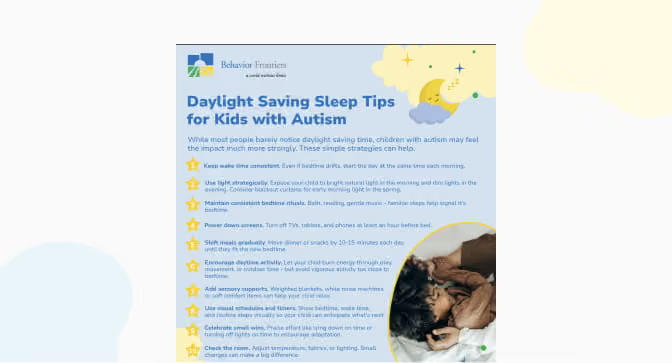
Daylight Savings Tips

Back to School Tips
.avif)
Navigating the School Year
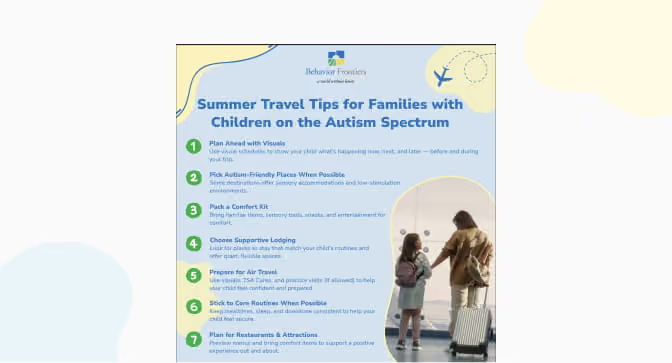
Travel Tips for Kids with Autism
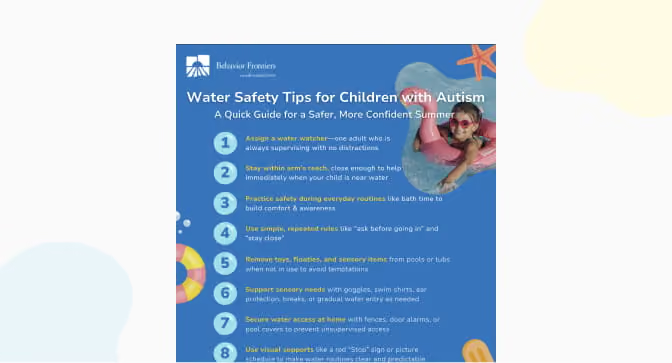
Water Safety Tips
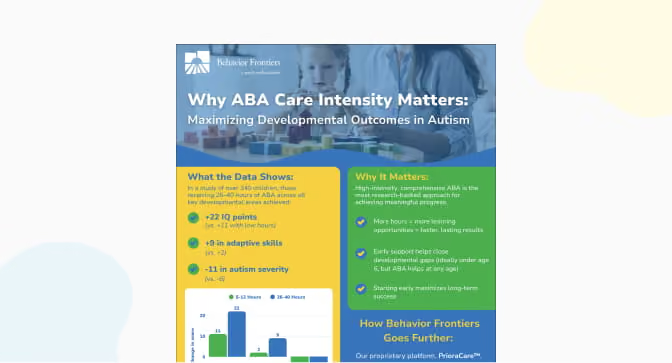
Early Intervention Research
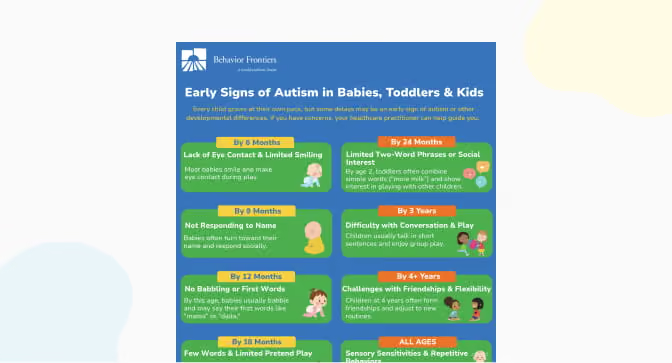
Early Signs of Autism
Early Intervention Research
Early Signs of Autism
Back to School Tips
Navigating the School Year
Thanksgiving Checklist
Sensory Friendly Superbowl
New Years Resolutions
Holiday Tips
Halloween Checklist
Fourth of July Tips
Fall activities
Daylight Savings Tips
Insurance Coverage Coordination
Reinforce ABA Skills at Home
Emotional Regulation Tips
Frequently Asked Questions

ABA therapy, or Applied Behavior Analysis, is an evidence-based behavioral therapy approach that helps children with autism build the skills they need to thrive - including communication, social, language, emotional regulation, school readiness, motor or movement, and daily living skills (like toilet training and feeding). Every care plan is play-based, personalized, and guided by a licensed BCBA, adjusting over time based on your child's progress. Along the way, challenging moments like tantrums or meltdowns become learning opportunities that build confidence and independence.
Our center-based ABA programs are designed for toddlers and young children up to age 6, focusing on early intervention, school readiness, and comprehensive skill building across all domains. For children, teens, and young adults, we also offer in-home ABA services for anyone under 25. While ABA therapy is most effective the younger you start, it supports meaningful growth and progress at any age.
Yes, most insurance providers require a formal autism diagnosis to approve ABA therapy. If your child doesn't have one yet, we may be able to help! For families ready to move forward with ABA therapy, we offer access to our trusted network of diagnostic partners, with wait times as little as 4 weeks and a single intake specialist guiding you the whole way. Contact us to see if this option could be a fit for your family.
Yes - for families ready to move forward with ABA therapy, we can connect you with our trusted network of diagnostic partners to help you get a diagnosis in as little as 4 weeks, compared to the 6-month to 1-year wait time families often face elsewhere traditionally. While we don't perform evaluations in-house, your intake specialist will manage the referral and seamless transition into ABA therapy from start to finish, so there’s no re-explaining your situation to a new party every step Contact us to see if this option could be a fit for your family.
Most insurance plans cover ABA therapy as a medically necessary service. We're in-network with 125+ providers, including most major commercial and Medicaid plans, and our team will conduct a courtesy benefits check and walk you through what's covered.
Yes, we do! We’re in-network with most major commercial and Medicaid insurance plans. Contact us to learn more - our team can help verify your benefits and walk you through what’s covered before starting.
Yes, we do! We’re in-network with most major Medicaid and commercial insurance plans. Contact us to learn more - our team can help verify your benefits and walk you through what’s covered before starting.
The cost of ABA therapy depends on your insurance plan and your child’s recommended hours - there's no one-size-fits-all number. Contact your insurance provider and ask about your specific ABA therapy benefits, copays, and deductibles. Once you contact us, our team can also help you understand your coverage and walk you through what to expect.
Getting started is easy! Simply contact us, and we’ll walk you through the entire process, including a courtesy benefits check, insurance authorization, assessment and care plan development with one of our expert BCBAs, and more.
Yes, ABA therapy is available in various formats that fit your family best. Our center-based ABA programs are for our early learners under 6, and they run full-day (ex: 8am-4pm), Monday through Friday (similar to preschool or daycare in format), with your child attending one of our state-of-the-art centers each day. For our in-home ABA care, sessions are scheduled around your child’s recommended treatment hours and your family’s routine - whether that’s mornings, during the day, or after school. Contact us to find the right fit for your child.
The number of recommended therapy hours is based on your child’s individual needs, goals, and assessment results. Just like a doctor carefully determines the right amount of medication for you or your child to thrive, our clinical team designs a personalized plan that provides the right level of support for meaningful, lasting progress. For many young children, this often means a comprehensive program ranging from 30-40 hours per week, always tailored to what will benefit your child most.
Yes! If your child is under 6 years old and you're interested in making the switch, our team will walk you through the specifics and help make that transition as smooth as possible.
Family involvement is a core part of the care plan. From the start, we guide you through our caregiver training program so you feel confident supporting your child at home, with ongoing check-ins and ideas to build on as your child grows. You'll also receive an update after every session, so you're always in the loop on your child's progress and milestones - no matter how big or small.
Families choose Behavior Frontiers because we don't just provide therapy - we show up as true partners in your child's autism journey. Since 2004, our clinician-founded and led programs have spanned center-based, in-home, and school settings, meeting your child wherever they are. Our proprietary clinical outcomes and reporting software, PrioraCare, makes progress visible in real time, so you're always in the loop - and families stay because they feel it from day one: the warmth, the celebration, and the genuine belief that their child has everything it takes to thrive.


Still Have Questions?
Talk to our intake team
Call 888.922.2843 or send us a note and we'll respond within one business day. In-network with most major insurance plans.