
What is Reinforcement? Understanding Why it Matters in ABA Therapy
%2013.avif)

At its core, reinforcement is motivation. It's the simple but powerful idea that when something good follows a behavior, that behavior is more likely to happen. And it's one of the foundational tools in Applied Behavior Analysis (ABA) that helps children with autism build new skills, communicate more effectively, and gain confidence.
But here's where most parents get worried: reinforcement sounds like bribery. And while they might seem similar on the surface, they're actually very different.
Let's discuss what reinforcement really is, how it works, and why it's such an important part of your child's therapy.
What is Reinforcement?
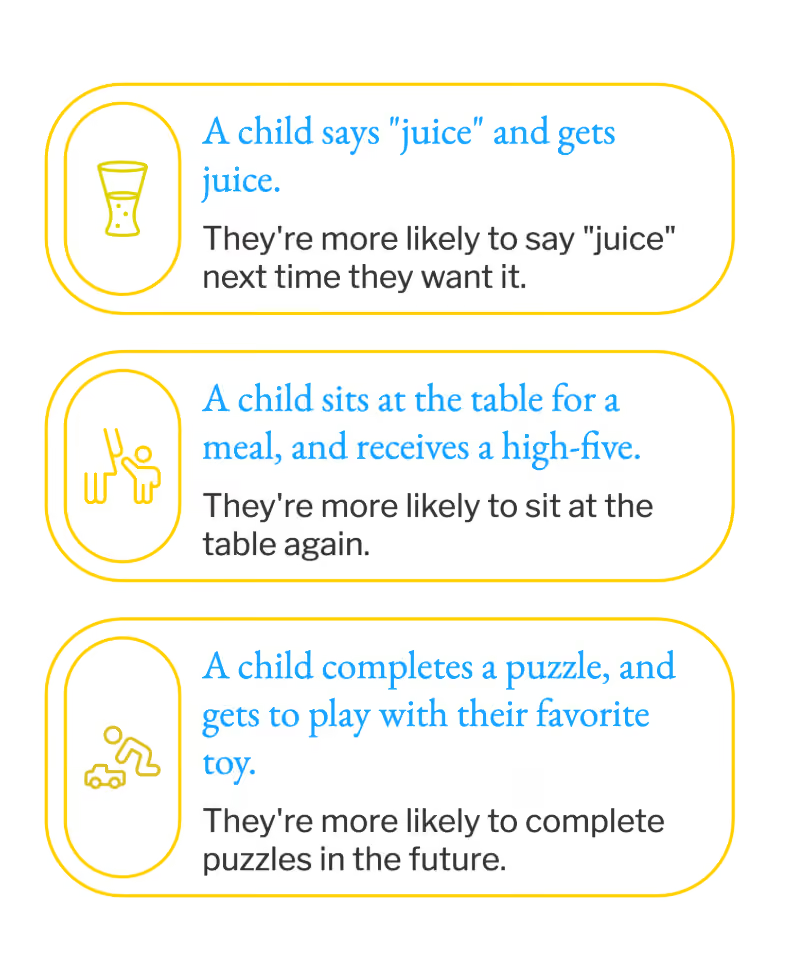
In ABA terms, reinforcement refers to a stimulus that follows and is contingent upon a behavior and increases the probability of that behavior being repeated.
Here are a few examples:
The truth is, reinforcement isn't really a therapy concept. It's just how humans are wired.
Think about how you feel when your boss recognizes your hard work, or when you cook a meal and your family loves it. That good feeling motivates you to keep going.
Reinforcement works exactly the same way for children. When a behavior leads to something meaningful and rewarding, the brain takes note. And then, that behavior becomes more likely to happen again. In ABA therapy, we simply use that natural process intentionally and thoughtfully to help your child build skills that last. So, take heart — reinforcement isn't manipulation or trickery.
Isn't Reinforcement Just Bribery?
But as a parent, you may still be asking: "Isn't this just bribing my kid?"
The short answer is no. Bribing and reinforcement are not the same, and there are key differences.
Bribery is reactive and happens before the behavior and is often used to stop a problem behavior that's already happening.
- Example: Your child is throwing a tantrum in the store, so you say, "If you stop crying, I'll buy you candy."
Reinforcement is proactive and happens after the desired behavior, and is planned ahead of time to encourage positive behaviors.
- Example: Before entering the store, you say, "If you stay with me and use your walking feet, you can pick a snack at the end." The child does it, and you follow through.
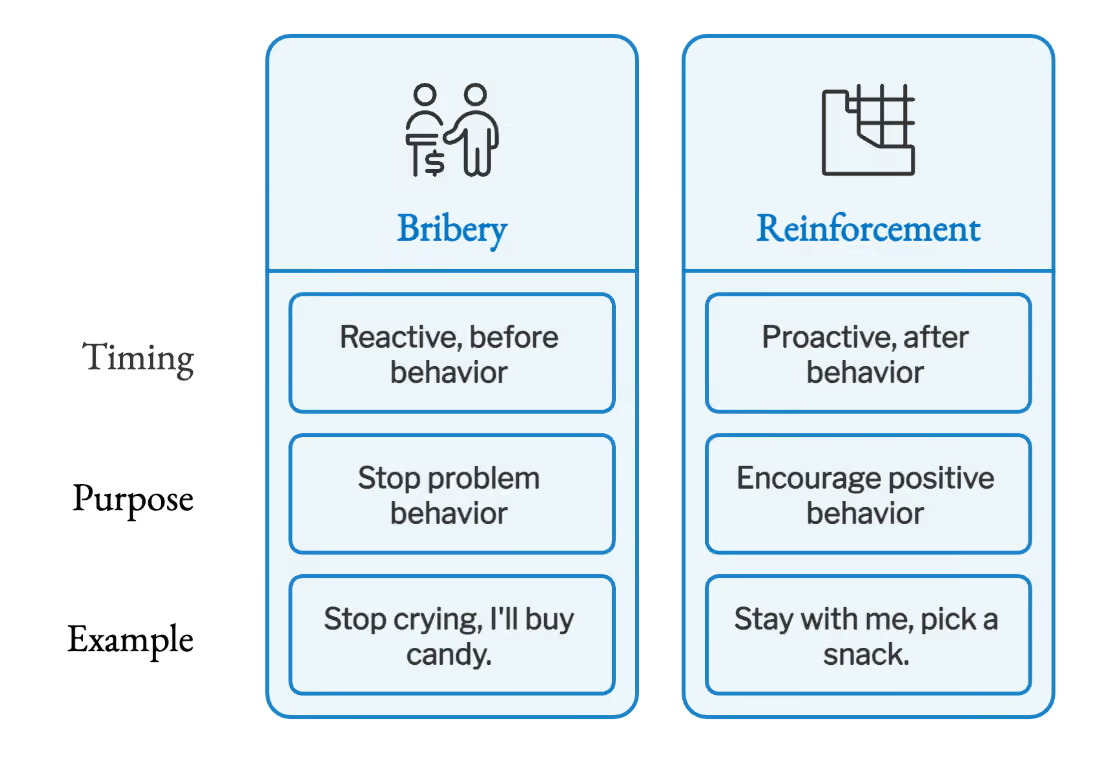
Bribery teaches kids that misbehavior gets rewarded. Reinforcement teaches kids that good behavior gets rewarded.
And reinforcement is how the world works:
You go to work because you get paid.
You cook dinner because your family enjoys it and thanks you.
You exercise because you feel good afterward.
We all respond to reinforcement, and it's one of the reasons you are as great as you are. ABA therapy just uses it intentionally and systematically to help children learn.
Positive Reinforcement vs. Negative Reinforcement
Reinforcement comes in two main forms: positive and negative. Both increase the likelihood of a behavior happening again, but they work in different ways.
What Is Positive Reinforcement?
Positive reinforcement means adding something pleasant after a behavior to increase the chances that the behavior will happen again.
The word "positive" here means something is added to the situation.
A few examples of positive reinforcement:
- A child asks for help using words, and you give them the help they need plus praise → They're more likely to ask for help with words next time.
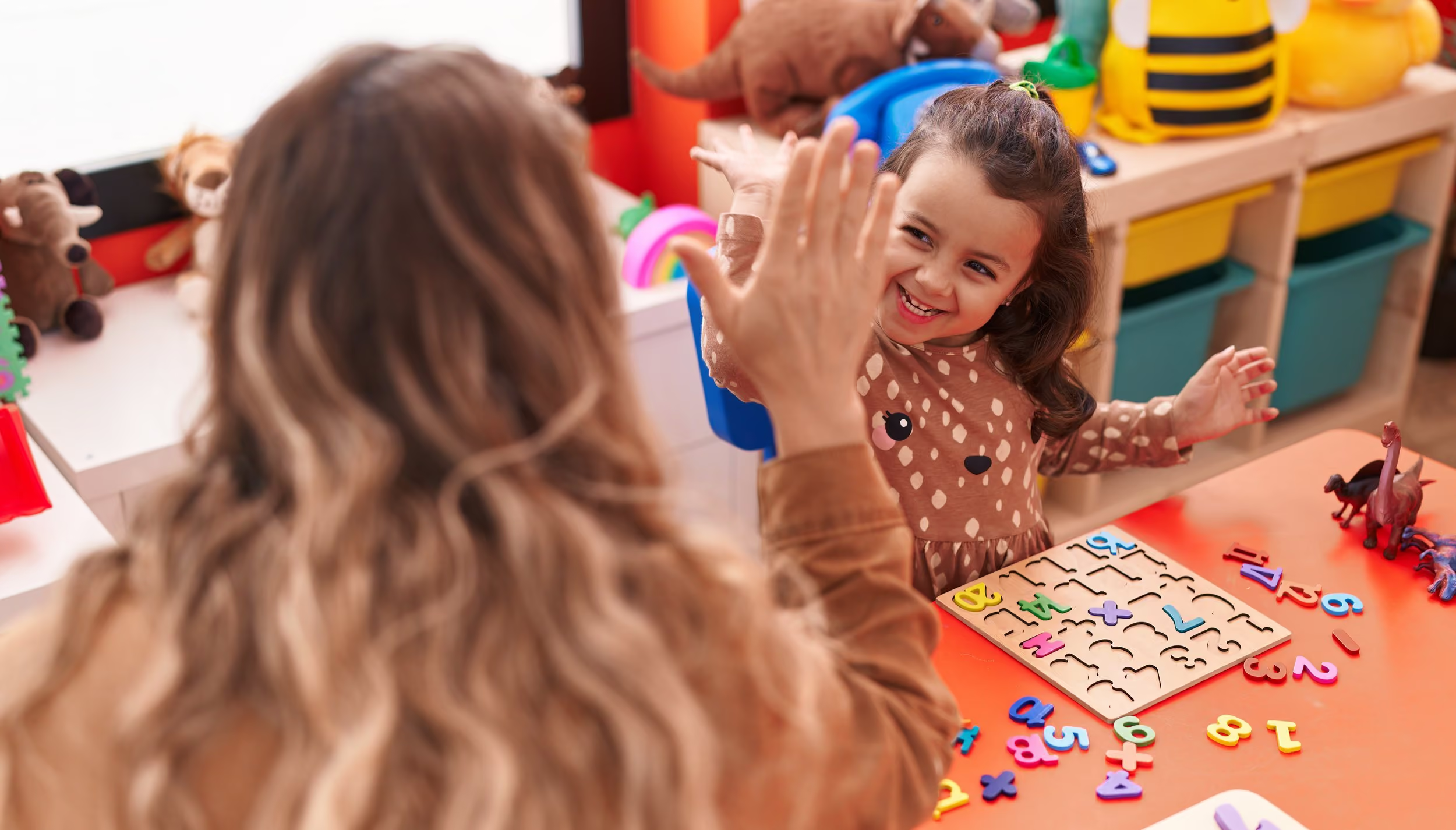
- A child shares a toy with a sibling, and you give them a high-five and extra playtime → They're more likely to share again.
- A child cleans up their toys, and you let them pick the next activity → Cleanup becomes more appealing.
What Is Negative Reinforcement?
Negative reinforcement means removing something unpleasant after a behavior to increase the chances that the behavior will happen again.
The word "negative" means something is taken away from the situation.
A few examples of negative reinforcement:
- A child puts on their seatbelt, and the annoying beeping in the car stops → They're more likely to buckle up quickly next time.
- A child asks for a break using words instead of screaming, and you remove the difficult task → They're more likely to ask for a break appropriately in the future.
- A child completes their homework, and you stop reminding them about it → They're more likely to finish homework on time.
Both positive and negative reinforcement increase behavior. The difference is whether you're adding something good or removing something unpleasant.
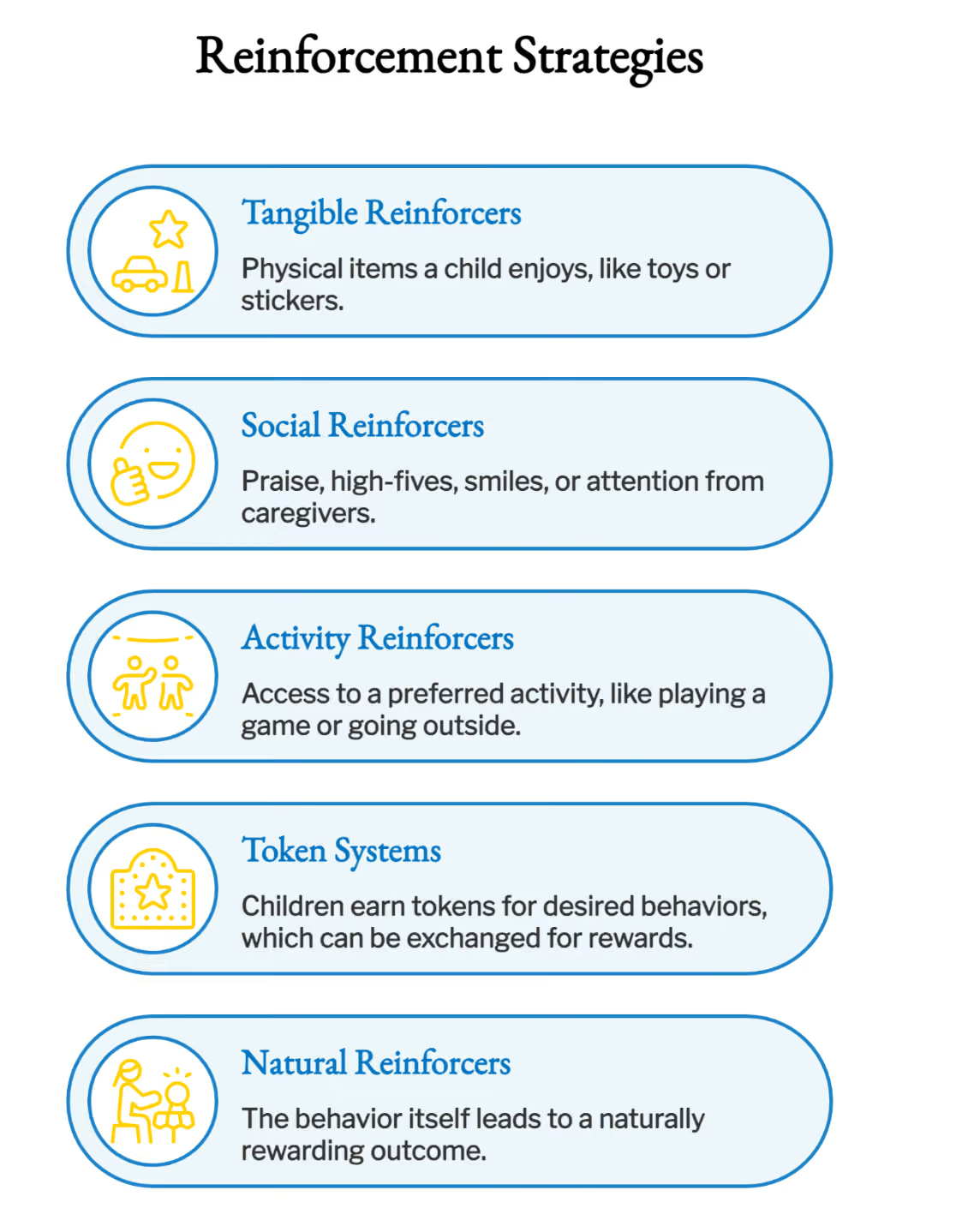
What Reinforcement Strategies Can You Use?
Reinforcement isn't always black and white. What motivates one child might not motivate another. That's why ABA therapists are constantly assessing what reinforces each child and adjusting strategies accordingly.
Common Reinforcement Strategies
Tangible Reinforcers
These would be physical items a child enjoys. For example: toys, snacks, stickers, or favorite objects. These work well for young children or when teaching new skills.
Example: After completing a task, the child gets to play with a toy car for two minutes.
Social Reinforcers
This could be praise, high-fives, smiles, or attention. Many children are highly motivated by positive interaction with caregivers and therapists.
Example: "Great job using your words! I'm so proud of you!"
Activity Reinforcers
This one is access to a preferred activity. It could be playing a game, going outside, watching a favorite video, or engaging in sensory play.
Example: "First, we finish this puzzle, then we can go jump on the trampoline!"
Token Systems
Children earn tokens (stickers, stars, chips) for completing tasks or displaying desired behaviors. Once they collect a certain number, they can exchange them for a bigger reward.
Example: Earn five stars on the chart, then pick a prize from the treasure box.
Natural Reinforcers
This means the behavior itself leads to a naturally rewarding outcome. This is the gold standard because it doesn't require external rewards.
Example: A child asks for juice and gets juice. A child waves goodbye, and someone waves back.
Reinforcement Tools and Types in Action
Before every session, behavior technicians run preference assessments to identify what the child is motivated by that day.
Then, therapists use the Premack Principle (also known as "First/Then") to structure reinforcement clearly:
- "First work, then pom poms."
- "First, we finish this puzzle, then you can play with blocks."
Over time, with consistency and positive reinforcement, new skills become habits for your child.
Therapists also adjust reinforcement schedules as skills are mastered. At first, a child might get reinforcement after every correct response. But as the skill becomes stronger, reinforcement might happen after every third response, or every fifth, until eventually the behavior is maintained by natural reinforcement.
This gradual fading ensures that children don't become dependent on external rewards. The ultimate goal is always independence and intrinsic motivation.
Can Reinforcement Help Your Child?
Reinforcement is one of the most powerful tools in ABA therapy. It's how we teach new skills, build confidence, and help children experience success. And when done well, it feels like play.
At Behavior Frontiers, we use reinforcement thoughtfully, individually, and joyfully. We celebrate every small win and find what motivates your child. Then, we use that spark to help them grow.
If you're wondering whether ABA therapy (and the power of reinforcement) could help your child communicate better, navigate challenges, or build new skills, we're here to help.
Ready to take the first step? Reach out to us to start the process! After a brief intake, you'll be connected with a Board Certified Behavior Analyst (BCBA) to begin building your child’s tailored growth plan.