April 27, 2021

Autism: Signs to Watch For
Autism: Signs to Watch For — Behavior Frontiers

While having a child is one of the most magical and amazing times in a new parent’s life, having a child newly diagnosed with Autism Spectrum Disorder (ASD) can lead to increased anxiety, stress, and a new set of fears and concerns. Although there is no blood test or medical test for a doctor to use to determine if a child has ASD, a child can receive a diagnosis from their doctor through observation, input from their parent, and various assessment or testing tools to make that determination. When determining if a child has ASD, a diagnosing professional, such as a doctor, neurologist, or clinical psychologist will refer to the symptoms detailed in the Diagnostic and Statistical Manual, 5th edition or DSM 5 to determine if the child meets the detailed criteria for Autism Spectrum Disorder.

Below is a summary of the symptoms the child must meet in order to receive the Autism Spectrum Disorder diagnosis which will be presented in a checklist format.

Autism Diagnostic Symptoms (Summary):

  • Difficulty in social communication and social interaction across multiple situations
  • Difficulty with initiating and responding to social-emotional interactions
  • Difficulty with back-and-forth conversation
  • Difficulty sharing interests of others
  • Difficulty with emotions or showing emotions
  • Difficulty responding to and using nonverbal communication, eye contact, and body language
  • Difficulty using and responding to nonverbal gestures
  • Lack of facial expressions and nonverbal communication
  • Difficulty in developing, maintaining, and understanding relationships
  • Difficulty adjusting behavior to suit the social situation and contexts
  • Difficulty sharing imaginative play
  • Difficulty or not interested in making friends
  • May engage in restricted, repetitive patterns of behavior or engage in stereotyped or repetitive motor movements
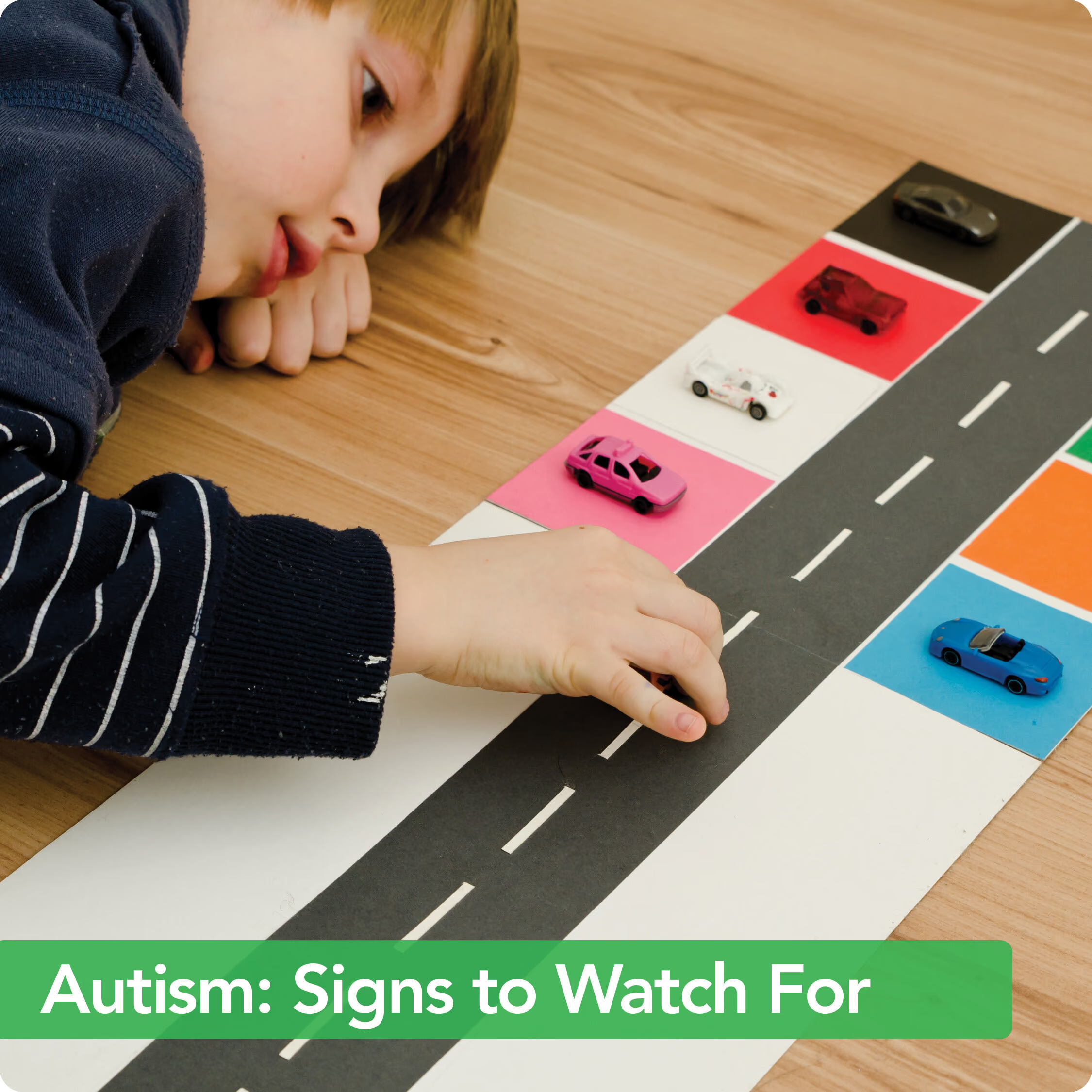
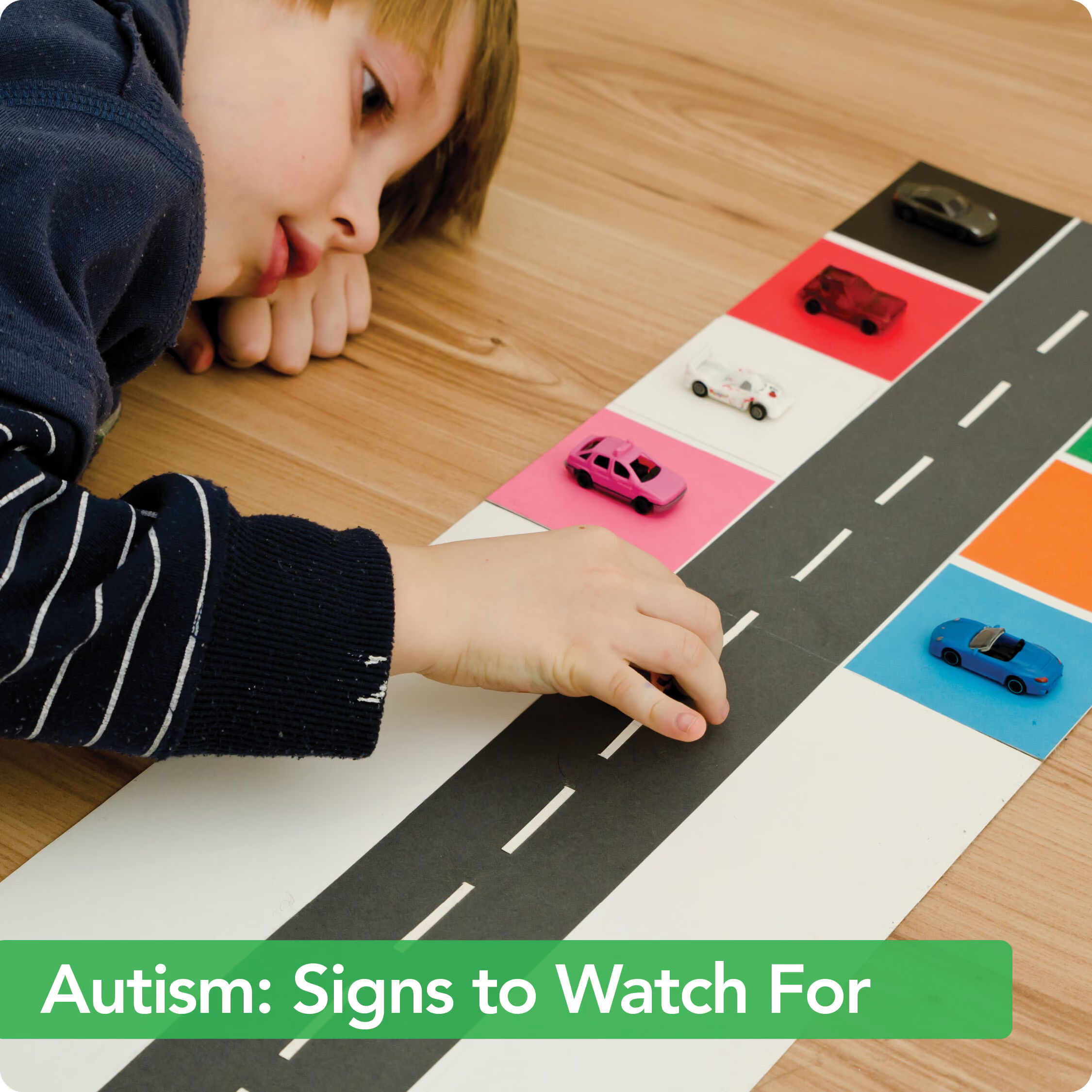
  • May engage in retentive speech, lining up objects or flipping objects
  • Insistence on sameness or inflexible adherence to routines
  • Insistence to routines or distress with small changes or transitions
  • Rigid thinking patterns or fixated interests
  • Hyper- or hypoactive to sensory input or sounds
  • Unusual interests in sensory aspects of the environment or indifference to pain/temperature
  • Excessive smelling or touching of objects, visual fascination with lights or movement)

If you are concerned that your child has ASD, please reach out to your pediatrician and local healthcare professional to express your concerns. An early diagnosis can help your child begin the process of being referred for services and therapy that can make a major, positive impact on your child’s abilities such as Applied Behavioral Analysis (ABA) therapy.
Carrine Pilkington, M.S., BCBA, LMFT, LBA
Regional Clinical Director
Tuesday, April 27, 2021

View Our Previous Blog Posts

7 Famous People with Autism Who've Shared Their Diagnosis
September 8, 2026

7 Famous People with Autism Who've Shared Their Diagnosis

An autism diagnosis never determines your success. For many of the most creative, driven, and groundbreaking minds in history, it may have been the very thing that fueled it. An intense focus, pattern recognition, and a willingness to see the world differently are not limitations. They're superpowers. And when a person with autism is given the right support and space to grow, truly incredible things can happen.
What Is DRA in ABA Therapy? (Differential Reinforcement of Alternative Behavior)
September 8, 2026

What Is DRA in ABA Therapy? (Differential Reinforcement of Alternative Behavior)

Every time your child wants to play with a toy, they have big emotions until they get it. At school, when presented with difficult work, they might run away. These are all examples of behaviors your child might exhibit to serve a communicative purpose. They might need something or want your attention. Or maybe they just want access to an opportunity. Whatever the behavior might be—it works, so it continues. Sometimes, we as adults may reinforce these behaviors without realizing it.
The 7 Dimensions of ABA Therapy (Baer, Wolf & Risley, 1968)
September 8, 2026

The 7 Dimensions of ABA Therapy (Baer, Wolf & Risley, 1968)

What guides every intervention in Applied Behavior Analysis (ABA) therapy?The 7 dimensions of ABA.Think of ABA therapy like a multi-dimensional figure. It has many angles, perspectives, and ways to evaluate it. That is exactly what the dimensions do. They give clinicians and families a complete way to see how well an intervention is working, from every angle.
Errorless Learning in ABA: How and Why Behavior Therapists Use It
September 8, 2026

Errorless Learning in ABA: How and Why Behavior Therapists Use It

In Applied Behavior Analysis (ABA) therapy, errorless learning is a way to teach new skills by giving the right amount of support from the very beginning.When your child with autism is learning something new, mistakes are part of the process. But for some kiddos, too many mistakes too quickly can feel uncomfortable, frustrating, or discouraging. The last thing we want is for your child to shut down, guess, avoid the task, or lose confidence before the skill has a chance to grow. That's where errorless learning can help.
Stimming and Autism: What It Is, Why It Happens, and When to Support It
September 8, 2026

Stimming and Autism: What It Is, Why It Happens, and When to Support It

Have you noticed your child rocking, flapping their hands, or making the same sounds on repeat?What you’re observing is called stimming. Stimming (short for self-stimulating behavior) refers to repetitive motions, sounds, or interactions with objects, and it’s far more common than you may think. In fact, close to 44% of people with autism engage in some form of stimming.
What Are the Benefits of Center-Based ABA Therapy? What Parents Should Know
September 3, 2026

What Are the Benefits of Center-Based ABA Therapy? What Parents Should Know

If your child recently received an autism diagnosis, the next steps can feel exciting in some ways. Now, your child has access to all the support they need. But after that diagnosis comes a fresh set of questions, one of them being: what's the right next step? To help you understand if your kiddo is a good fit for center-based ABA therapy, we'll cover: the definition of center-based ABA, the benefits of center-based ABA, and the key differences between center-based and in-home ABA.
Find ABA Therapy Near Me