

Why Parents Are Recommending Behavior Frontiers for ABA Therapy


Exceptional Satisfaction. Trusted Care. Proven Results.
When you’re searching for quality ABA therapy or trusted autism care, it’s hard to know where to start. With hundreds of providers offering Applied Behavior Analysis (ABA) therapy across the country, how do you know which one is truly right for your child?
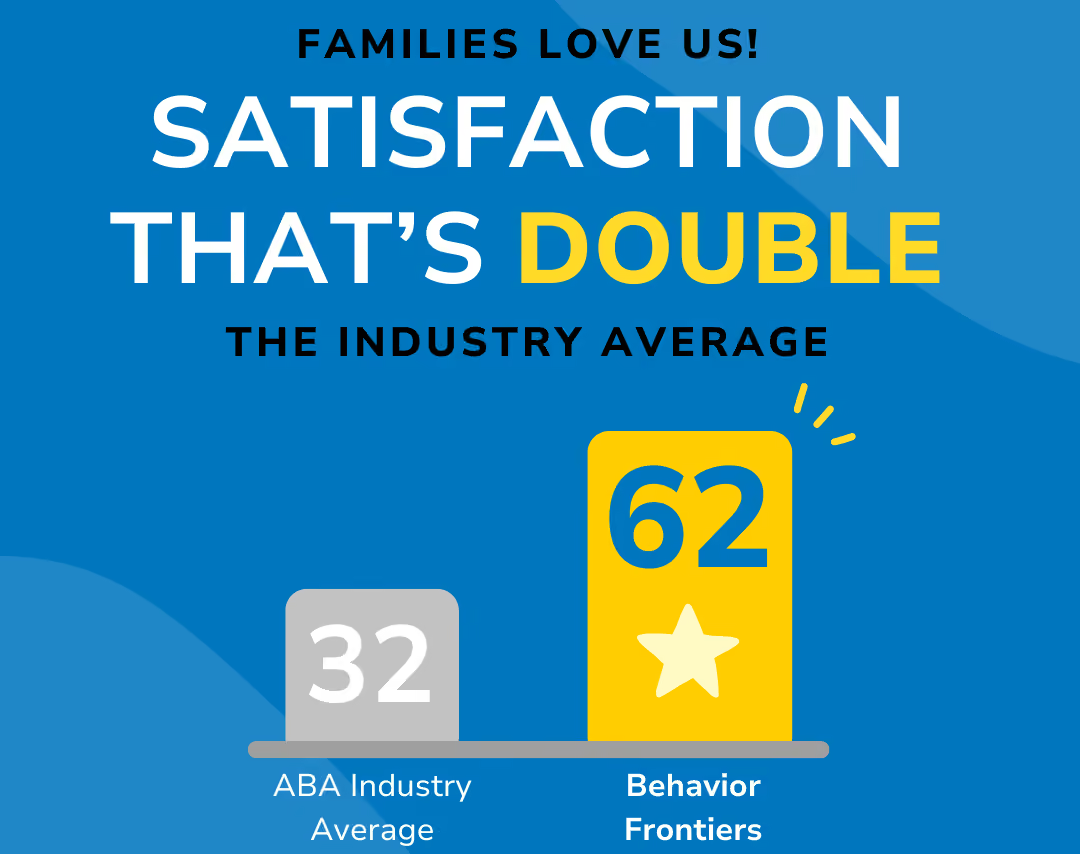
At Behavior Frontiers, we believe the answer lies not just in what we say—but in what families experience. That’s why we’re proud to share that our Net Promoter Score (NPS) has reached 62 in 2025, placing us among the highest-rated ABA providers in the industry.
What is NPS—and Why Should It Matter to Parents?
Net Promoter Score (NPS) is a nationally recognized measure of client satisfaction and trust. It reflects how likely families are to recommend a service to others, based on their real-world experiences.
Our NPS score of 62 was derived from our annual client satisfaction survey, which is sent to every parent and caregiver whose child is receiving services at Behavior Frontiers.
Here’s what that looks like in the ABA world:
- ABA Industry Average: 32
- Behavior Frontiers: 62
With a satisfaction score that’s double the ABA industry average, Behavior Frontiers ranks among the highest-rated ABA providers in the country.
An NPS of 50 or higher is considered exceptional by national standards across all industries. In the ABA field—where satisfaction scores often fall below that due to challenges in consistency and communication, 62 stands out as a powerful reflection of the care, progress, and trust families experience with our team.
And that’s not the only area where families are speaking up.
- In the same survey, over 90% of families expressed satisfaction with the timeliness and professionalism of our behavior technicians, the positive relationships those technicians build with their children, and the way behavior intervention plans are being implemented.
- Similarly, more than 90% of parents reported being satisfied with the professionalism and training of the supervisors who oversee their child’s ABA program.
That level of consistency and satisfaction is especially rare in ABA—making these results all the more meaningful.
What Makes Behavior Frontiers Different?
We don’t believe in one-size-fits-all care. Our approach to ABA therapy is centered around personalization, progress, and partnership—with an emphasis on real, measurable results.
Individualized, Data-Backed Care
Every child at Behavior Frontiers receives a personalized therapy plan tailored to their strengths, interests, and goals. Our Board-Certified Behavior Analysts (BCBAs) and Behavior Technicians work closely with each family to ensure therapy is meaningful, flexible, and responsive.
PrioraCare™: Built from Scratch to Improve Outcomes
One of our most powerful tools is PrioraCare™—our proprietary clinical platform, built from scratch to deliver smarter, more responsive care. Unlike standard systems used across the industry, PrioraCare™ gives our clinicians immediate access to real-time data, helping them make faster, more informed decisions that improve outcomes.
With PrioraCare, we’re able to:
- Monitor each child’s progress in real time
- Quickly adapt goals based on data—not just instinct
- Identify and prioritize the strategies that deliver meaningful outcomes
And for families, it’s just as powerful. With PrioraCare, families:
- Receive clearer, more consistent updates
- Understand what’s working—and why
- See real, measurable progress and stay involved every step of the way
That’s why families don’t just stay with Behavior Frontiers—they become advocates for our care.
A Compassionate, Collaborative Approach
We don’t just support the child—we partner with the entire family. Our clinicians work closely with parents and caregivers through regular training, hands-on guidance, and open communication to help them confidently support their child’s progress at home and in everyday life. We believe parents are essential to long-term success, and we’re here to provide the tools, knowledge, and encouragement every step of the way.
Real Satisfaction, Real Outcomes
Our NPS score of 62 is more than just a number. It’s a signal that families feel supported, children are making meaningful progress, and we’re building the kind of trust that lasts. When parents say they would recommend our services to others, it validates everything we do.
If you’re looking for an ABA provider who:
- Delivers personalized, high-quality autism therapy
- Provides clear communication and real results
- Is trusted by thousands of families across the country
…we’re here to help.
Ready to Take the Next Step?
Whether your child was recently diagnosed with autism or you’re exploring new therapy options, our team is here to help you navigate your next steps with clarity and confidence. We’ll walk you through what to expect, answer your questions, and help determine if Behavior Frontiers is the right fit for your child and family. Call us at 888-922-2843 or fill out the form below to get started. Let’s build a future of progress—together.