

Does My Child Need an IEP For Autism? A Parent’s Guide to IEPs

%2013.avif)

An Individualized Education Plan (IEP) is a written, legally binding document between your family and your child’s school. It’s a roadmap that explains your child’s educational goals and the support needed to achieve them.
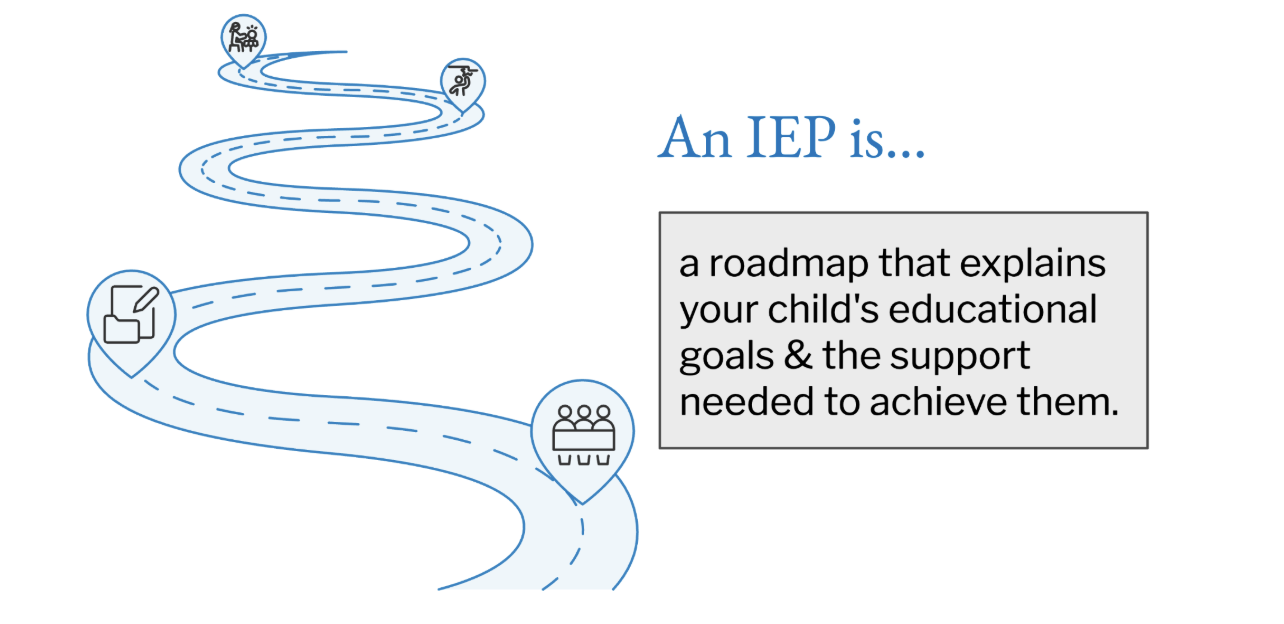
An IEP is an incredibly helpful, tailored document that holds everyone on your child’s team accountable.
Let’s walk through what an IEP is, how it’s created, and what role you play as the parent within the IEP process.
What’s the Purpose of an IEP?
IEPs exist so that children who need support at school don’t go without it. So, for children with autism, an IEP is often the foundation of their educational experience. It’s a living, breathing document — it helps guide decisions for support, keeps track of important data and information, and is always adapting to what your child needs.
And importantly, an IEP is an opportunity for partnership and inclusivity. The real work happens within the action of the IEP. Words are important, yes, but members of your child’s team must put them into action. You (the parent), educators, administrators, and specialists all collaborate to ensure your child reaches their goals.
In short, IEPs are a protection and a promise. They protect your child’s right to free and appropriate public education (FAPE) and promise that the school will provide all the support written in the document.
Who is on the IEP team?
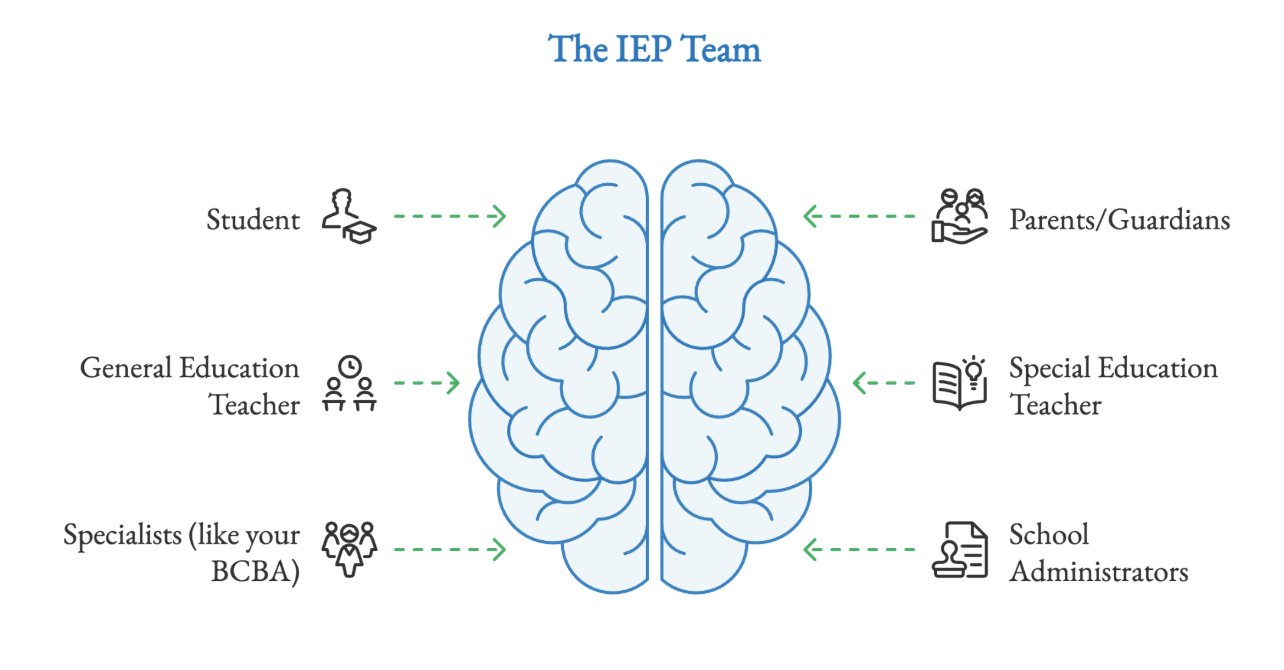
The IEP is created by a team of people who bring different perspectives and expertise. Each person on the team plays an important role in making decisions that help the student reach their goals.
The IEP team typically includes:
- The student (when appropriate, especially for older students who can participate in their own planning)
- Parents or guardians (you are a critical member of the team and have a legal right to participate)
- General education teacher (provides insight into how the student functions in a typical classroom setting)
- Special education teacher (brings expertise in adapting curriculum and teaching strategies)
- Specialists (such as behavior analysts, speech therapists, occupational therapists, or school psychologists)
- School administrators (such as a principal who can authorize services and supports)
Each person on the team offers a different perspective, and together, the team collaborates to make decisions that support the student's success.
How Is an IEP Created?
The team creates an IEP after the child is evaluated and found eligible for special education services.
Step 1: Referral for Evaluation
A student is referred for evaluation, often by a parent or teacher who has concerns about the child's development, behavior, or academic progress.
Step 2: Evaluation
With parent consent, the school evaluates the student in all suspected areas of need. This might include behavioral observations, cognitive assessments, speech and language evaluations, occupational therapy assessments, and more.
Step 3: Eligibility Determination
If the student qualifies for special education services under IDEA, the IEP team meets to begin writing the plan.
Step 4: IEP Development
The team reviews the evaluation results, identifies the student's needs, writes measurable annual goals, and decides what supports, services, accommodations, and placement will help the student make progress.
Step 5: Implementation and Review
The IEP is then implemented in the school setting. It must be reviewed at least once a year, though parents can request additional meetings if they have concerns or if the child's needs change.
What’s Included in an IEP?
An IEP has several key components. Here are the three major parts:
Component 1: Assessment
The first major component of the IEP is the assessment. The assessment process is crucial when developing goals for the child with autism, as it provides a solid baseline of the child's current functioning.
For example, it wouldn't be appropriate to set a goal for a child to engage in conversational turn-taking of 3-4 exchanges if they are unable to produce single words at the time of assessment. Once the evaluation is complete, the IEP meeting is scheduled with everyone in attendance.
Parents are entitled by law to attend and participate in this meeting. You should receive a copy of the evaluation results before the meeting so you can review them and come prepared with questions.
Component 2: Goals
The second major component is the goals. Goals are developed based on the assessment results and typically cover areas such as:
- Self-care skills
- Communication and language
- Social interaction
- Academics
- Play skills
- Behavioral and emotional regulation
Goals must be specific, measurable, achievable, relevant, and time-bound (SMART). They should clearly describe what the child will accomplish and how progress will be measured.
Component 3: Placement and FAPE
The third major component is placement. Your child should be placed in the least restrictive environment (LRE) that will help them best meet the goals in their IEP.
The IEP must include specific content for placement, such as:
- The setting in which services will be provided (general education classroom, resource room, special education classroom, etc.)
- The list of professionals who will be providing services
- How much time will the student spend in general education vs. special education settings
If your child is 16 years of age or older, the IEP must also include a description of transitional services, planning for life after high school, including post-school activities, employment, or independent living.
This component is also referred to as the "offer of FAPE" (Free and Appropriate Public Education). It's the school's formal commitment to providing the services outlined in the IEP.

What Is My Role as a Parent in the IEP Process?
Your involvement is irreplaceable. As a parent, you are privy to important information that no one else sees. It's important to share this information about your child's needs, expectations, and current skill set.
At the IEP meeting:
- Share your vision. What do you hope your child will accomplish this school year? What are your long-term goals for them?
- Highlight strengths and challenges. You know your child better than anyone. Share what they're good at and where they struggle.
- Voice concerns. If you have concerns about behavior, communication, academics, or social skills, speak up. This is the time to make sure everything is addressed.
- Ask questions. Don't be afraid to ask for clarification if something in the evaluation or proposed goals doesn't make sense. This is your child's plan, and you have a right to understand it fully.
- Know your rights. If you don't agree with the IEP that was developed, you have recourse. You can request changes, ask for an independent evaluation, or pursue mediation or due process if necessary.
Your voice is an integral piece of the IEP puzzle. And your advocacy can make all the difference in ensuring your child gets the support they deserve.
How Behavior Frontiers Can Support the IEP Process
For many children with autism, an IEP is just one part of their support plan. So, when families and school teams are looking for ways to reinforce progress, ABA therapy can be a helpful partner. There may also be a chance your insurance covers ABA therapy in school, which allows your Behavior Therapist to accompany your child to school. That means that your child will have 1:1 support throughout the entire school day to ensure they have the behavioral support they need to access their education.
At Behavior Frontiers, we support children through individualized ABA services, collaboration with families, and coordination with the whole care team to help children build the skills they need for school and the rest of their lives.
Ready to take the first step towards ABA therapy? Reach out to us to get started! After a brief intake, you'll be connected with a Board Certified Behavior Analyst (BCBA) to begin your child's ABA journey and build a growth plan tailored to their unique needs.