

Understanding In-Home ABA Therapy: A Simple Guide for Proactive Parents

%2013.avif)

Are you exploring ABA therapy options and wondering if in-home ABA could be a good fit? If so, consider this your starting point. At Behavior Frontiers, we offer both center-based and in-home ABA therapy.
Here’s how we like to explain it:
In-home ABA therapy brings personalized, evidence-based autism care directly to you. Center-based therapy offers the same meaningful, skill-building work in our centers for early learners (typically under age 6). Both deliver effective ABA services, but the main difference falls on the setting and who they’re designed to serve.
We’ll walk you through both in-home and center-based ABA therapy options, how to make the most of in-home ABA therapy, and frequently asked questions about home ABA therapy. Whichever path you choose, the goal is the same: helping your child feel supported, confident, and set up for success.
In-Home ABA vs. Center-Based ABA: What’s the Difference?
Both in-home and center-based ABA therapy are effective, evidence-based approaches. The right choice depends on your child's age, developmental stage, and specific needs.
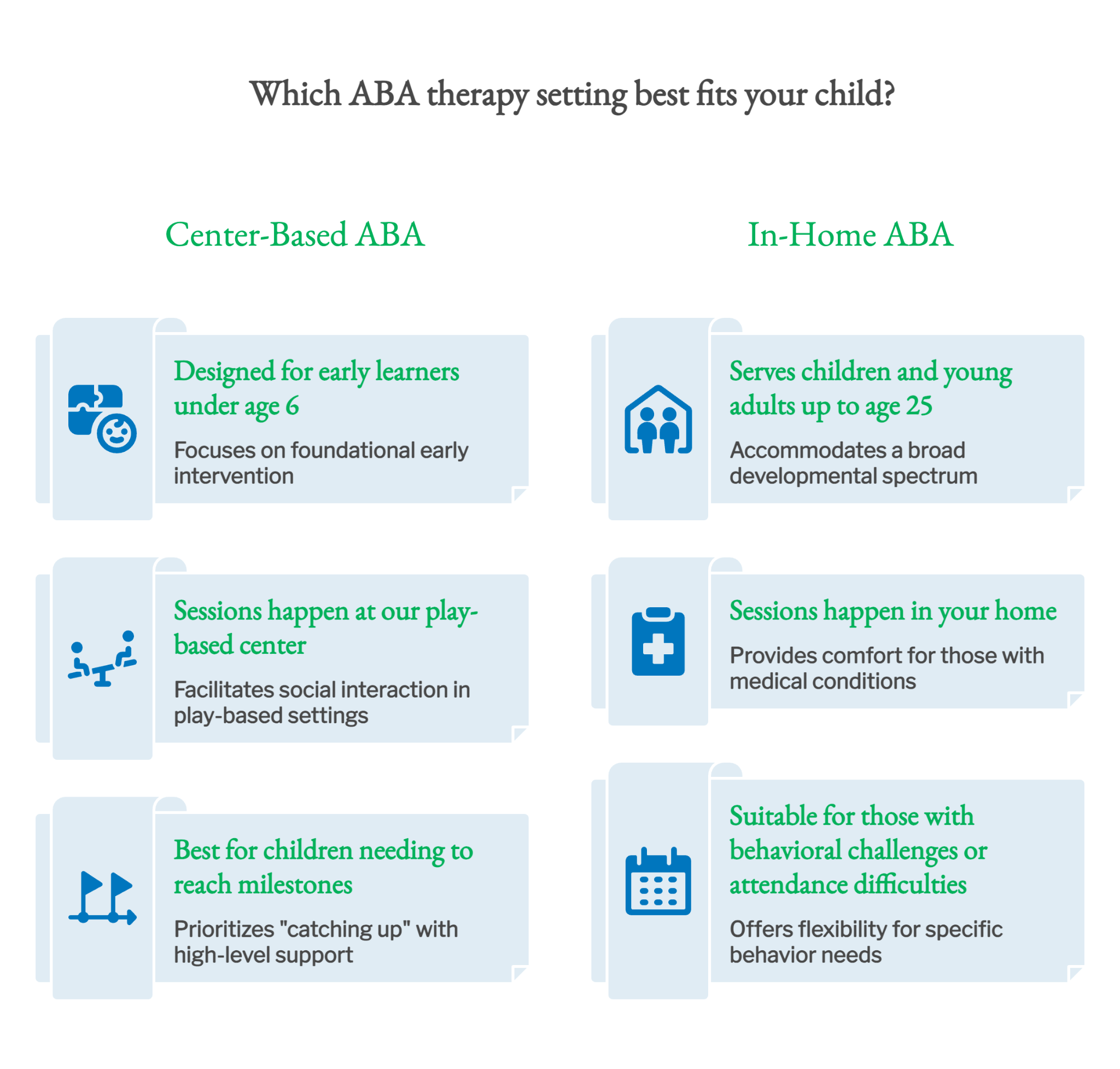
Center-based ABA is designed for early learners under age 6 who benefit from intensive early intervention. In our centers, young children work on foundational skills in a play-based environment alongside peers. It’s most ideal for children who need a high level of support to reach developmental milestones and “catch up” to their peers during those important early years.
In-home ABA serves children and young adults from early childhood to age 25. Sessions happen in your home. This setting works well across all developmental stages and can be great for kiddos with particular behavioral challenges or medical conditions that might make center attendance difficult.
Neither option is inherently “better” — they serve different purposes. Some families start with in-home therapy to address specific behaviors, then transition to center-based therapy when they’re ready. Others may begin at the center for early intervention and then continue with in-home support as they grow older. It never has to be “all or nothing” or “one-and-done.”
5 Ways to Set Yourself Up for Home ABA Therapy Success
If you’re finding that in-home therapy fits your kiddo best at the moment, here are a few ways to allow your sessions to run smoothly.
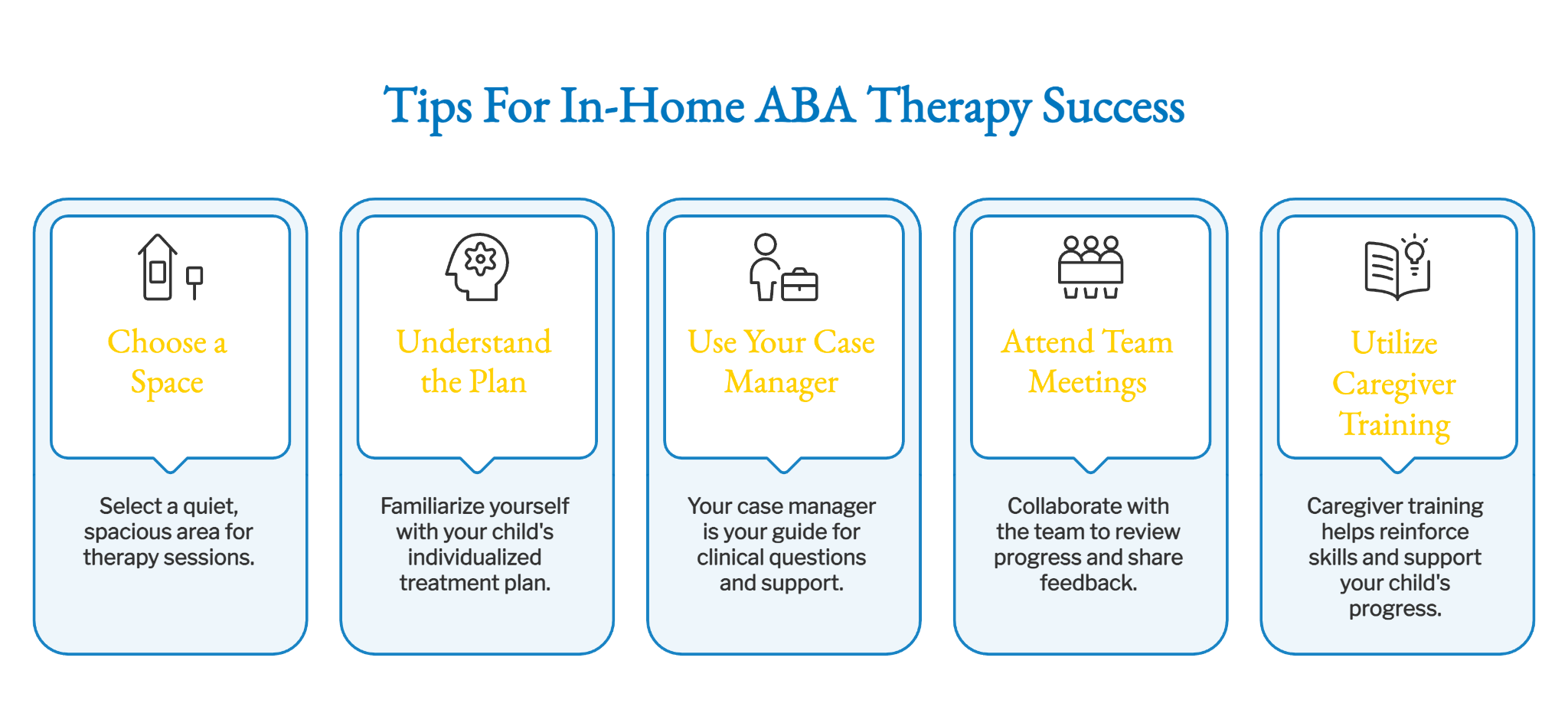
1. Decide on a Space for Sessions
Choose an area of your house where ABA therapy sessions will take place. Ideally, this should be:
- A room with the least amount of distractions (away from TVs, high-traffic areas, or noisy pets)
- A space with enough room for movement and play
- An area where your child feels comfortable and can focus
Your Behavior Technician or case manager might recommend a specific setup based on your child's needs. You don't need anything fancy—just a clean, safe space where learning can happen.
2. Be Familiar with Your Child's Individualized Treatment Plan
Your child's Behavior Intervention Plan (BIP) is tailored to their unique needs. We use assessment data, observations, our comprehensive curriculum, and your feedback to develop this plan.
Take time to understand:
- What goals is your child working toward
- What skills are being targeted
- How progress is being measured
At Behavior Frontiers, we track real-time data through our proprietary PrioraCare™ platform. This helps our clinicians make more informed, accurate decisions when it comes to your child's plan. You'll have visibility into progress and can celebrate milestones alongside the team.
3. Use Your Case Manager or Supervisor as a Guide
Your case manager or clinical supervisor is your go-to resource. They're there to:
- Answer clinical questions
- Guide how to support your child between sessions
- Conduct face-to-face visits to observe progress and adjust the plan as needed
Don't hesitate to reach out. Whether you have a question about a specific behavior, want clarification on a goal, or just need reassurance, your case manager is there to support you.
4. Attend Monthly Team Meetings
Monthly team meetings are a collaborative opportunity for you, the Behavior Technician, and your case manager to come together and review:
- Your child's strengths
- Areas for improvement
- Progress toward goals
These meetings are also a chance for you to:
- Share observations from home
- Ask questions or raise concerns
- Provide feedback on what's working and what isn't
Your input is invaluable. You know your child best, and your insights help the team refine the plan and ensure it's truly personalized.
5. Enhance Your Knowledge With Caregiver Training
Caregiver training is an important part of our care plans. The skills your child builds with their Behavior Technician become even more powerful when practiced across different environments and with others in their life (you, siblings, grandparents, and their extended care team).
Our robust caregiver training helps you:
- Learn strategies to reinforce skills between sessions
- Understand how to respond to challenging behaviors
- Practice techniques that support your child's progress
When everyone in your child's life is using the same strategies, learning is supported, valued, and consistent.
Make the Most of In-Home ABA Therapy
At Behavior Frontiers, we take you by the hand and say, “You’re not facing this alone” — bringing personalized, compassionate ABA therapy right to your door. We, within your family’s routines, honor your rhythms and celebrate the small (and big) wins along the way.
Ready to take the first step towards ABA therapy? Reach out to us to get started! After a brief intake, you'll be connected with a Board Certified Behavior Analyst (BCBA) to begin your child's ABA journey and build a growth plan tailored to their unique needs.
FAQs About In-Home ABA Therapy
1) What does the initial assessment process look like?
Once you complete the intake process, you'll be connected with a Board Certified Behavior Analyst (BCBA) who will conduct a comprehensive Functional Behavior Assessment (FBA). During this assessment, the BCBA will:
- Observe your child in their natural environment
- Interview you about your child's strengths, challenges, and daily routines
- Identify specific behaviors and skills to target
- Gather baseline data to understand where your child is starting from
From there, your BCBA will develop an individualized treatment plan with clear, measurable goals tailored to your child's unique needs. This plan becomes the roadmap for your child's ABA journey, and it's reviewed and adjusted regularly based on progress and your family's input.
2) How long are sessions, and how many hours per week?
The recommended hours for ABA therapy are determined through your child's Functional Behavior Assessment (FBA), with clinically recommended hours provided by your BCBA in your care plan. Each child’s path is different, and is based on their age, development, skills, strengths, and goals.
3) What if I have other children at home? Will they disrupt the session?
We love it when siblings get involved! And we work with families in all kinds of household situations.
- Younger siblings: If you have toddlers or younger children, it may be helpful to have a plan to keep them occupied during focused work time. However, we understand that's not always possible, and our Behavior Technicians are trained to work flexibly around family life.
- When siblings should participate: However, in many cases, we want siblings involved, especially during play-based activities or social skills practice. Your BT can coach siblings on how to interact in ways that support your child's goals. This also helps your child generalize skills with peers and family members.
- When siblings might need to step back: During one-on-one skill-building activities (like speech work, toileting routines, or addressing specific behaviors), it's helpful to minimize distractions.
Your supervisor or case manager will work with you to create a plan that honors your whole family's needs and rhythms. Many families find that siblings adjust quickly and even enjoy being part of the process.
4) What happens if my child is sick? Do we still have the session?
If your child is sick, please cancel or reschedule the session. ABA therapy is far less engaging, fun, and effective when your child is feeling icky.
5) How will I know if my child is making progress?
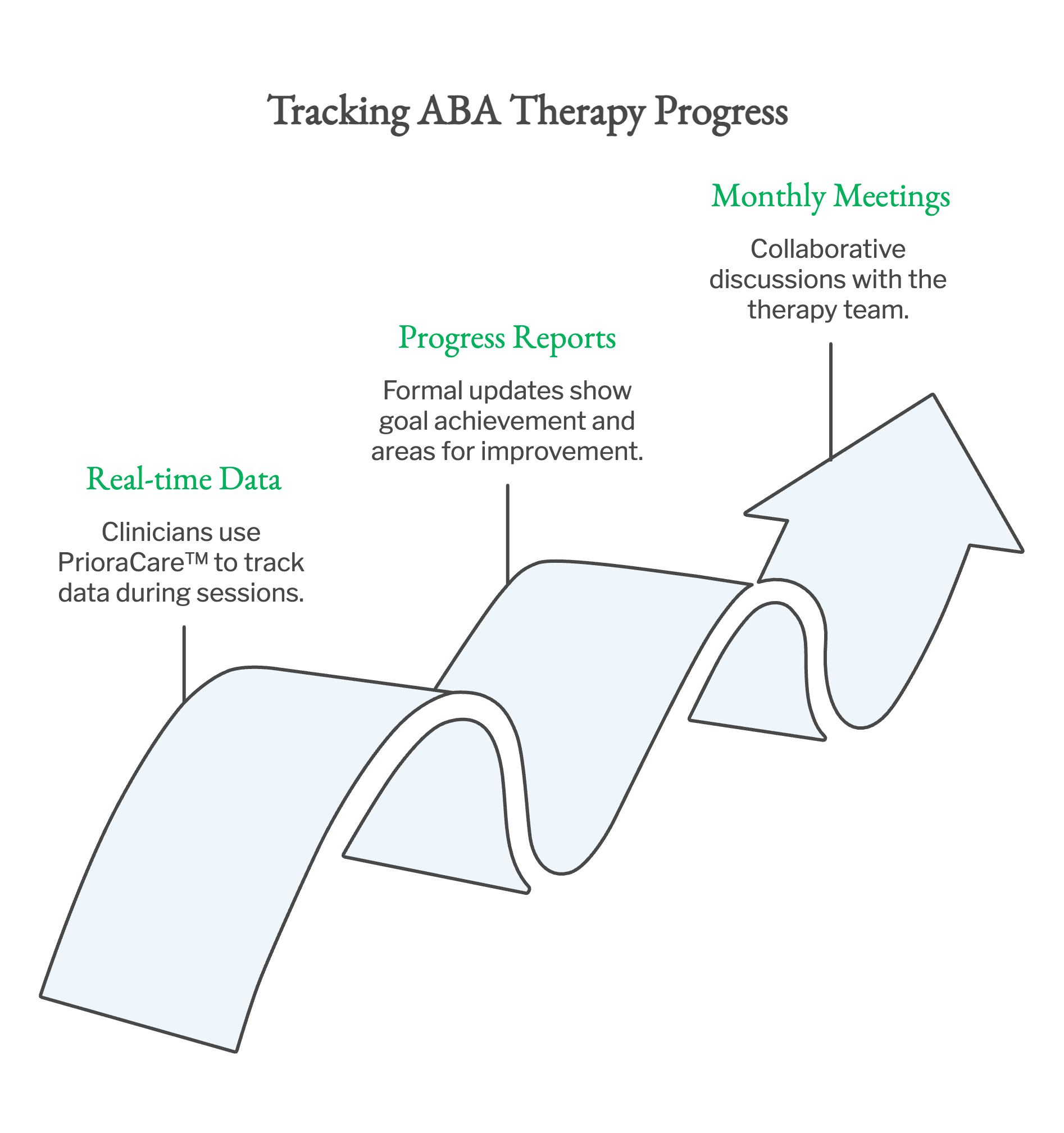
Progress tracking is baked into every session:
- Real-time data: At Behavior Frontiers, we use our proprietary PrioraCare™ platform to track data during every session. This allows our clinicians to see exactly how your child is performing on each goal and make informed decisions about the treatment plan.
- Regular progress reports: You'll receive formal progress updates that show which goals have been met, where your child is improving, and areas that may need more focus.
- Monthly team meetings: During these collaborative meetings, you'll review progress with your Behavior Technician, case manager or supervisor, and clinical director, celebrate wins, and discuss any adjustments to the plan.
6) Can we switch from in-home to center-based (or vice versa) if our needs change?
Absolutely. We understand that family circumstances, your child's needs, and developmental stages change over time.
If you feel like a different setting might better serve your child, talk to your BCBA. They'll assess whether a transition makes sense and help you make the switch smoothly.