January 9, 2024

Unlocking Progress Through Consistency: Attending Scheduled ABA Therapy Sessions

Unlocking Progress Through Consistency: Attending Scheduled ABA Therapy Sessions — Behavior Frontiers

Life happens. You come down with a nasty cold and you have an overwhelming to-do list. Your child's school activities, a soccer game, family outings, and playdates are all happening. You haven't finished the food shopping, the home is in disarray, and you have a parent-teacher meeting to go to.

Suddenly, you realize you canceled your child’s scheduled ABA therapy sessions more times than they attended this month.

The good news is that everything is fine!

Sometimes, things come up in families that can disrupt scheduled sessions, but your child's progress is still intact. This is just an opportunity to reaffirm your commitment to your child’s program!

Success with ABA therapy comes from consistency. The clinical data speaks for itself - consistency leads to better outcomes and helps your child flourish.

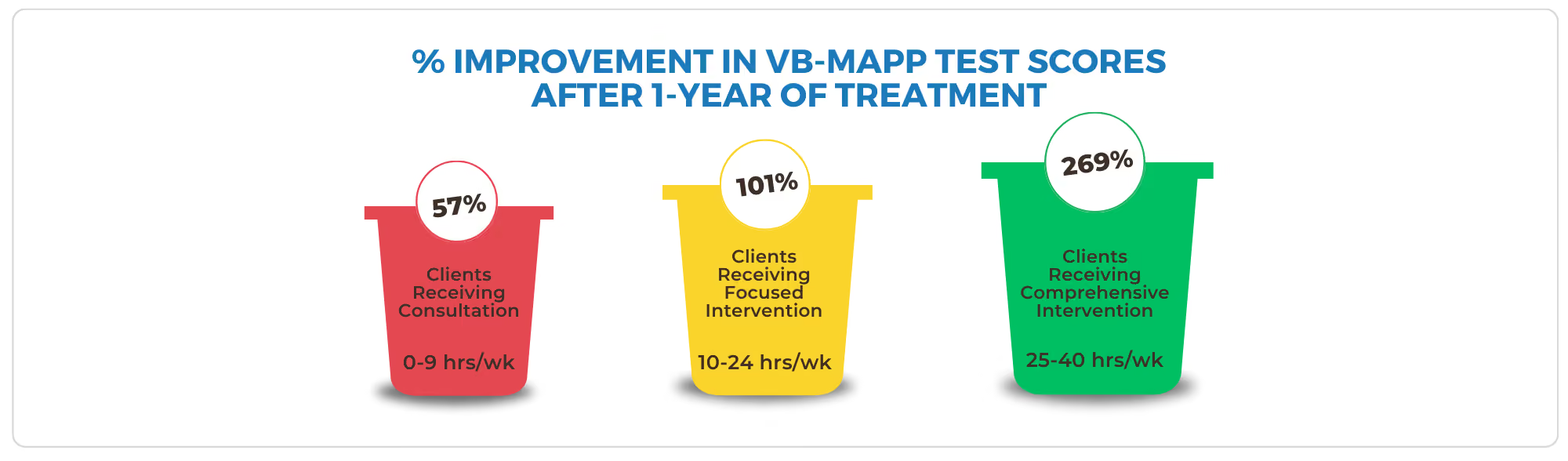
Our data shows that clients who receive more therapy hours see the most improvement in their behavior. These findings aren't just numbers; they represent hope and progress.

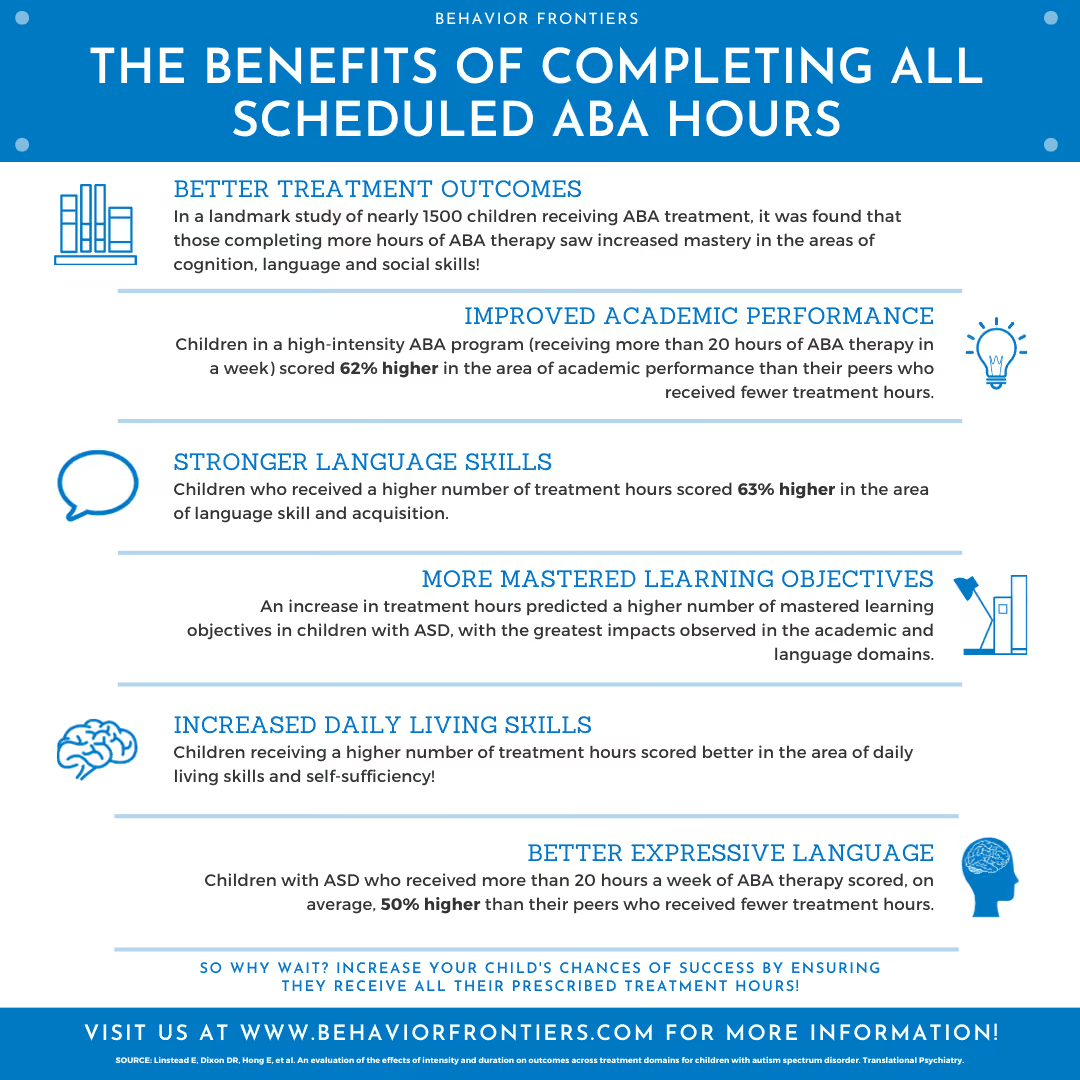
Here are some additional benefits to ensuring that your child completes all of their scheduled ABA hours:

Better Treatment Outcomes: In a landmark study of nearly 1500 children receiving ABA treatment, those completing more hours of ABA treatment saw increased mastery in the areas of cognition, language, and social interactions!

Improved Academic Performance: Children in a high-intensity ABA program (receiving more than 20 hours of ABA therapy in a week) scored 62% higher in the area of academic performance than their peers who received fewer treatment hours.

Stronger Language Skills: Children receiving a higher number of applied behavior analysis treatment hours scored 63% higher in the area of language skill and acquisition.

More Mastered Learning Objectives: An increase in treatment hours predicted a higher number of mastered learning objectives in children with ASD. The greatest impacts observed are in the academic and language domains.

Increased Daily Living Skills: Children receiving a higher number of treatment hours scored better in the area of daily living skills and self-sufficiency!

Better Expressive Language: Children with ASD receiving more than 20 hours per week of applied behavior analysis therapy scored, on average, 50% higher in the area of expressive language than those receiving fewer treatment hours.
We’re Here To Help!

You can do several things to help your child receive their full scheduled hours. Many families choose our Autism Centers for ABA therapy, especially if parents or caregivers work away from home. Center-based therapy also offers opportunities for socialization that may not be available in-home. Check out our Behavior Frontiers locations page to find a center near you!

If your child has any problems going to their ABA therapy sessions, talk to their supervisor about it. Together, we can identify solutions and ensure your child receives the best possible care.

View Our Previous Blog Posts

7 Famous People with Autism Who've Shared Their Diagnosis
September 8, 2026

7 Famous People with Autism Who've Shared Their Diagnosis

An autism diagnosis never determines your success. For many of the most creative, driven, and groundbreaking minds in history, it may have been the very thing that fueled it. An intense focus, pattern recognition, and a willingness to see the world differently are not limitations. They're superpowers. And when a person with autism is given the right support and space to grow, truly incredible things can happen.
What Is DRA in ABA Therapy? (Differential Reinforcement of Alternative Behavior)
September 8, 2026

What Is DRA in ABA Therapy? (Differential Reinforcement of Alternative Behavior)

Every time your child wants to play with a toy, they have big emotions until they get it. At school, when presented with difficult work, they might run away. These are all examples of behaviors your child might exhibit to serve a communicative purpose. They might need something or want your attention. Or maybe they just want access to an opportunity. Whatever the behavior might be—it works, so it continues. Sometimes, we as adults may reinforce these behaviors without realizing it.
The 7 Dimensions of ABA Therapy (Baer, Wolf & Risley, 1968)
September 8, 2026

The 7 Dimensions of ABA Therapy (Baer, Wolf & Risley, 1968)

What guides every intervention in Applied Behavior Analysis (ABA) therapy?The 7 dimensions of ABA.Think of ABA therapy like a multi-dimensional figure. It has many angles, perspectives, and ways to evaluate it. That is exactly what the dimensions do. They give clinicians and families a complete way to see how well an intervention is working, from every angle.
Errorless Learning in ABA: How and Why Behavior Therapists Use It
September 8, 2026

Errorless Learning in ABA: How and Why Behavior Therapists Use It

In Applied Behavior Analysis (ABA) therapy, errorless learning is a way to teach new skills by giving the right amount of support from the very beginning.When your child with autism is learning something new, mistakes are part of the process. But for some kiddos, too many mistakes too quickly can feel uncomfortable, frustrating, or discouraging. The last thing we want is for your child to shut down, guess, avoid the task, or lose confidence before the skill has a chance to grow. That's where errorless learning can help.
Stimming and Autism: What It Is, Why It Happens, and When to Support It
September 8, 2026

Stimming and Autism: What It Is, Why It Happens, and When to Support It

Have you noticed your child rocking, flapping their hands, or making the same sounds on repeat?What you’re observing is called stimming. Stimming (short for self-stimulating behavior) refers to repetitive motions, sounds, or interactions with objects, and it’s far more common than you may think. In fact, close to 44% of people with autism engage in some form of stimming.
What Are the Benefits of Center-Based ABA Therapy? What Parents Should Know
September 3, 2026

What Are the Benefits of Center-Based ABA Therapy? What Parents Should Know

If your child recently received an autism diagnosis, the next steps can feel exciting in some ways. Now, your child has access to all the support they need. But after that diagnosis comes a fresh set of questions, one of them being: what's the right next step? To help you understand if your kiddo is a good fit for center-based ABA therapy, we'll cover: the definition of center-based ABA, the benefits of center-based ABA, and the key differences between center-based and in-home ABA.
Find ABA Therapy Near Me