July 16, 2024

Virtual Summer Camp | An Awe-Inspiring ArtVenture

Virtual Summer Camp | An Awe-Inspiring ArtVenture — Behavior Frontiers

Grab your explorer's hat and your paintbrush, because we're going on an ArtVenture!

Welcome to our fourth week of Behavior Frontiers ABA summer camp. This week we're inspiring creativity and exploration through art and adventure!

Be sure to follow Behavior Frontiers on Facebook, LinkedIn, Instagram and Pinterest for more DIY crafts for kids!

Improving Cognitive Development & Fine Motor Skills through Sensory Experiences

At our Plano Autism Care Center, we help kids explore their interests and be curious about new things.

Every day, there is something new to discover at our autism therapy center. However, we're encouraging our young explorers to think beyond the four walls this week. We're going outside!

Have your toddler with autism tap into their inner adventure-seeker by crafting a set of binoculars. Our autism center in Dallas gathered step-by-step instructions for you to do at home.

Be sure to follow Behavior Frontiers on Facebook, LinkedIn, Instagram and Pinterest for more DIY crafts for kids!

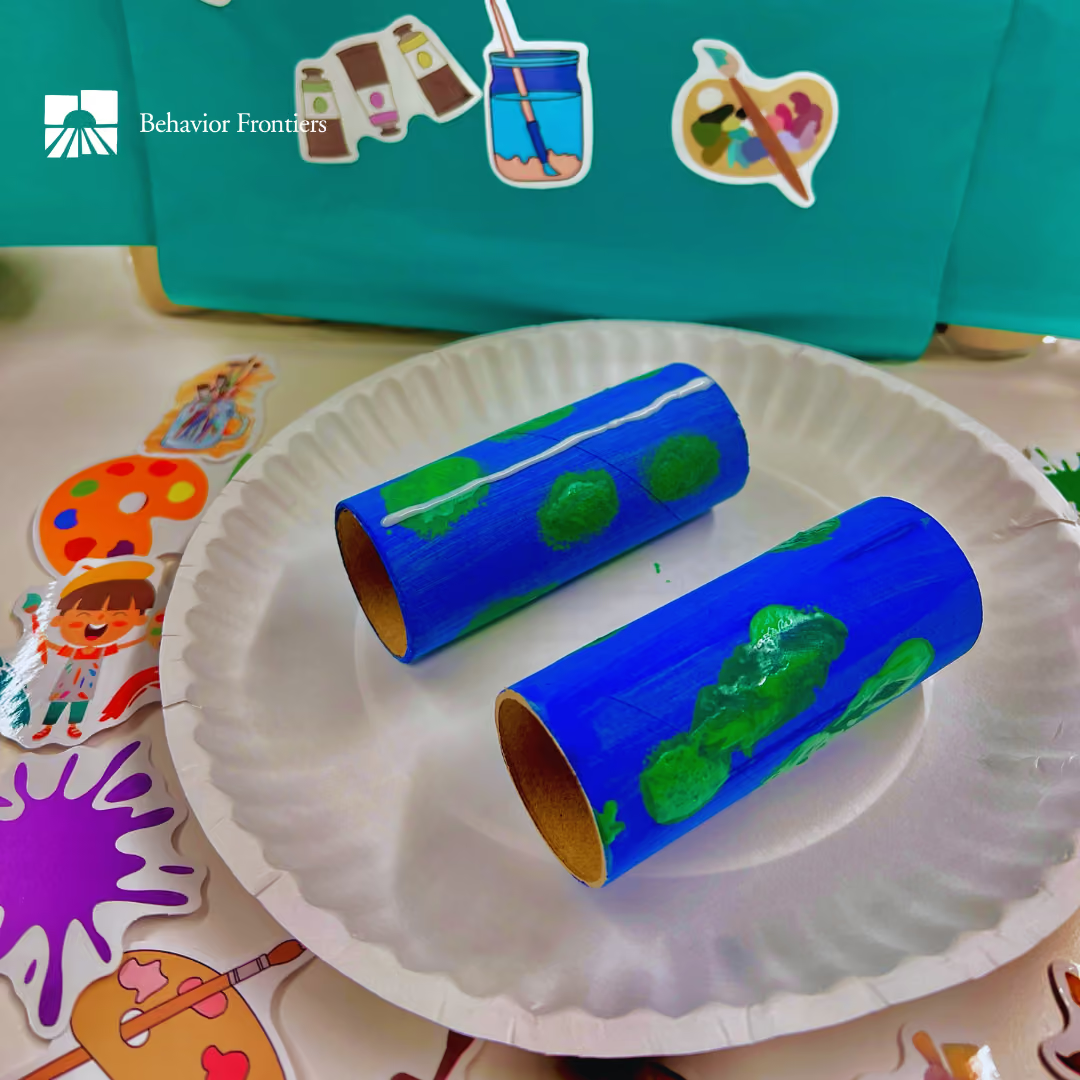
DIY Toilet Paper Roll Binoculars

These binoculars for children are an easy project to do at home. Chances are you already have these materials laying around the house! Explain to your kiddo how using toilet paper rolls for this project is a great way to reduce, reuse and recycle. Minimizing waste can make a major impact on the environment.

Step 1Gather materials: 2 toilet paper rolls, green and blue acrylic paint, paint brush, string, glue or tape
STEP 2Have a parent make one hole on the side of each toilet paper roll where you will be attaching the string
STEP 3Paint the rolls blue to resemble the ocean and let them dry.
STEP 4Step 4: Add green paint to each roll to resemble the continents and let them dry.
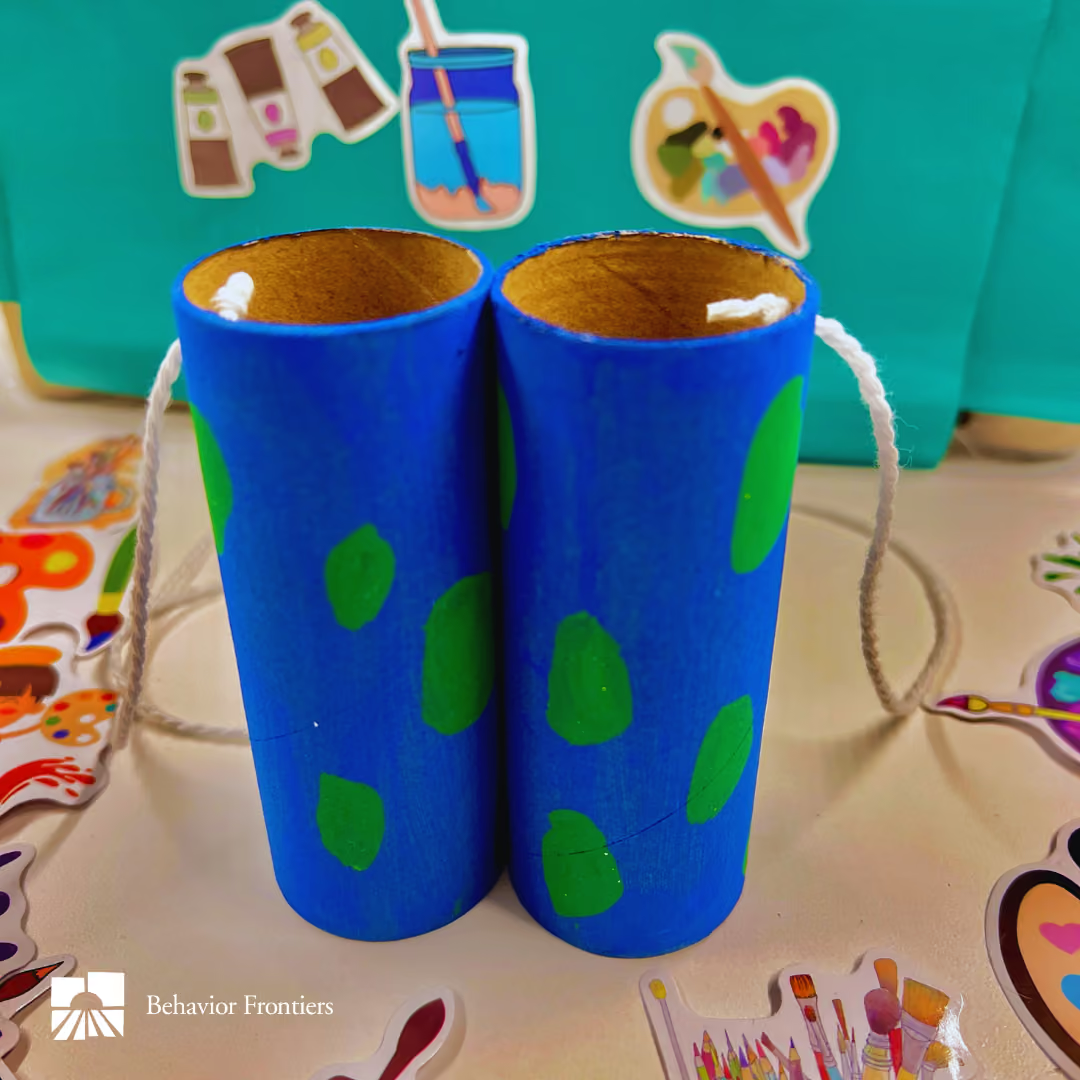
STEP 5Put glue on one roll's opposite side, with holes facing out. Attach the other roll, making sure its hole faces outward in the opposite direction. Let it dry.
STEP 6Now thread the string through the hole on the first roll, make a knot, and do the same to the other side. Now you have binoculars!

Tips for Exploring Outdoors with Your Child with Autism

Ready to take your kiddo on their first nature hike? Here are some tips from our Dallas autism center to help you have a successful outdoor adventure with your child!
Familiar Trails: exploring a trail or a park that they visited before will reduce anxiety about the unknown.

Easy and Short Walks: Start with a short walk and gradually increase as your child becomes more comfortable.

Visual Aids: Maps, videos, and pictures will help your child understand what to expect.

Social Stories: Create a social story outlining what they are about to experience! Such as, preparing for the adventure, transportation to the trailhead and what they might see or hear, etc.

Pack Essentials: Comfort items like a toy or a blanket, sensory toys, snacks, water, sunscreen, proper footwear, etc.

Manage Sensory Input: Be mindful of noisy areas and have a plan to manage them. Take breaks as needed.

Encourage Discovery: Smell flowers and plants, walk barefoot in the grass, feel the textures of different rocks, etc., to keep your child with autism engaged.

Celebrate Achievements: Congratulate your passionate young explorer for a successful adventure – no matter how small!

Want some tunes for the car ride to the trailhead or the park? Check out these family-friendly playlists sure to inspire your inner explorer!

Embrace the Adventure Before Bedtime

After a long day of exploring and creating, it's time to catch some zzz's!

Our behavioral therapists in Plano, Texas selected a few good bedtime stories featuring exciting adventures. Encourage your young explorer to wake up tomorrow ready to embark on a new journey!

Recommended Bedtime Stories:

A World Without Limits in Autism Care

Exploring new worlds and creating art are acts of discovery and wonder. Similarly, creating a world without limits for children with autism involves discovering and unlocking their hidden potential, talents, and abilities.

At Behavior Frontiers, we help kiddos shine by discovering their strengths and providing them with the skills they need to thrive!

Empower your young explorer to discover their own limitless potential! Enroll with us today!

View Our Previous Blog Posts

7 Famous People with Autism Who've Shared Their Diagnosis
September 8, 2026

7 Famous People with Autism Who've Shared Their Diagnosis

An autism diagnosis never determines your success. For many of the most creative, driven, and groundbreaking minds in history, it may have been the very thing that fueled it. An intense focus, pattern recognition, and a willingness to see the world differently are not limitations. They're superpowers. And when a person with autism is given the right support and space to grow, truly incredible things can happen.
What Is DRA in ABA Therapy? (Differential Reinforcement of Alternative Behavior)
September 8, 2026

What Is DRA in ABA Therapy? (Differential Reinforcement of Alternative Behavior)

Every time your child wants to play with a toy, they have big emotions until they get it. At school, when presented with difficult work, they might run away. These are all examples of behaviors your child might exhibit to serve a communicative purpose. They might need something or want your attention. Or maybe they just want access to an opportunity. Whatever the behavior might be—it works, so it continues. Sometimes, we as adults may reinforce these behaviors without realizing it.
The 7 Dimensions of ABA Therapy (Baer, Wolf & Risley, 1968)
September 8, 2026

The 7 Dimensions of ABA Therapy (Baer, Wolf & Risley, 1968)

What guides every intervention in Applied Behavior Analysis (ABA) therapy?The 7 dimensions of ABA.Think of ABA therapy like a multi-dimensional figure. It has many angles, perspectives, and ways to evaluate it. That is exactly what the dimensions do. They give clinicians and families a complete way to see how well an intervention is working, from every angle.
Errorless Learning in ABA: How and Why Behavior Therapists Use It
September 8, 2026

Errorless Learning in ABA: How and Why Behavior Therapists Use It

In Applied Behavior Analysis (ABA) therapy, errorless learning is a way to teach new skills by giving the right amount of support from the very beginning.When your child with autism is learning something new, mistakes are part of the process. But for some kiddos, too many mistakes too quickly can feel uncomfortable, frustrating, or discouraging. The last thing we want is for your child to shut down, guess, avoid the task, or lose confidence before the skill has a chance to grow. That's where errorless learning can help.
Stimming and Autism: What It Is, Why It Happens, and When to Support It
September 8, 2026

Stimming and Autism: What It Is, Why It Happens, and When to Support It

Have you noticed your child rocking, flapping their hands, or making the same sounds on repeat?What you’re observing is called stimming. Stimming (short for self-stimulating behavior) refers to repetitive motions, sounds, or interactions with objects, and it’s far more common than you may think. In fact, close to 44% of people with autism engage in some form of stimming.
What Are the Benefits of Center-Based ABA Therapy? What Parents Should Know
September 3, 2026

What Are the Benefits of Center-Based ABA Therapy? What Parents Should Know

If your child recently received an autism diagnosis, the next steps can feel exciting in some ways. Now, your child has access to all the support they need. But after that diagnosis comes a fresh set of questions, one of them being: what's the right next step? To help you understand if your kiddo is a good fit for center-based ABA therapy, we'll cover: the definition of center-based ABA, the benefits of center-based ABA, and the key differences between center-based and in-home ABA.
Find ABA Therapy Near Me