

Is Your Child Starting ABA Therapy? Here’s What to Expect

%2013.avif)

Your child is about to start Applied Behavior Analysis (ABA) therapy, and you’re probably wondering what comes next.
Starting ABA therapy is a big milestone for many families of children with autism. After navigating evaluations, appointments, and the diagnostic process, you’ve finally unlocked support designed to help your child build meaningful skills and reach new heights.
But, just like starting anything new, it’s natural to have questions.
How will your child adjust to ABA therapy?
What happens during sessions?
How are goals chosen?
What role will you play as a parent?
The good news is, ABA therapy is all about helping children with autism build skills that support greater independence, communication, confidence, and success at home, in school, and in the community.
While every child’s ABA path is unique, understanding what to expect can help you feel more prepared and confident as you begin this next chapter together. Just like climbing a mountain, every step will take your child closer to their goals — closer to great heights.
In this guide, we’ll walk through why ABA therapy is effective, how treatment plans are personalized, what ABA sessions typically look like, and how therapy evolves as your child grows.
Why is ABA Therapy Effective?
ABA therapy is a science-based approach that helps children with autism learn meaningful skills by understanding the reasons behind why a behavior happens. Instead of making assumptions, ABA relies on observation, assessment, and data to identify what a child needs and create a plan that supports their individual goals.
Decades of research backs up the science, too. ABA therapy is one of the most thoroughly researched and proven methods of autism care, and it’s been shown to help children with autism develop skills that improve their quality of life and independence. Through individualized treatment plans, children can build communication, social, play, self-help, and coping skills that support success at home, in school, and in life beyond.
The data also shows that early, intensive ABA therapy leads to better outcomes in communication, social skills, adaptive behaviors, and independence. However, it’s important to note that ABA therapy can help create meaningful progress at any age — so it’s important to start as soon as you can.
One of the reasons ABA therapy is so effective is that it's personalized. Every goal, strategy, and lesson is tailored to your child's strengths, needs, interests, and learning style. As your child grows and develops new skills, their therapy plan evolves alongside them.
Perhaps most importantly, ABA therapy focuses on meaningful progress. Every new word, successful transition, social interaction, or independent skill builds toward something bigger: helping your child navigate the world with greater confidence, independence, and success.
ABA Therapy Sessions are Tailored to Your Child
No two children are exactly alike, so no two ABA programs should be, either.
Before The First Session
Before your child’s first ABA session, we’ll spend some time getting to know them - their background, their behavioral challenges, and your biggest hopes for them. From there, we conduct a Functional Behavior Assessment (FBA). This is a comprehensive evaluation that helps us understand:
- What skills your child already has
- Areas where they may need additional support
- What challenging behaviors are happening and why
- What goals matter most
- What motivates your child
- What environments and circumstances help them thrive
Together, this FBA assessment helps us create a personalized therapy plan designed specifically for your child. As your child develops new skills and reaches new milestones, that plan continues to evolve to support their changing needs.
The First Session: Trust Building
Your child’s first session will be all about trust building and easing into the new routine. It’s normal for your child to be uncertain (at first), and then gradually create a strong relationship with their behavior technician (BT).
Our behavior technicians will engage in playful interactions to help your child feel comfortable. Think building blocks scattered on the floor, bubbles, or learning about your child’s favorite game. There will also be built-in sensory breaks with play-based activities to keep the session fun and light. These breaks and activities could look like playing with kinetic sand or playdough, playing a game that makes them feel at ease, or squeezing a stress ball or fidget toy.
Their BT will also use this session to learn about your child. They may sit back and observe or join in on your child’s play to see what makes them smile and feel at ease.
Ongoing Progress Tracking Through PrioraCare™
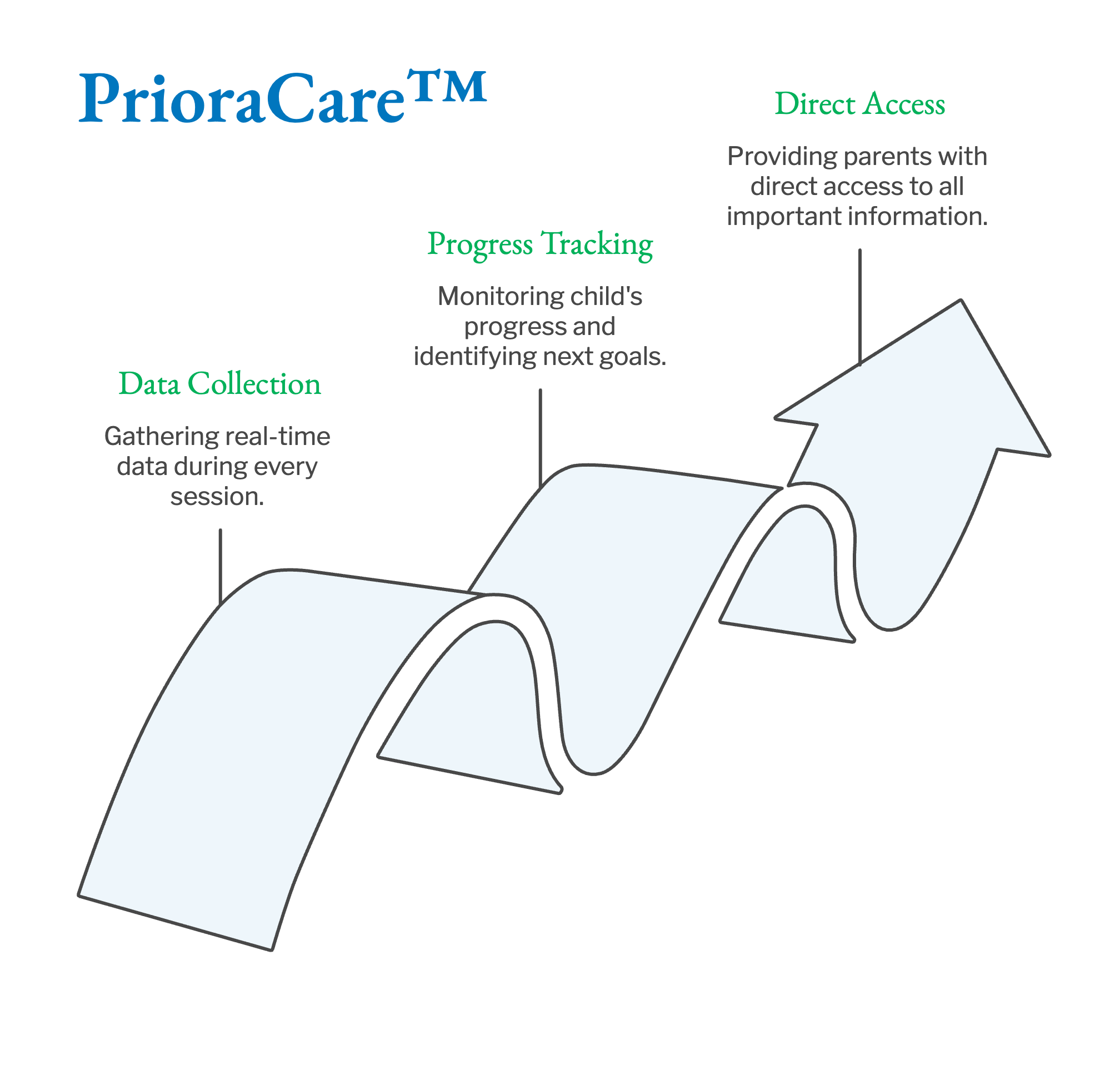
You’ll always have access to the important information. At Behavior Frontiers, we track all data in real-time through our proprietary platform PrioraCare™. From the very beginning, we’re tracking how your child is progressing, and what goals are up next. This way, you never have to wonder how your child is progressing.
Folding ABA Therapy Seamlessly into Your Routine
ABA therapy becoming part of your routine comes down to consistency. Within that consistency are tiny moments of growth, and those moments build upon each other over time. It is these tiny steps of momentum that help your kiddo reach their goals.
So while you may not see dramatic changes after one day, one week, or even one month, the change is happening in that daily rhythm. At some point (sooner than you think), we’ll become a natural part of your child’s routine. Soon, sessions will blend in so seamlessly, that it’ll feel like you’ve always had them.
Your child will start looking forward to seeing their BT. You’ll start noticing skills they’re learning showing up in everyday life. The “new” normal becomes just… normal.
Possible ABA Session Activities
The nature of ABA therapy is flexible, engaging, and intentionally built around your child’s unique needs. Sessions sparkle with your child’s originality and lean into what they need most.
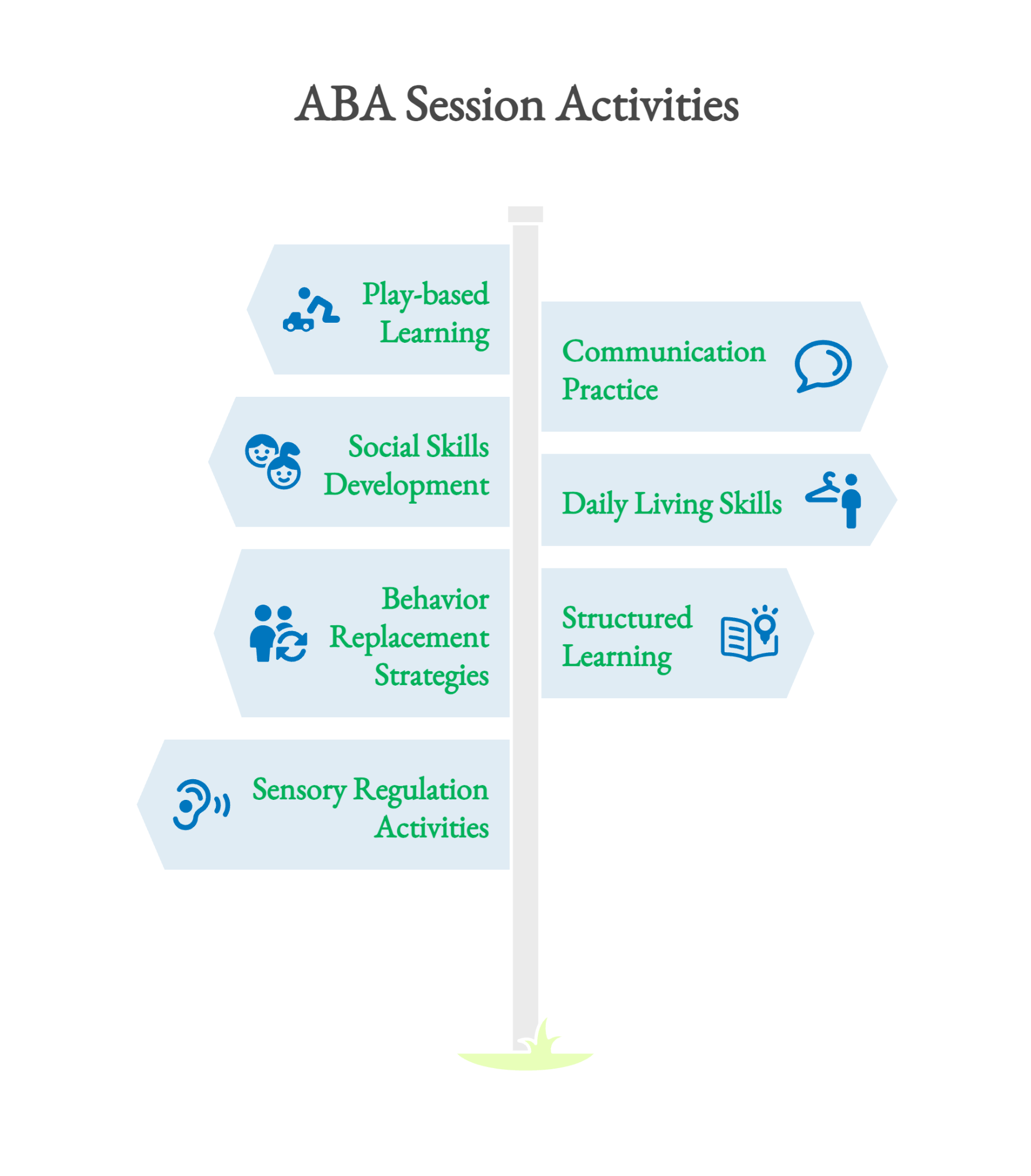
Here’s what you might see during a typical ABA session:
- Play-based learning: Learning through play is a powerful tool. So, while your child will likely be playing with toys, it’s not just that. Your child’s BT is teaching skills like taking turns, pretend play, and following directions.
- Communication practice: Communication is folded into every session. Many children work on skills like speaking their first words, expanding sentences, or learning to request what they need.
- Social skills development: Practicing peer interactions (especially at one of our state-of-the-art ABA centers), learning to read facial expressions, understanding emotions, or navigating group activities—all crucial skills taught in natural, engaging ways.
- Daily living skills: If needed, they’ll practice getting dressed, brushing teeth, washing hands, toileting, feeding, or preparing simple snacks. These practical skills build independence and confidence.
- Behavior replacement strategies: Sessions include teaching children replacement behaviors and making choices that align with their goals. For example, if your child yells when they need a snack, a replacement behavior would be something like asking with words or using a communication card.
- Sensory regulation activities: Movement breaks, sensory tools, or calming strategies (like using noise canceling headphones) might be incorporated to help your child stay regulated and ready to learn.
- Structured teaching: Lastly, your child will sit at the table with their Behavior Technician 1:1 to learn a skill. This might be following multi-step directions, specific skills, flash cards, or other readiness skills.
With ABA therapy, nothing is random. All activities are intentionally planned to provide your child with the best opportunities for growth and development.
ABA Therapy Evolves With Your Child
The goals your child begins ABA therapy with won’t always be the same. When your child begins ABA, they begin a path leading to growth. Even day-to-day sessions won’t look the same, and that’s an intentional choice.
Day-to-Day Flexibility
From session to session, activities and skill focus will shift based on what your child needs.
If your child is tired, the session might focus on lighter skills. For some children this could be completing a simple puzzle or practicing waving “hi.” If they're full of energy, their BT may push for more challenging activities. For example, this may look like going through a visual checklist of what they need for the day or practicing more specific social cues. (These examples will vary depending on your kiddo’s specific goals).
Your child’s BT is trained to read your child’s cues and adjust in the moment. And this is why it’s so important for BTs to build a trusting relationship with your child.
Long-Term Growth
Effective ABA therapy doesn’t lock your child into a program that keeps them stuck. Because as skills develop, goals should shift—growing with your child every step of the way.
A child who began ABA therapy without speech may grow to hold conversations with peers.
A child who can only play alone may grow to play with new friends.
That’s the beautiful nature of ABA therapy. It grows with your child, constantly reaching and stretching toward the next goal.
You’re Not Climbing Mountains Alone
Behavior Frontiers will help your child climb mountains through ABA therapy. At the top, the fog clears and you’re left with relief and hope. And that’s exactly what we want for your child.
Starting ABA therapy is a big step forward. There will be adjustments, learning curves, and days that feel harder than others. But there will also be breakthroughs, celebrations, and moments where you’ll be reminded that every step was worth it.
Progress of any kind is like a mountain to climb. Which is why we believe each step (even small ones) guide your child where they’re meant to go. And they’re going to beautiful places! Let us travel with you.
Ready to start the ABA therapy your child needs? Reach out to us to get started! After a brief intake, you'll be connected with a Board Certified Behavior Analyst (BCBA) to begin your child's ABA journey and build a growth plan tailored to their unique needs.