Autism Evaluation: The Step-by-Step Process Parents Should Expect



You've noticed a few things about your child. They experience the world differently than other children their age. As they’ve grown, you’re starting to notice more—and based on your observations, you’re wondering if they might have autism.
You may have already brought it up at a well-child visit, and perhaps your pediatrician recommended an autism evaluation. With those words floating around in the air, you’re sitting with an incomplete picture and might be unsure of what to do next.
Your questions might sound a little like this:
“How many appointments will this be?”
“What is the actual process?”
“How long until we get results?”
“How much will it cost?”
This guide serves to answer these questions. By the end, you’ll understand the three stages of an autism evaluation, what to expect at each appointment, how long the process typically takes, what it may cost, and where you can go for an evaluation. We’ll also explain how Behavior Frontiers can help you navigate the diagnostic process.
What Is an Autism Evaluation?
An autism evaluation is a careful, thorough look at how your child communicates, plays, and experiences the world. It happens in steps: developmental screening, a comprehensive clinical testing, and a final review where everything is brought together and explained to you.
At its core, an autism evaluation is the deeper, longer process that determines whether your child meets the criteria for autism spectrum disorder (ASD). You can think of it as a map beginning to take shape. The early stages of this process can help guide you and your child toward the support that will work best for them.
For a closer look at the specific assessment tools clinicians use along the way, read our guide to autism assessment. If you're earlier on in the process and haven't talked to anyone yet, our article about early signs of autism might also be a good place to start.
The 3 Stages of an Autism Evaluation
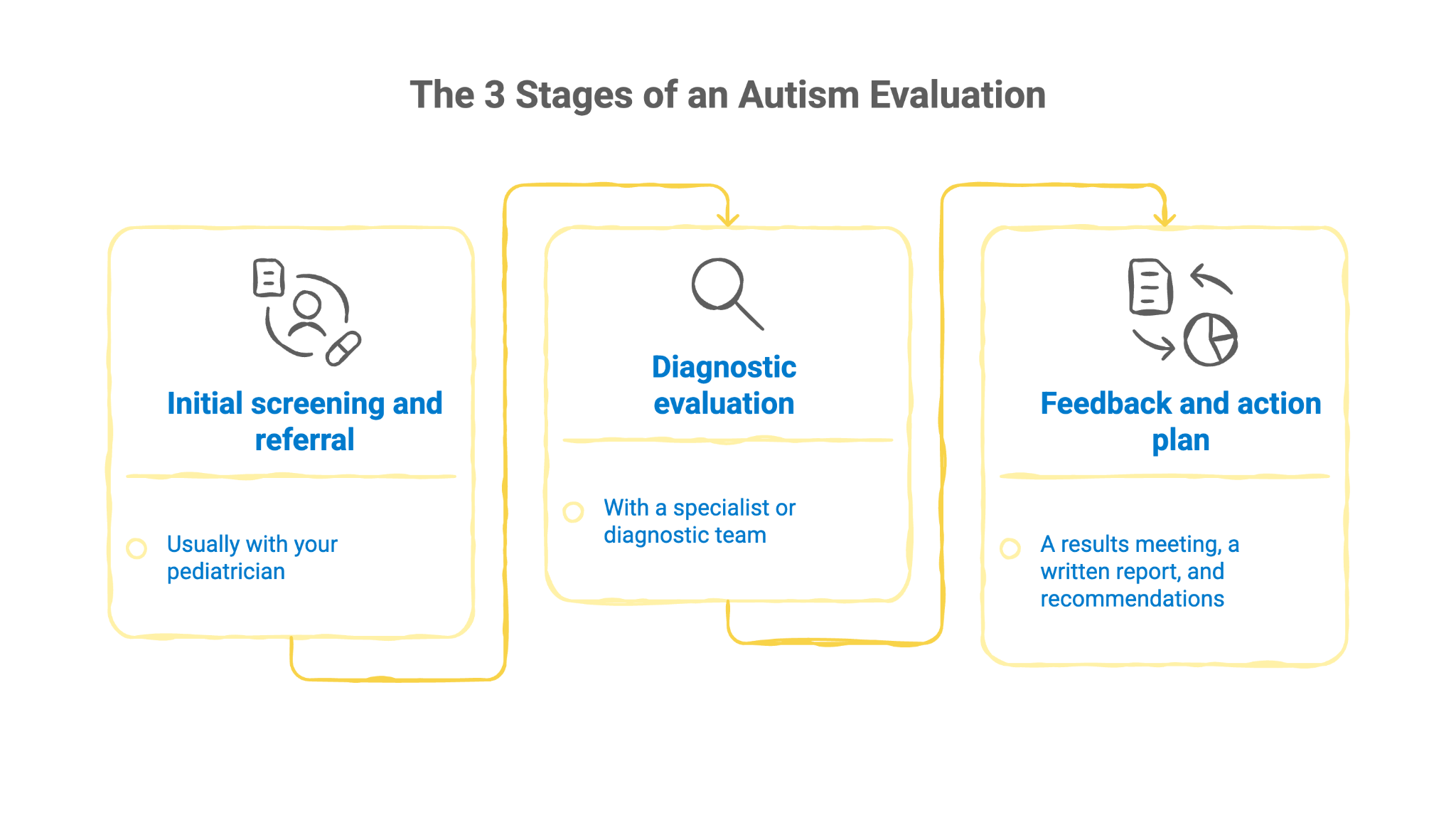
There are three main stages to an autism evaluation:
- Initial screening and referral, usually with your pediatrician
- Comprehensive diagnostic evaluation, with a specialist or diagnostic team
- Feedback and action plan, when you receive the results, a written report, and recommendations
Stage 1: Initial Screening and Referral
You've likely already started this part of the process without realizing it.
Every time you've noted a milestone, mentioned a small concern at a checkup, or made small notes about your child’s behaviors and mannerisms, you've been monitoring their development (which is kind of like detective work). This stage is often well underway long before anyone gives it a name.
The next piece is a screening questionnaire, which is a brief tool used during routine well-child visits. A few you might come across:
- Modified Checklist for Autism in Toddlers, Revised, with Follow-Up (M-CHAT-R/F): the most common screening tool for toddlers
- Ages and Stages Questionnaire (ASQ): a developmental checklist covering several skill areas
- Parents' Evaluation of Developmental Status (PEDS): a short questionnaire built around your own observations
Here's what to expect from the screening itself:
What happens in the room: Your provider asks you questions about your child and may also observe how they respond to certain things.
How to prepare: You don't need to prepare anything ahead of time.
How long it takes: The screening usually takes 30 minutes or less and is often folded right into a routine appointment.
What comes next: If the screening identifies a few things worth exploring, your pediatrician may provide a referral to a specialist.
Remember, a positive screening is not a diagnosis. It simply means a closer look is worth taking, and nothing more than that.
Stage 2: Comprehensive Diagnostic Evaluation
This appointment usually begins with background and history. This is where all those little observations you’ve made come to use.
The specialist will review:
- Medical history
- Family background
- Your child's early developmental milestones (including fairly detailed questions about their first years)
Then comes direct observation, where the clinician watches how your child plays, communicates, and interacts with others. This part often looks much more casual than you’d think. It usually looks like play, to both you and your child.
Alongside that, clinicians use standardized tools, and most use several of them together. The Autism Diagnostic Observation Schedule, Second Edition (ADOS-2) is one of the most commonly used, often paired with tools like the Autism Diagnostic Interview-Revised (ADI-R) or Childhood Autism Rating Scale–Second Edition (CARS-2).
Keep in mind, all of this can take several hours. Many providers split it across multiple visits rather than doing everything in one sitting, which tends to be easier on everyone involved.
Here are a few helpful things to bring along:
- Snacks and comfort items
- A preferred toy or two, both for the evaluation itself and for the downtime around it
- Any previous reports, evaluations, or Individualized Education Program (IEP) documents
- Your own notes and any videos you've taken of your child
Stage 3: Feedback and Action Plan
Once the evaluation is complete, the team will bring you back in for a results meeting to walk through their findings and answer your questions.
You'll also receive:
- A written report with scores
- Observations
- A clear diagnosis if the criteria are met
Make sure to keep copies of this, and find a safe, accessible place to store them. This report can help you access support services down the road.
From there, the team will recommend therapies and local resources, which often includes Applied Behavior Analysis therapy, or ABA therapy.
Whatever the results are, remember, this isn’t your kiddo’s identity. They are exactly who they have always been. Only now, you have the beginnings of a plan to help them receive the support they need.
How Long Does an Autism Evaluation Take?
Here’s what you can expect for each appointment:
- Screening: 30 minutes or less, often folded into a visit you were already having
- Diagnostic evaluation: several hours, sometimes spread across multiple visits
- Results meeting: typically a few weeks afterward
But, how long does the entire process take?
Typically, the longest seasons of waiting during this process happen between appointments, not during. Waitlists for developmental pediatricians and diagnostic clinics stretch for months in many areas, and even longer in some.
But you do have options. If you're staring down a long waitlist, Behavior Frontiers partners with licensed diagnosticians who can often provide comprehensive evaluations much faster than the typical wait.
How Much Does an Autism Evaluation Cost?
The cost of an autism evaluation varies, and there are several factors that determine this:
- Where you go: A hospital system, a private practice, and a university clinic will all price differently.
- What's included: An evaluation that adds speech, language, and cognitive testing may cost more than one that doesn't.
- Where you live: Rates can vary quite a bit from one area to the next.
As for insurance, most major plans do cover autism diagnostic evaluation as a medically necessary service. When you call to verify, ask specifically about coverage for diagnostic evaluation rather than just ABA therapy. Those are separate line items on your plan, and confirming one doesn't confirm the other.
Where to Get an Autism Evaluation
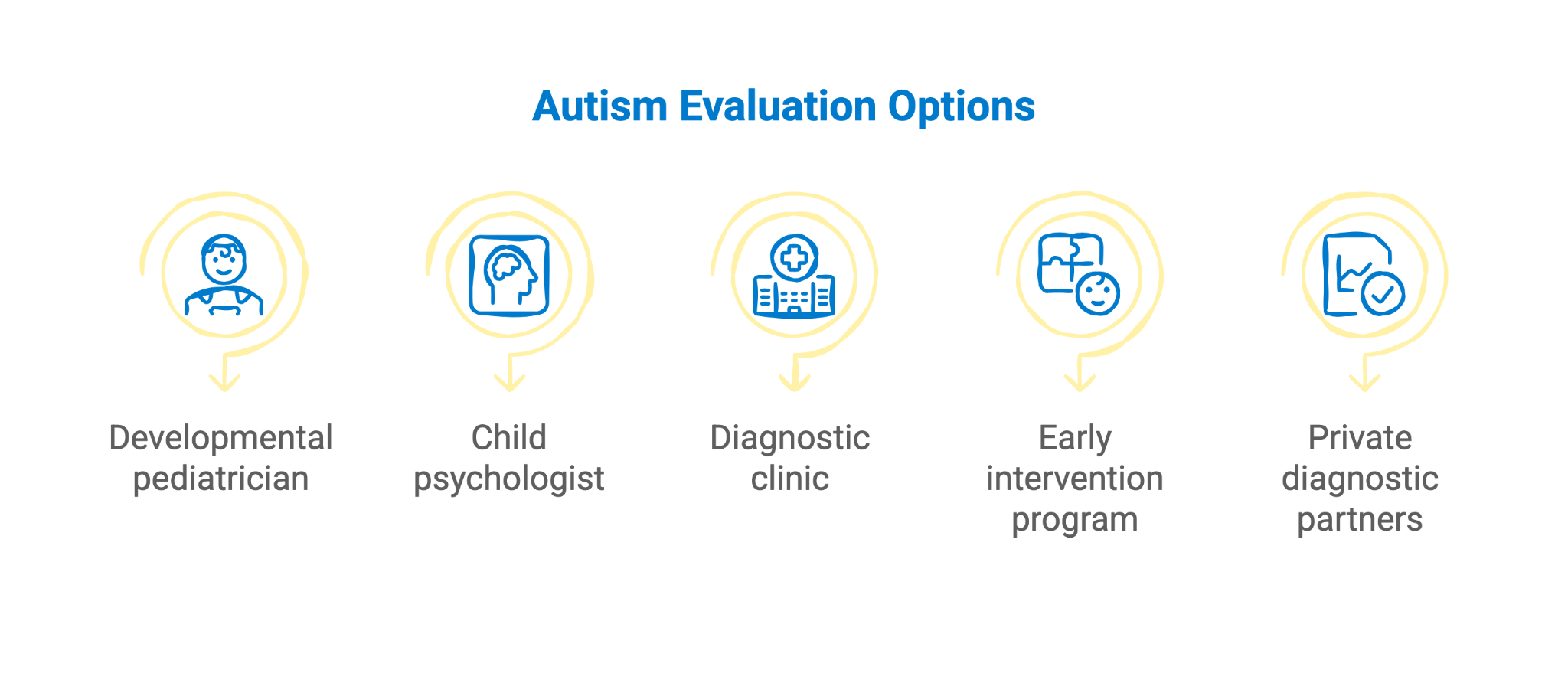
You have more options here than you might realize:
- A developmental pediatrician is the most common path, usually reached by referral. The expertise is excellent, though the wait is often the longest.
- A child psychologist or neuropsychologist may be faster to access, although it depends on your area.
- An autism diagnostic clinic brings together multidisciplinary teams, sometimes attached to hospitals or universities.
- Your state's early intervention program is free and state-run for children under 3, though it determines educational eligibility rather than providing a medical diagnosis.
- Private diagnostic partners, including the licensed diagnosticians Behavior Frontiers works with, are often the quickest route to a medical diagnosis.
For more information, read our full guide about how to get an autism diagnosis.
What Happens After the Evaluation and How Behavior Frontiers Can Help
The evaluation answers questions you’ve been holding onto for a long time. Now that they’re answered—now what?
Well, what happens next is something beautiful: Your child now has access to the support they need. And that support can look a lot of different ways.
But we know this:
Your child has progressed this far because you decided to say what you were seeing out loud. You stayed through appointments, filled out questionnaires, answered hard questions, and endured the waiting period.
And if you haven’t gone through an autism evaluation yet but are just putting the pieces in motion, we can make that process a little easier, too. At Behavior Frontiers, we partner with trusted diagnosticians who provide autism evaluations for those who qualify. Through this partnership, you may be able to get results faster than through other methods.
Contact us today to connect with one of our licensed diagnostician partners. We may be able to help you take that important first step toward understanding what your child needs.
Frequently Asked Questions
What are the typical stages of an autism evaluation for children?
There are three main stages. The first is the initial screening and referral, usually done through your pediatrician during a routine visit. Next is the comprehensive diagnostic evaluation, a longer appointment with a specialist that includes a detailed history, direct observation of your child, and standardized tools. Finally, there’s the feedback meeting, where the team explains their findings and gives you a written report with recommendations.
At what age can a child be evaluated for autism?
According to the Centers for Disease Control and Prevention, or CDC, screening can begin as early as 18 months during routine well-child visits, and a reliable diagnosis is possible by age 2. That said, you don't have to wait for a certain age to raise concerns. If something doesn't feel right to you, that's reason enough to bring it up. Your observations are useful to a clinician at any age, and they're often the most valuable information in the room.
Learn more in our guide to early signs of autism in toddlers.
Does your child need an autism evaluation to start ABA therapy?
In most cases, yes. Insurance plans typically require a formal diagnosis before they'll cover ABA therapy, since coverage is tied to medical necessity. Requirements vary by state and by plan, so it's always worth checking yours directly.