What is Autism Spectrum Disorder (ASD)?



What is Autism Spectrum Disorder (ASD)?
Autism, or autism spectrum disorder (ASD), refers to a broad range of conditions characterized by challenges with social skills, communication, relationships, and self-regulation.
And autism isn't as rare as you’d think. In fact, about 1 in 31 (3.2%) children aged 8 years have been identified with ASD, according to the Centers for Disease Control based on 2022 data.
Signs of autism usually appear by age 2 or 3. Some associated developmental delays can appear even earlier, and autism diagnosis can happen as early as 18 months. Research shows that early intervention (like using applied behavior analysis programs) leads to more positive outcomes later in life.
This is exactly why early intervention is recommended, however, intervention is helpful at any stage.
Signs and Symptoms of Autism
Autism shows up differently in every child, but there are common patterns to keep an eye out for.
Typically, a child is diagnosed with autism (by a diagnostician or other professional) when they have six or more symptoms from three different areas (communication, social interaction, and repetitive or inflexible behaviors).
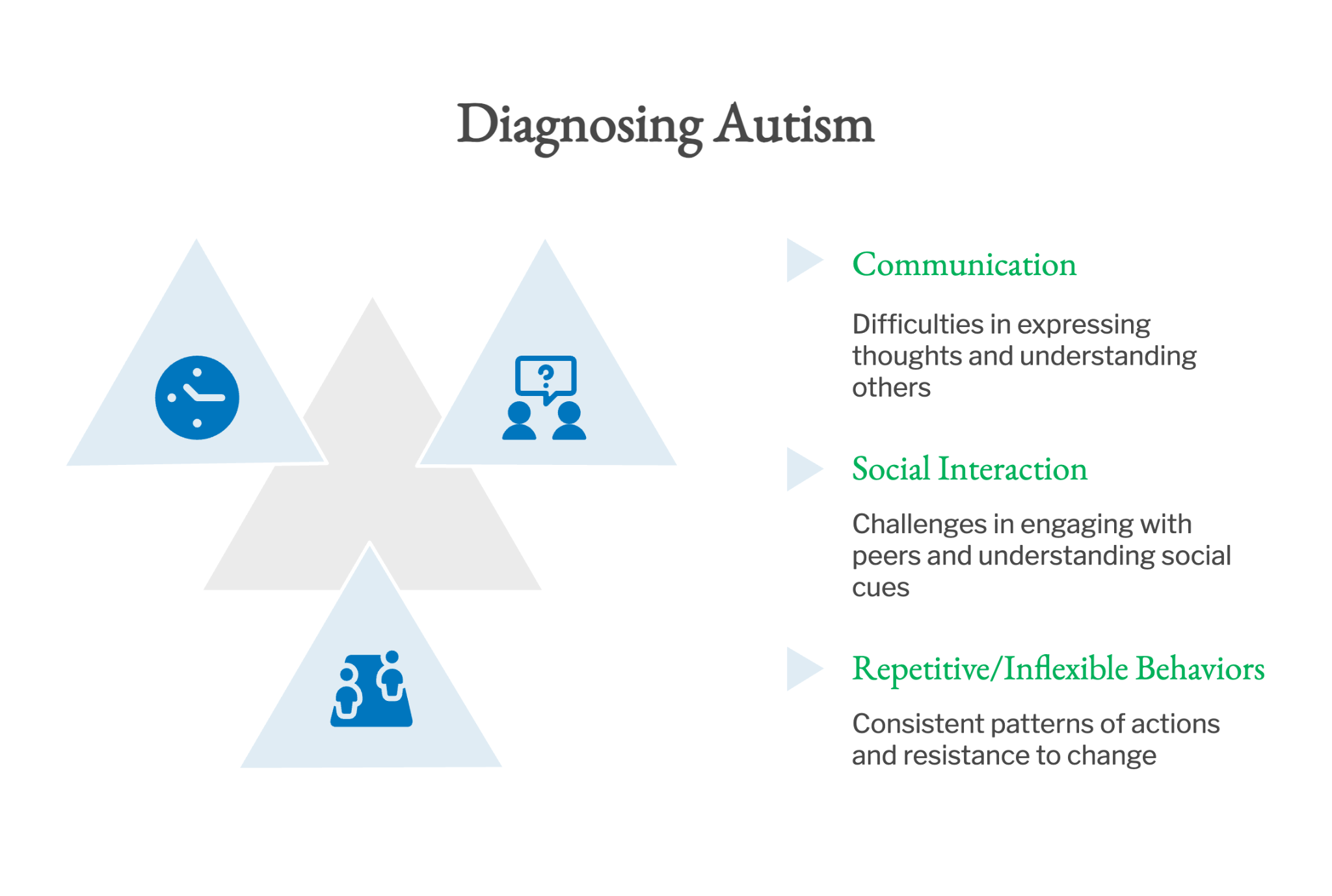
Area 1 - DIfficulty with Communication
You might notice your child has:
- Limited or no spoken language (some children are nonverbal)
- Language delays compared to peers
- Difficulty starting or continuing a conversation
- Inflexible and repetitive language (also called “videotape talk,” or scripting)
- Trouble imitating others
- Difficulty playing make-believe with toys
For a diagnosis, a child needs one or more communication difficulties from this category.
Area 2 - Challenges with Social Interaction
Social challenges are often one of the first things parents may notice. Your child might show:
- Poor or limited eye contact
- Not responding to their name when called
- Not pointing out items of interest to share with you
- Difficulty understanding or using gestures
- Trouble with peer relationships or difficulty making friends
- Preference to be alone rather than around other people or children
For a diagnosis, a child needs two or more challenges with socialization.
Area 3 - Repetitive or Inflexible Behaviors
These behaviors can look different depending on the child, but common patterns include:
- Following rigid, non-functional routines
- Insisting on doing the same thing every time (like taking the exact same route to school)
- Obsessions with inflexible and limited interests
- Obsessions with parts of objects (like only playing with wheels on toy cars)
- Repetitive play (spinning toy car wheels, lining up toys in specific orders)
- Unusual obsessions (only wanting to wear truck shirts, only wanting to use the color green)
- Inflexible and repetitive body movements, also called self-stimulatory behaviors or “stimming”
For a diagnosis, a child needs one or more repetitive or inflexible behaviors.
Self-Stimulatory Behaviors (SSBs or “Stimming”)
Stimming is a natural way many children with autism regulate their sensory and emotional experiences. These behaviors can act as a “self-reward,” regulation, or pleasure. They aren’t harmful at all.
Common types include:
- Body movements: jumping in place, hand flapping, toe walking, or spinning in circles
- Visual: eye gazing, peripheral eye gazing, watching items spin or fall, or looking at items lined up
- Auditory: repetitively making sounds in order to hear them
- Oral: playing with saliva, putting fingers or objects in their mouth, or grinding their teeth
- Tactile: seeking out favorite materials to touch (like soft or fuzzy items)
- Smell: picking up items and smelling them or smelling their hands
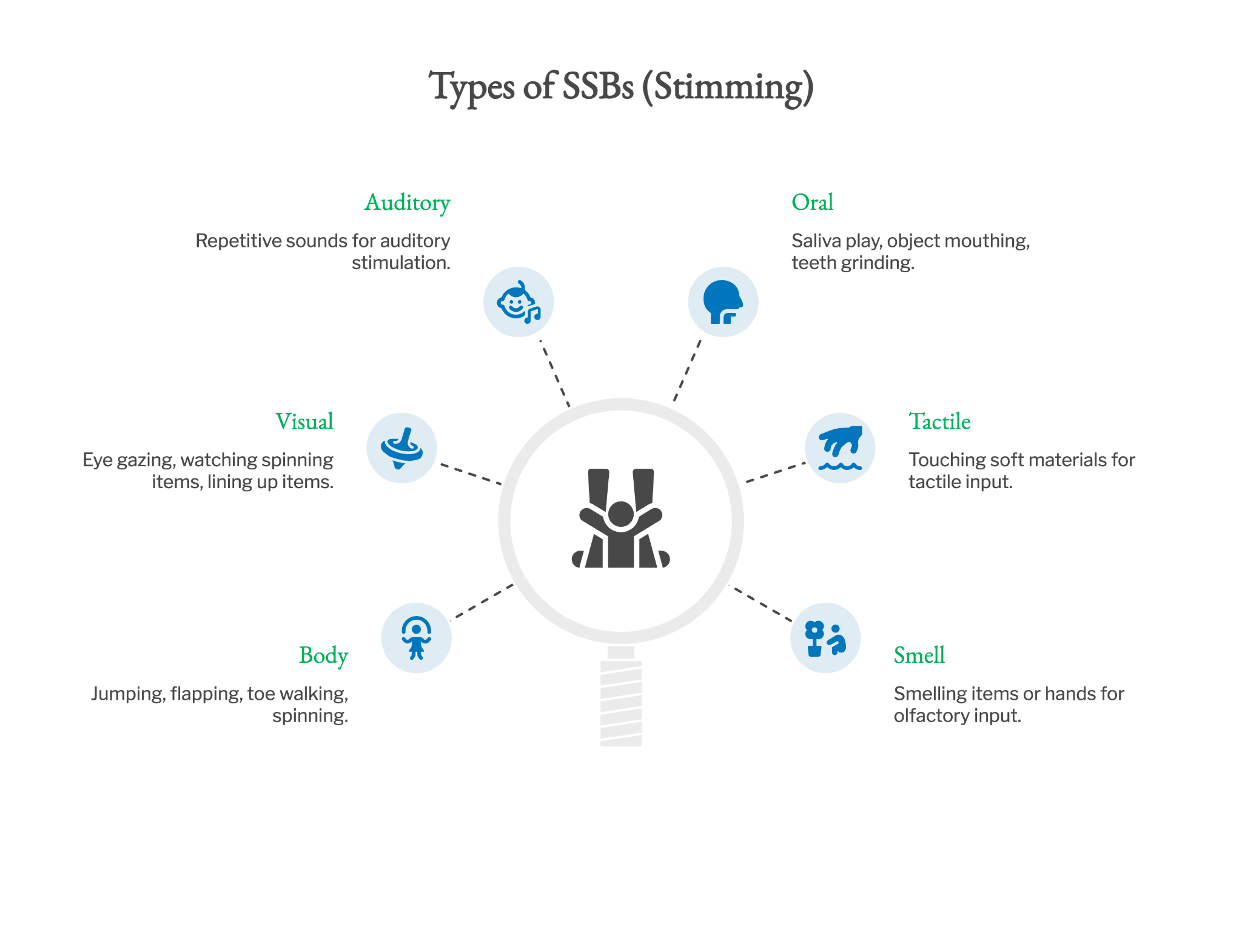
Different types of stimming.
Are There Types of Autism?
So are there different “types” of autism? Well, there isn’t exactly a cut-and-dry explanation. Since 2013, we categorize and define autism differently (for example, you may have heard the term “Asperger's” to describe autism in the past).
However, in a recent study from Nature Genetics, researchers analyzed data from over 5,000 children. They didn’t isolate single traits, but rather grouped the children based on social behaviors, developmental milestones, co-occurring conditions, and other traits.
This study revealed four possible subtypes of autism:
- Social and behavioral challenges (37%): social challenges and repetitive behaviors, but developmental milestones still reached
- Moderate challenges (34%): milder core autism traits, with milestones also typically reached on time
- Mixed ASD with developmental delay (19%): delays in early milestones alongside some social issues or repetitive behaviors
- Broadly affected (10%): most severe challenges including developmental delays, communication difficulties, and some mental health disorders
When your child has autism, they’re wired differently than most. But since the patterns of “brain wiring” vary from one person to another, symptoms can look very different from person to person (and can’t be contained with strict boxes). This is why autism is best understood as a spectrum.
This study lends to the fact that we should think about the autism spectrum as less of a single line going from “less severe” to “more severe,” but rather a color wheel. Each color represents a different symptom, and the shade or saturation of each color represents the intensity of that symptom for your child.
So, are there really types of autism? Technically, yes. But, it’s not black and white. A variety of symptoms exist which carry levels of intensity that affect a person’s ability to function in the world.
Because of this, your kiddo may need different levels of support, specific accommodations, and personalized approaches to allow them to achieve goals (compared to others also diagnosed with autism). No one travels the same exact path.
Early Intervention For Autism = Best Outcomes
A child's mind is flexible. The younger they are, the higher their brain plasticity is. Meaning they are more adaptable and available to learning new things. Their brains are open, moldable, and ready to absorb new skills and connections.
Children’s brains have higher plasticity.
But, don’t worry. If you’ve already passed the “early intervention” timeframe with your kiddo, the most important step is to start. Intervention at any stage is helpful and will allow your child to reach their goals.
Receive a Quick, Reliable Autism Diagnosis
Still unsure if your child has autism? We know living in the unknown is a foggy experience.
At Behavior Frontiers, we partner with some of the best diagnosticians to bring you the answers you need. If you’re ready to take the first step and you’re ready to start ABA therapy following a diagnosis, contact us to receive all the details about our diagnostic services.
And once you have a diagnosis in hand, ABA therapy is there to help your child build the skills, tools, and confidence they need to thrive.
Frequently Asked Questions
What causes autism?
We don't have a solid answer for you. There are known “risk factors,” but we haven't zeroed in on main causes for autism. Research continues, but the truth is we're still learning what combination of genetic and environmental factors contribute to autism spectrum disorder.
Why is autism on the rise?
Three main reasons explain the increase in autism diagnoses:
- Changes in diagnostic criteria: The definition of autism has expanded over time to include a broader range of presentations.
- Improved screening tools and procedures: We're better at identifying autism now than we were 20 or 30 years ago.
- Increased awareness: Parents, pediatricians, teachers, and early intervention specialists know more about what to look for, leading to earlier and more accurate identification.
How does getting an autism diagnosis work?
At Behavior Frontiers, we partner with a network of licensed diagnosticians to provide autism evaluations for those ready to start ABA therapy following a diagnosis
You can also read more about what happens during the evaluation process in our blog post about autism assessments.