

What Is DRA in ABA Therapy? (Differential Reinforcement of Alternative Behavior)

%2013.avif)

Do any of these behaviors sound a bit familiar?
Every time your child wants to play with a toy, they have big emotions until they get it.
At school, when presented with difficult work, they might run away.
At home, they may grab food off the counter without asking.
These are all examples of behaviors your child might exhibit to serve a communicative purpose. They might need something or want your attention. Or maybe they just want access to an opportunity. Whatever the behavior might be—it works, so it continues. Sometimes, we as adults may reinforce these behaviors without realizing it.
In ABA therapy, we use one type of differential reinforcement to help address these behaviors rooted in communicative needs: Differential Reinforcement of Alternative Behavior (DRA).
Differential reinforcement is a core ABA principle used across many different settings – from classrooms to parenting to supporting kids with ADHD or other developmental needs. Here, we’re focusing on how DRA specifically helps children with autism build more effective ways to communicate their needs through ABA.
This type of differential reinforcement is one of five types used in ABA therapy. While all types of differential reinforcement are designed to build more effective behaviors, DRA reinforces an appropriate alternative behavior that serves the same purpose as the behavior being addressed.
Consider this your access to an in-depth look at DRA, including how it could help your child, practical DRA examples, and how it compares to other types of differential reinforcement.
What Is DRA?
DRA stands for “Differential Reinforcement of Alternative Behavior” and is a type of differential reinforcement. It zeros in on the target behavior and selects an alternative behavior that serves the same purpose.
For example, let’s say your child hits an adult or peer when they want access to a toy. They need a way to communicate without hitting. So instead, they are taught a new alternative behavior to gain the toy they want: lightly tapping the person who has the toy.
This way, the lightly tapping behavior replaces the hitting behavior. It still communicates their desire for the toy, but in a more successful, gentle way.
In understanding DRA, it also helps to picture this:
Your child’s behavior is at the tippy-top of an iceberg. At this point, it’s the only thing you see—an obstacle that you’re not entirely sure how to pass. But beneath the surface are clues that can help explain why your child is exhibiting a particular behavior.
Oftentimes, the reason behind their behavior could be this: They need to communicate with you. (Which is where DRA helps most).
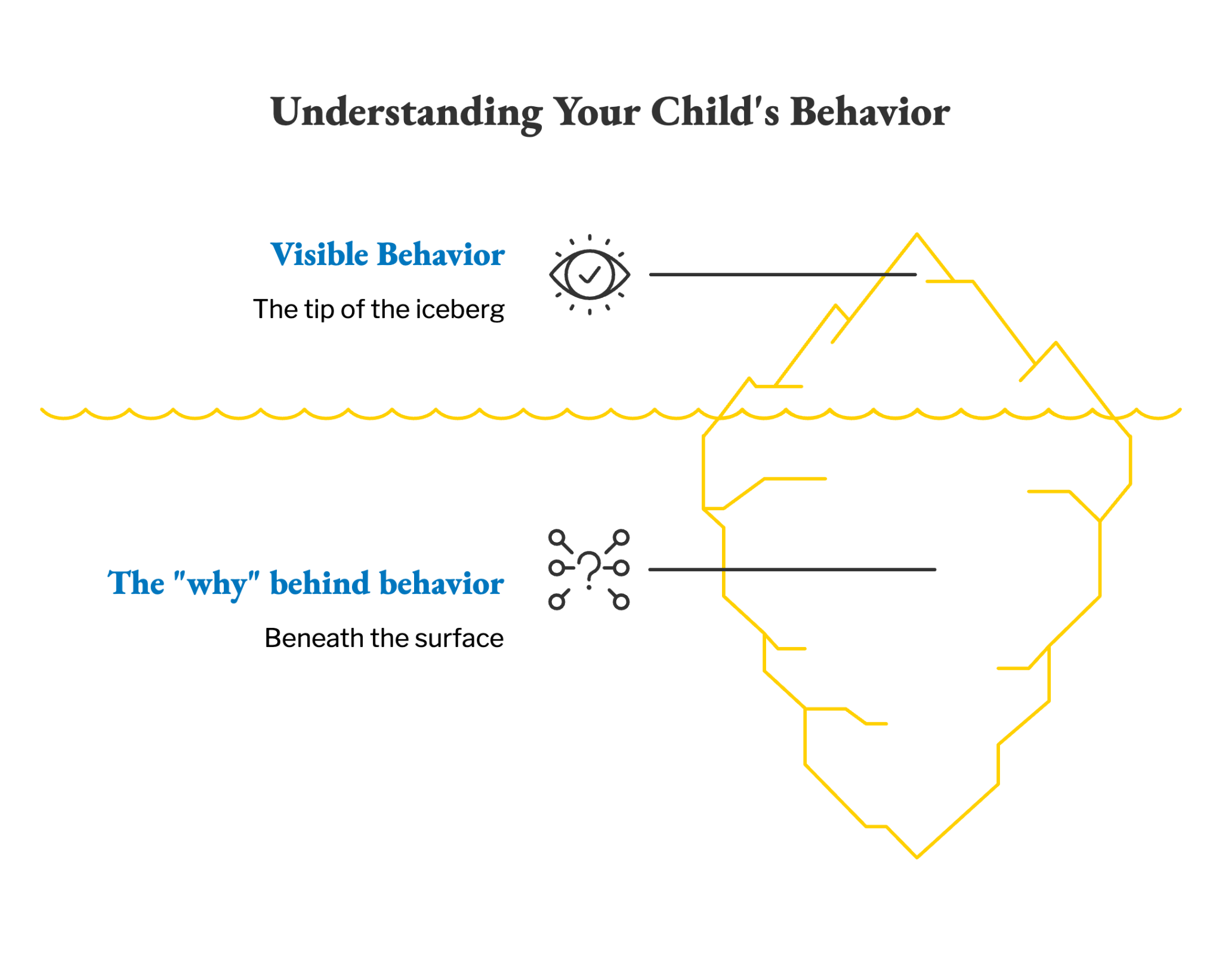
Before we can assume the reason behind your child’s behavior (the below-the-surface part of the iceberg), we need to do a little digging. That’s why, at Behavior Frontiers, we always conduct a functional behavior assessment (FBA) before we start any autism care or intervention programs. This in-depth assessment involves observations, interviews, and more to give us enough data to make a decision.
When we get to the true “why” behind your child’s behavior, real doors can open. And real change can happen. We’re here to help.
How Does DRA Work?
What are the moving parts that make DRA work to help your child with autism build more effective behaviors to communicate their needs?
Well, it’s far from a random experiment. It’s rooted in data, decades of research, and established ABA principles.
Here’s the process that goes into it:
- Identify the function of the target behavior. Going below the “iceberg” is important. You need to understand the “why” behind their behavior before an alternative behavior can be taught (for example: they want your attention or access to a favorite toy).
- Select an alternative behavior. This new behavior should meet the same need as the target behavior, giving your child a more appropriate way to get what they need (for example: instead of running away from an undesired task, they give you a break card).
- Reinforce only the alternative behavior consistently. This might mean using a token system, praise, preferred activity, or another meaningful reinforcer your child enjoys. This step is irreplaceable because consistency and accuracy working in harmony makes DRA effective. Without that harmony, DRA wouldn’t work.
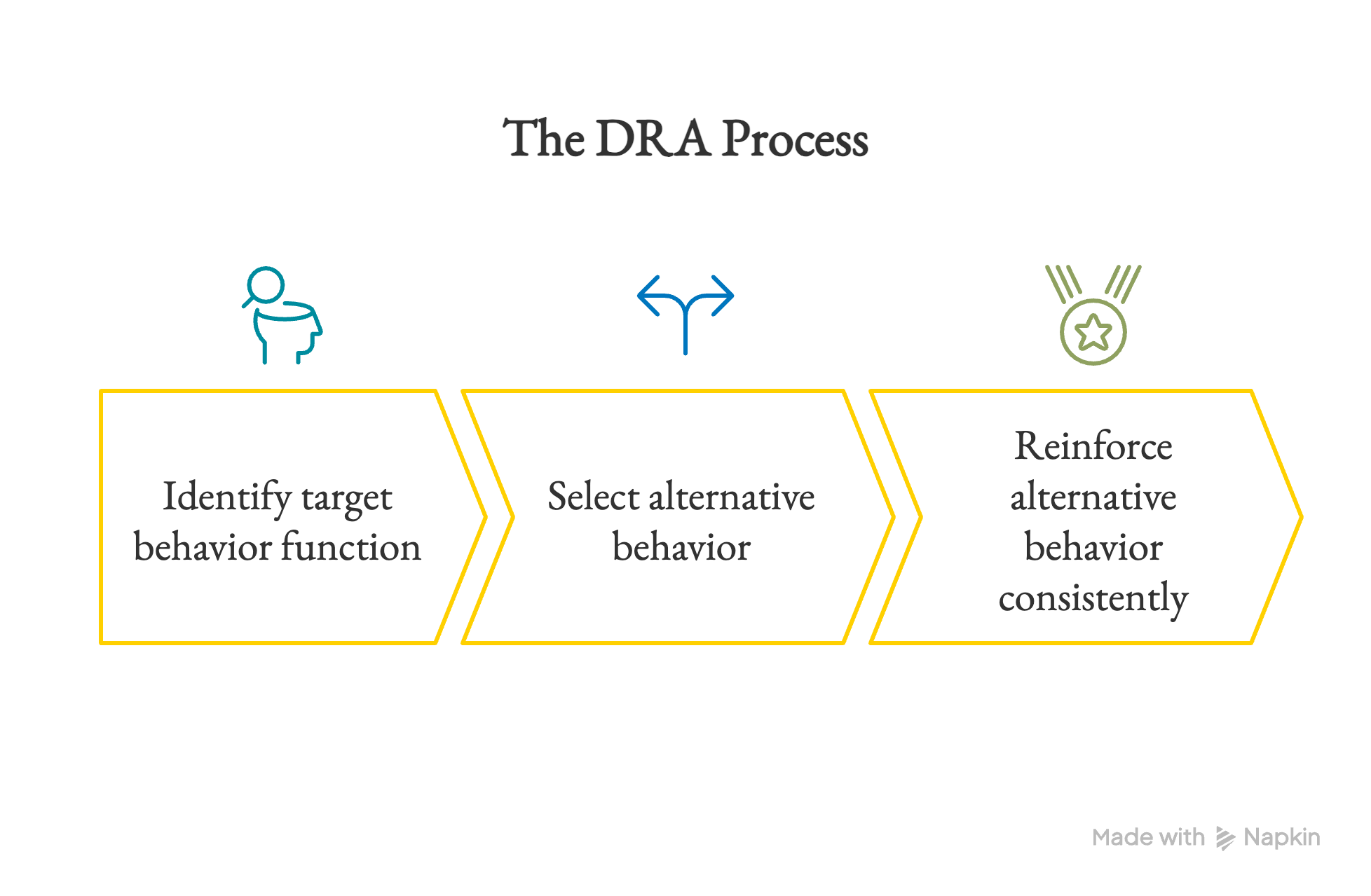
Following this process, the alternative behavior proves itself to be more efficient and rewarding than the original behavior causing issues. That initial behavior loses its purpose, and the alternative behavior fully replaces it.
This process takes time (it likely won’t happen overnight), so patience is a required ingredient. But little by little, progress builds – and over time, you’ll start to see your child responding in new, more effective ways.
DRA Real-Life Examples
Your child’s BCBA or Behavior Technician will always adjust the implementation of DRA depending on your child’s specific behavior and needs. Let’s bring a few examples to life, and from there you can see how DRA works in everyday scenarios.
You’ll notice the same pattern in each of these examples:
Identify target behavior → Understand the “why”→ Select alternative behavior → Reinforce → Reflect
Example 1: Screaming to get a toy
Target behavior: Every time your child wants to play with a desired toy, they resort to screaming at a peer or an adult until they receive the toy.
The “why”: Your child wants to communicate they want the toy, and they know screaming to get the toy usually works. So, the behavior continues.
Alternative behavior: Instead of screaming, we will reinforce the behavior of asking for the toy nicely.
Reinforcement: Your child’s BCBA or Behavior Technician rewards your child with a sticker on a chart every time they ask for a toy nicely instead of screaming.
Reflection: Now, your child still receives what they desire (the toy), and asking nicely has become their new way of getting it.
Example 2: Running away from difficult work
Target behavior: At school during math time, your child runs away from their desk when presented with an assignment.
The “why”: Your child is communicating they think math is difficult and they need a break. Running away from their desk usually results in a break, so the behavior works.
Alternative behavior: Instead of running, we will reinforce the behavior of using a break card when they need a break from math work.
Reinforcement: Your child’s BCBA or Behavior Technician rewards your child with five minutes of a preferred activity every time they use their break card during math time (instead of running).
Reflection: Now, your child still receives what they need (a break), and using a break card has become their new way of getting it.
Example 3: Grabbing food without asking
Target behavior: Your child grabs food from the table, refrigerator, and pantry without asking.
The “why”: Your child is communicating that they’re hungry and want something to eat. Grabbing food from these locations seems to result in getting food, so the behavior works and continues on.
Alternative behavior: Instead of grabbing, we will reinforce the behavior of asking an adult for permission before eating food.
Reinforcement: Your child’s BCBA or Behavior Technician rewards your child with a piece of their favorite candy every time they ask for permission to get food from an adult.
Reflection: Now, your child still receives what they need (food), and asking for permission has become their new way of getting it.
No matter the real-life situation, your child’s BCBA or Behavior Technician will always reflect on the process, track data, and make adjustments as needed to support their success.
At Behavior Frontiers, we track all data in real-time through our proprietary clinical outcomes platform, PrioraCare™. From the very beginning, we monitor your child’s progress and identify which goals are up next. This way, you never have to wonder how your child is doing.
When Is DRA the Right Choice?
DRA isn’t always the right choice for every behavior. It’s best used for certain behaviors and situations.
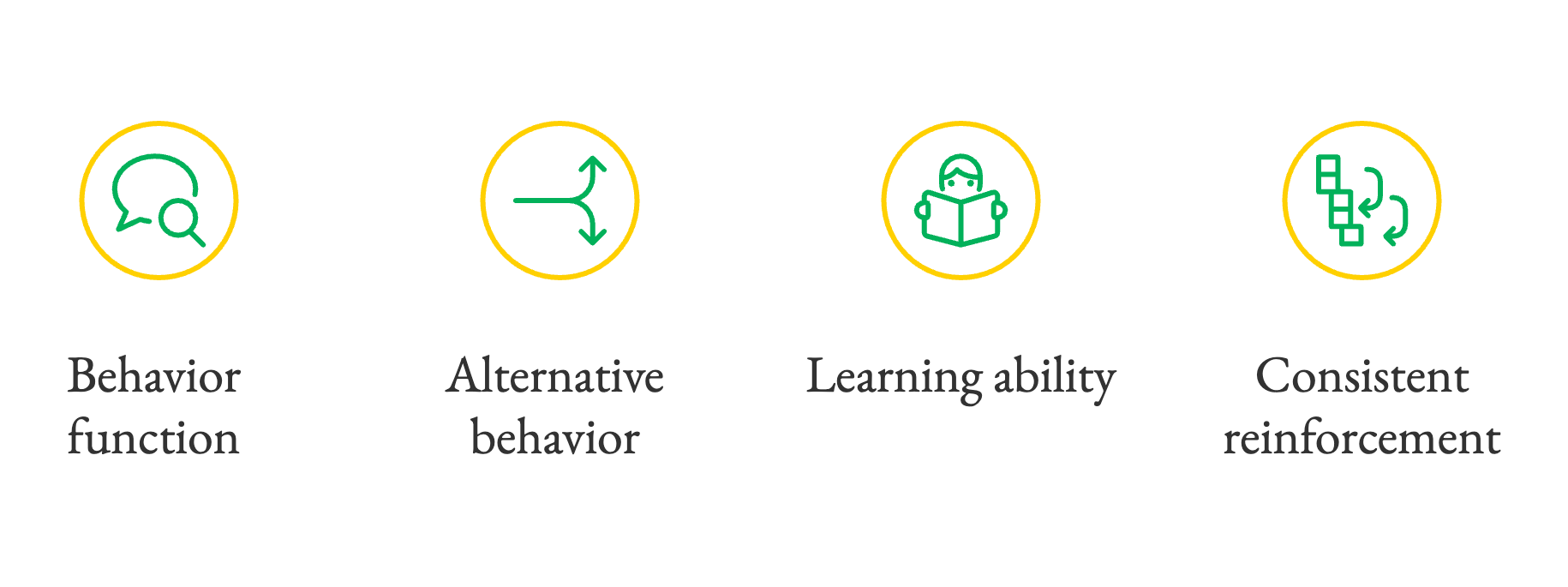
DRA results in the best outcomes for your child when these factors align:
- The function of behavior (the “why”) is clearly identified through an FBA and rooted in a communicative purpose
- There is a functionally equivalent alternative behavior to replace the target behavior
- Your child has the ability to learn the specific alternative behavior
- Reinforcement can be delivered consistently across all settings (home, school, ABA center, etc.)
DRA vs. DRO, DRI, DRL, and DRH: What Is the Difference?
Differential reinforcement isn’t limited to one type. In fact, there are five types of differential reinforcement, and each is a powerful tool in helping build more effective behaviors.
The differences between them are nuanced and designed for different behaviors and situations. While some types may seem similar, their slight nuances make a big difference in how well they support your child’s daily life.
Let’s go through how they compare and how each could help your child depending on their behavior and situation.
DRADRIDRODRLDRHWhat you reinforceAn alternative behavior that serves the same functionA behavior that physically cannot occur at the same time as the target behaviorThe absence of the target behavior for a set timeReduced but not eliminated rates of the behaviorThe target behavior occurring at or above a set rate within a given time periodBehavior replaced?Yes, with a functionally equivalent alternativeYes, with a physically compatible oneNo replacement neededNo, just reducedNo, you're increasing a behavior your child already does, no replacementBest forCommunicative behaviors: attention-seeking, escape, or access to tangiblesUnsafe motor actions, aggression, or elopingHigh-frequency or hard-to-replace behaviorsAppropriate behaviors that happen too oftenBehaviors your child already does, but you want to see more of themExampleChild screams for food → taught to ask nicelyChild elopes at lunchtime → reinforced to ask for a breakChild reinforced every time they don’t screamChild raises hand 30 times per class → reinforced when it drops to 10 or fewerChild raises hand to answer but rarely does → reinforced when raising hand 3+ times in 30 minutes
If you want a more in-depth guide on the differences between the four types, read our guide all about differential reinforcement.
What DRA Looks Like at Behavior Frontiers
In ABA therapy, using Differential Reinforcement of Alternative Behavior is a procedure, yes. But it’s also rooted in humanness, compassion, and allowing your child to be fully seen.
It honors each part of them—their needs, desires, and what they care about most. Your child deeply wants to communicate with you. This support is what they deserve.
At Behavior Frontiers, our job is to make communication a lot easier for your child. We partner with you to help your child build more effective behaviors, using a specific-to-them treatment plan that aligns with your child’s goals and needs.
If you would like to learn more about how we use DRA and other evidence-based strategies to help your child with autism learn new skills, reach out to us. After a brief intake, you’ll be connected with a BCBA to begin building a plan designed around your child's unique needs.
Frequently Asked Questions
What does DRA stand for in ABA?
DRA stands for Differential Reinforcement of Alternative Behavior. Being one of the five types of differential reinforcement, this particular type helps best with behaviors rooted in communicative needs. While using DRA as an intervention, a target behavior is replaced with an alternative behavior that serves the same function. The alternative behavior is reinforced throughout the entire process.
What is an example of DRA in ABA?
A child screams every time they want a preferred snack. The screaming works, so it continues. Using DRA, a BCBA teaches the child to ask for the snack nicely instead. Every time the child asks appropriately, they receive a sticker on their reward chart. The function stays the same (getting the snack). But, the method changes. Over time, asking nicely fully replaces screaming.
What is the difference between DRA and DRI?
DRA reinforces any alternative behavior that serves the same function as the problem behavior. The alternative does not need to be physically incompatible with the problem behavior—it just needs to be a better path to the same outcome.
DRI, on the other hand, specifically reinforces a behavior that cannot physically occur at the same time as the problem behavior. For example, sitting in a chair is incompatible with standing on it. In other words, both cannot happen simultaneously. DRA is a little more flexible while DRI is more specific.
What is the difference between DRA and DRO?
DRA reinforces a specific alternative behavior that meets the same need as the challenging behavior. There is always a replacement behavior involved. DRO reinforces the absence of the challenging behavior for a defined period of time (no specific replacement behavior required).
DRA is the better fit when the behavior has a clear communicative function and a meaningful alternative behavior can be taught. DRO tends to be a better fit for high-frequency or severe behaviors where identifying a single replacement behavior is more difficult.
When is DRA used in ABA therapy?
DRA is used when a target behavior is serving a communicative function—meaning the child is using the behavior to get something, avoid something, or communicate a need.
Before DRA is implemented, a BCBA conducts a functional behavior assessment to identify the function or the “why” behind the behavior. That function drives every decision about which alternative behavior to select and how to reinforce it. Without understanding the function first, DRA cannot be designed effectively.
Can DRA be used at home?
Yes. With caregiver training, families can implement DRA strategies at home to support the same replacement behaviors being taught in therapy. Consistency across environments is a key ingredient here.
Where can I find behavioral health clinics specializing in DRA and ABA therapy for children with autism?
If you’re looking for a provider that uses DRA as part of a comprehensive, individualized ABA program, the most important thing to look for is a team led by Board Certified Behavior Analysts. BCBAs are specifically trained in behavior analysis, including differential reinforcement procedures, and are qualified to conduct the functional assessments and therapy plans that make DRA effective.
At Behavior Frontiers, DRA is one of many evidence-based strategies our BCBAs use to support children with autism. Every program begins with a functional behavior assessment, and every plan is built around your child's specific needs, behaviors, and goals. Reach out to us to get started.