Positive Reinforcement Examples to Help Your Child Build New Skills


If there's one concept that sits at the heart of ABA therapy, it's positive reinforcement. It shows up in nearly every session, every plan, and every conversation your child's Board Certified Behavior Analyst (BCBA) has about progress. But seeing positive reinforcement examples can help you understand what it really looks like in practice and why it works as well as it does.
At its core, positive reinforcement is about encouraging a child to repeat a behavior by offering something they value right after a behavior occurs. It sounds simple and, in some ways, it is. But the way it's applied in ABA therapy is far more deliberate and individualized.
Let's look at positive reinforcement philosophy, how BCBAs choose reinforcers, and real examples of how it shows up across different skills and goals.
What Is Positive Reinforcement and How It Works
Positive reinforcement is an ABA therapy method that consists of adding something desired by your child immediately after a specific behavior, making them more likely to repeat it in the future.
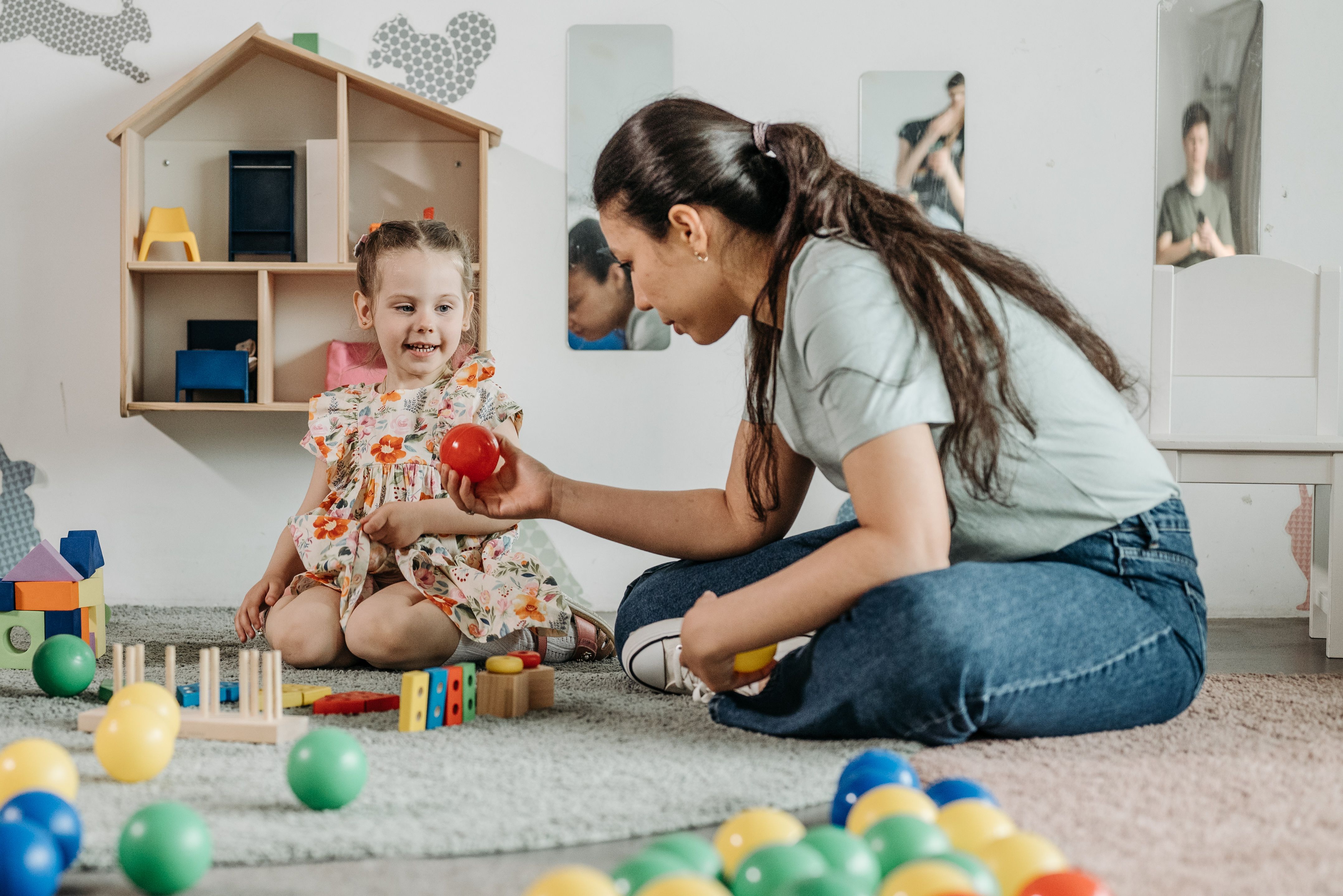
Let’s say your kiddo finishes a task they’ve been working on. You might give them a small sticker or let them choose a favorite toy to play with. By offering something they enjoy right after the behavior, you’re helping them connect their effort with a positive outcome.
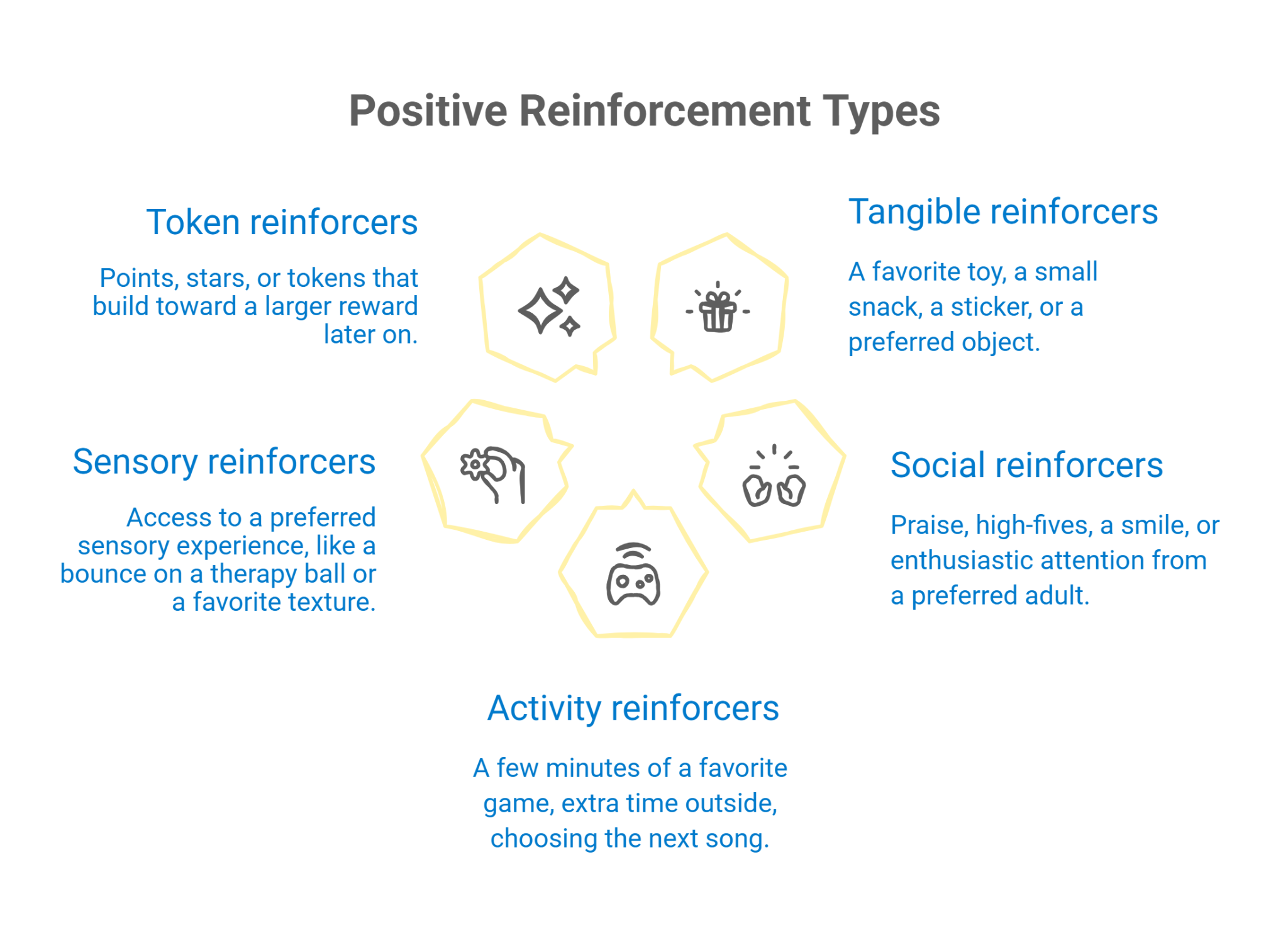
Positive reinforcements aren’t always tangible. They can be social, sensory, tokens, or even an activity. For example:
- Tangible reinforcers: a favorite toy, a small snack, a sticker, or a preferred object
- Social reinforcers: praise, high-fives, a smile, or enthusiastic attention from a preferred adult
- Activity reinforcers: a few minutes of a favorite game, extra time outside, choosing the next song
- Sensory reinforcers: access to a preferred sensory experience, like a bounce on a therapy ball or a favorite texture
- Token reinforcers: points, stars, or tokens that build toward a larger reward later on
Positive reinforcement isn't about being positive in tone, and it isn't the same thing as a reward given at the end of the day for good behavior overall. In behavior analysis, “positive” simply means something is being added to the situation, and “reinforcement” means the behavior it follows becomes more likely to happen again.
That distinction matters because it shapes how reinforcement gets used in therapy. It isn't a general encouragement strategy, but a precise tool applied immediately after a specific, targeted behavior, so the child's brain has the clearest possible connection between “I did that” and “this good thing happened.”
Timing is also important. Reinforcement delivered even a few seconds too late can end up strengthening the wrong behavior instead of the one it was meant to reinforce, which is why ABA therapists are trained to deliver it quickly and consistently.
5 Positive Reinforcement Examples Used in ABA
Seeing it in action often makes the concept click faster than any definition. Here are five positive reinforcement examples that demonstrate how it shows up across different skill areas.
1. Building communication
Your child uses a picture card to request a snack instead of grabbing it off the table. Their therapist immediately hands over the snack along with specific praise: “Great asking!” The snack and the praise together reinforce the act of requesting appropriately.
2. Following instructions
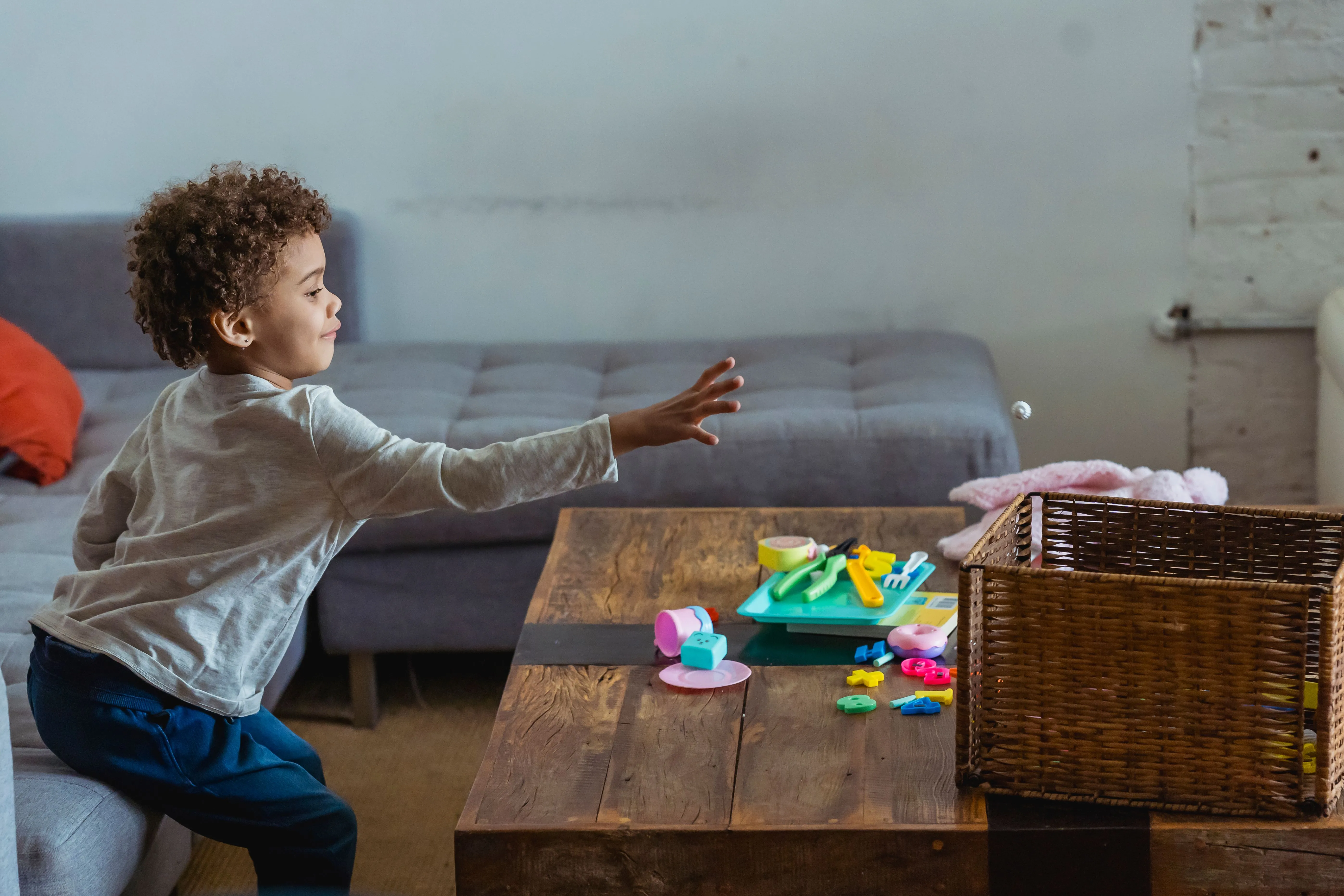
The therapist asks your child to put a toy in a bin. Your kiddo complies right away, and the therapist responds with an enthusiastic high-five and a few seconds of a favorite silly voice. Over repeated trials, they become quicker and more consistent at following one-step instructions.
3. School-readiness behavioral skills
Your child, who typically struggles to stay seated, manages to remain at the table for a full activity. Their therapist provides access to a preferred fidget toy for a short break immediately afterward, reinforcing the sitting behavior without requiring them to wait long for a payoff.
4. Social skills
During a peer play session, your child waits their turn instead of grabbing a toy. Their behavior technician immediately acknowledges this with specific praise: “You waited so nicely for your turn!” paired with a token toward a larger reinforcer your child is working to earn.
5. Daily living skills
Your child successfully brushes their teeth with minimal prompting. You, coached by the BCBA, immediately follows this with access to a favorite two-minute video clip, reinforcing the independent completion of the routine.
In every example, the reinforcement happens right after the targeted behavior, not minutes later, and it's something the specific child actually finds motivating rather than something assumed to be universally rewarding.
How BCBAs Identify What's Reinforcing
Not every child is motivated by the same things, and what works for reinforcement can change from week to week, or even session to session. A lot of groundwork goes into figuring out what will actually function as a reinforcer for your child before it's ever built into a teaching plan.
At Behavior Frontiers, this starts with a reinforcer survey during intake, where you share what your child enjoys most favorite toys, activities, snacks, or anything else that lights them up, since you know your child better than anyone. This is then revisited during the functional behavior assessment, and again as many times as needed with your BCBA and your child’s clinical team, so we always have an accurate, up-to-date picture of what motivates them. This matters because your child’s interests and preferences can naturally change as they grow, learn, and discover new things.
The best reinforcement plans usually mix things up with a few different reinforcers. When your child gets the same reward too often, they may naturally start to lose interest in it. Behavior analysts call this satiation, and switching things up can help keep your child interested and motivated.

Reinforcement Schedules: Why Consistency Changes Over Time
When your child is first learning a new skill, reinforcement is usually given every time they show the target behavior. This is called a continuous reinforcement schedule, and it helps your kiddo learn the new skill by making the connection between their behavior and the positive outcome clear and immediate.
As they become more comfortable and consistent with that skill, their BCBA will typically start moving toward an intermittent reinforcement schedule, where reinforcement is given only some of the time.
This might sound counterintuitive at first. You might even be thinking, “Wait, if reinforcement is helping my child learn, why would we give it less often?” But this gradual shift can help your child keep using the skill even when a reward isn’t given every time.
Over time, this approach can help skills become more natural and last beyond therapy sessions, so your child can continue using what they’ve learned in everyday situations.
This gradual thinning of reinforcement is a deliberate, data-driven process. A BCBA is tracking how your child responds at each stage and adjusting the schedule based on actual performance, not a fixed timeline. At Behavior Frontiers, we use PrioraCare™, our own clinical outcomes platform for live data collection, which allows clinicians to see what is and what isn’t working immediately and adjust the strategy as needed.
Positive Reinforcement vs. Bribery: What’s the Difference?
Now, you might be wondering whether positive reinforcement is really any different from bribery, and it’s a fair question. But no, they’re actually quite different. It all comes down to timing and intent.
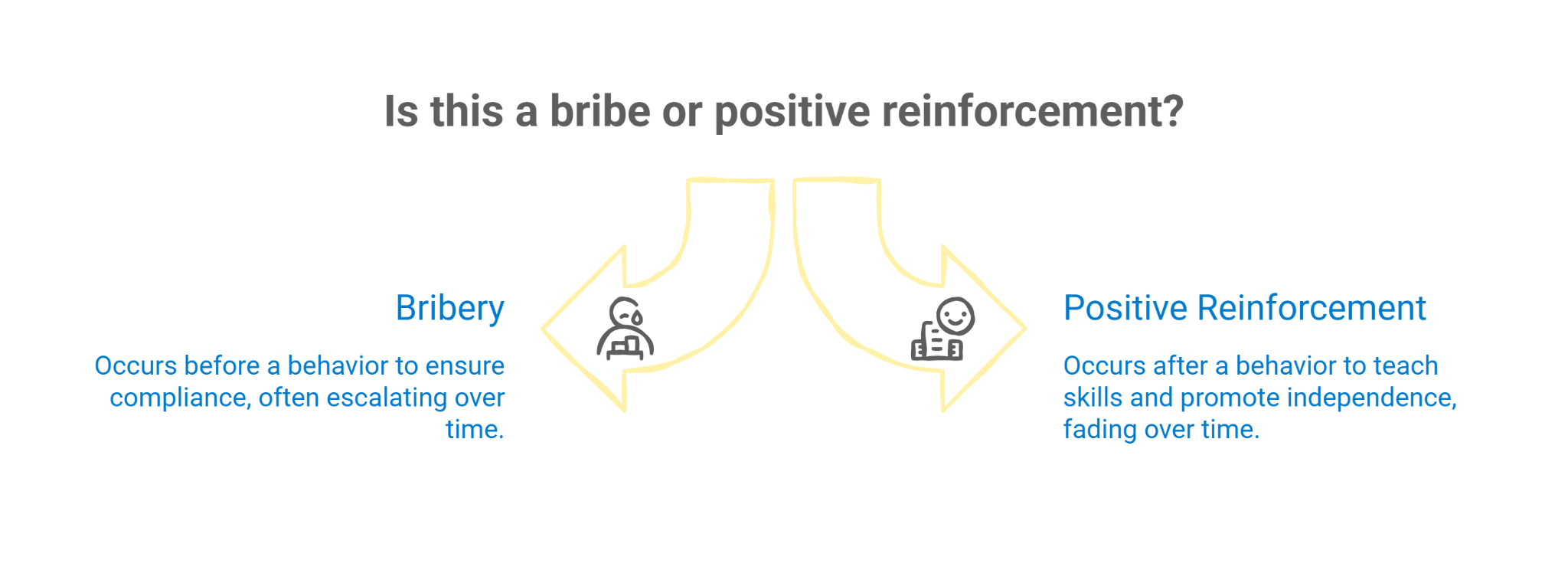
Bribery typically happens before a behavior, when you offer your child something in an attempt to get them to do what you want in the moment (“If you stop crying right now, I'll give you candy!”).
Positive reinforcement happens after your child has already shown a desired behavior. It’s part of a thoughtful plan designed to help your child learn and build new skills, not simply get through a challenging moment.
Reinforcement is also faded and adjusted intentionally over time as skills strengthen, whereas bribery tends to escalate, since your kiddo might learn that bigger reactions lead to bigger offers. A well-designed reinforcement plan does the opposite: it moves your child toward more independence, not more dependence on immediate rewards.
Why Positive Reinforcement Is Central to ABA Therapy
Positive reinforcement is one of the most heavily researched principles in behavior science, and its effectiveness is exactly why it anchors so much of ABA therapy. It gives your child clear, immediate feedback about which behaviors work well for them, and it does so in a way that builds motivation rather than relying on fear of consequences or pressure to comply.
When it’s used thoughtfully, positive reinforcement helps your child discover through experience that certain skills can lead to positive outcomes. Over time, many of these behaviors start to carry their own built-in reward, whether that's a peer's positive reaction or the simple satisfaction of finishing a task independently.
At Behavior Frontiers, we know that understanding what motivates your child, and why the plan is structured the way it is, can make it much easier to carry the same strategies into everyday moments at home. That’s why we offer individualized support and design a therapy plan tailored to your child's needs.
If you want to know more, reach out to us. After a brief intake, you’ll be connected with a BCBA who can get to know your child and begin creating a plan tailored to their unique needs.
Frequently Asked Questions
What are the types of positive reinforcement in ABA?
Positive reinforcement can take several forms, including tangible reinforcers (a favorite toy, snack, sticker, or preferred object), social reinforcers (praise, high-fives, smiles), activity reinforcers (a few minutes of a favorite game, extra outside time), sensory reinforcers (access to a preferred sensory experience, like a bounce on a therapy ball). There’s also token reinforcers (points or stars that build toward a larger reward). A BCBA typically rotates between several of these to keep a child motivated and avoid satiation.
What is the difference between positive and negative reinforcement?
Both increase the likelihood a behavior will happen again, but they work in opposite ways. Positive reinforcement adds something desirable right after a behavior, like praise after your child shares a toy. Negative reinforcement removes something unpleasant or aversive right after a behavior, like ending a difficult task once your child asks for a break. Despite the name, negative reinforcement isn't punishment. Its goal is to strengthen a behavior, just by taking something away rather than adding something in.
Is positive reinforcement the same as bribery?
No. Bribery typically happens before a behavior as an attempt to get immediate compliance, while positive reinforcement happens after a specific, targeted behavior has already occurred, as part of a broader plan to teach a skill. Reinforcement is also deliberately faded over time to build independence, whereas bribery tends to escalate rather than reduce.
Does positive reinforcement stop once a skill is learned?
Not entirely, but it does change. Early on, reinforcement is usually delivered every time the target behavior occurs. As a skill becomes more consistent, reinforcement is gradually thinned to an intermittent schedule, which helps the behavior hold up better over time, even outside of the therapy setting.