
The 4 Functions of Behavior in ABA Therapy: Understanding Your Child’s Behavior

%2013.avif)

Leaning over the kitchen counter, you quickly chop vegetables for dinner. But your kiddo is tugging on your pant leg, again.
You try to stay patient, but it happens every night. You need to get dinner ready, and they keep tugging. Soon, the tugging turns into throwing their stuffed animal and having big emotions.
You say, “Hey, we don’t throw things here.”
Yet the same pattern continues night after night. You find yourself wondering:
“Why does my child do this?”
This kind of behavior is common in kids of all ages. But for many children with autism, these patterns can be harder to read, and the strategies that work for neurotypical kids may not always translate. That's where understanding the function of behavior, a core concept in ABA therapy, becomes especially powerful.
In ABA therapy, understanding the functions of behavior help clinicians (and you) uncover what your child is trying to communicate through their behavior. And once we unlock the “why,” we also reveal the pathway to teaching new ways to communicate that same need (thus reducing challenging behaviors like tantrums, aggression, or throwing things) and setting up your child for success.
So, in this guide, we’ll uncover the four functions of behavior, why they happen, and how your child can have a behavior transformation (in all the best ways).
What Are the Functions of Behavior?
All behavior is a form of communication, and within ABA, this typically falls into one of four functions:
- Attention
- Escape or avoidance
- Access to tangibles
- Automatic or sensory reinforcement
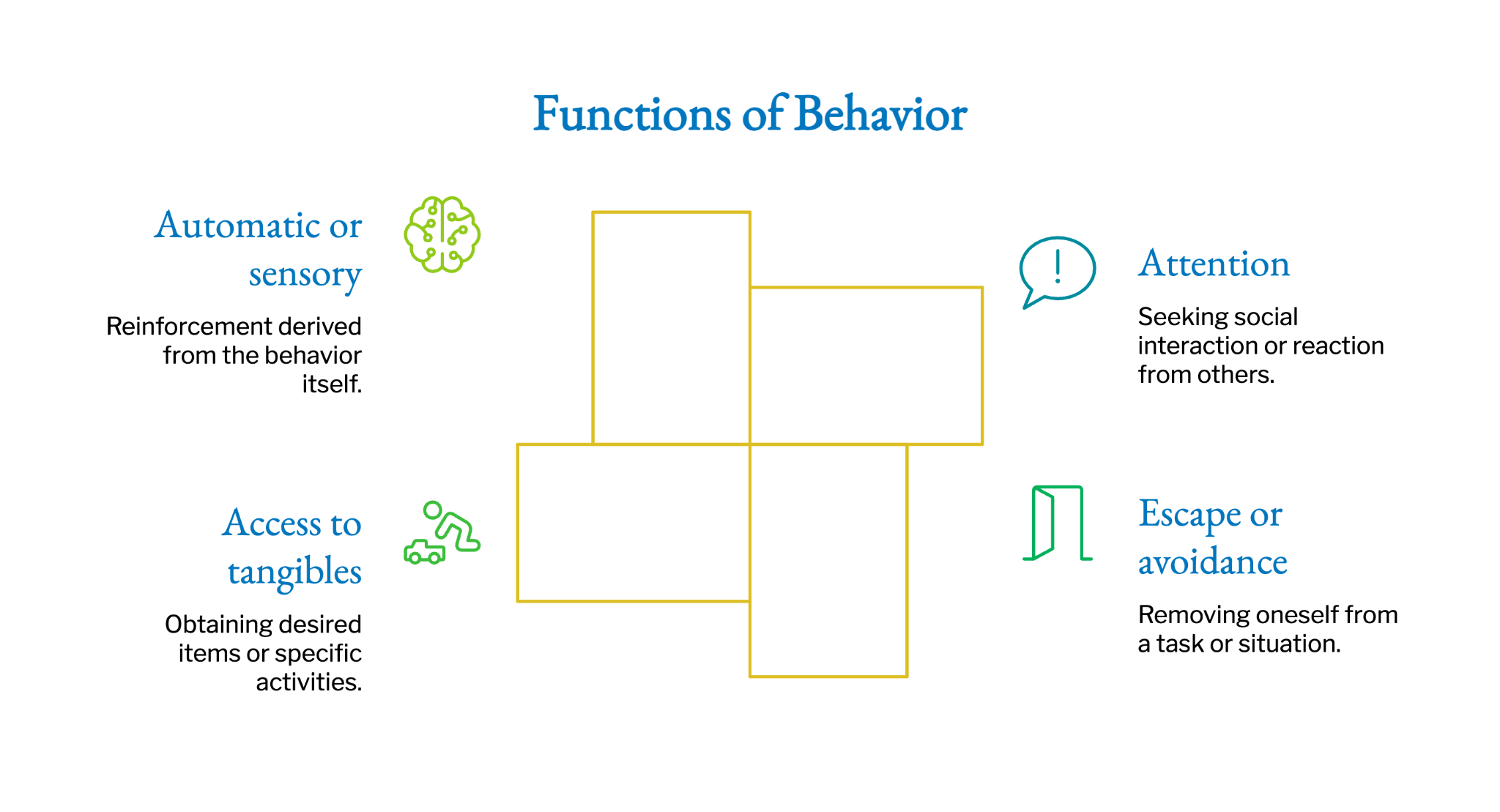
The four functions of behavior.
Once you know which of these four functions is driving a behavior, like the tugging in the example above, you can respond in a way that actually meets the need instead of just reacting to the moment.
The 4 Functions of Behavior
No two behaviors are exactly alike. But most behaviors serve one of four purposes. Here’s a quick breakdown of each function and how it could impact your child’s life.
Function 1: Attention
One “why” behind behavior is to gain attention. When it comes to your child’s behavior, this could mean gaining your attention, another adult’s attention, a peer’s attention, or someone else’s. Even negative reactions are still attention.
So, if you’re providing a negative reaction to your child's behavior, you may be unintentionally reinforcing it.
That form of attention (whether positive or negative) is often delivered right after the behavior, which reinforces the message: the behavior works.
Here are a few examples:
Example 1: Your child starts humming loudly or repeating "Mom? Mom? Mom?" when you're on the phone. Each time they do this, you pause to respond for a moment. They get your attention, so the behavior works, and it continues.
Example 2: At dinner, every time you begin speaking with another adult, your child announces "Watch this!" and does a little trick at the table. When you turn and watch, the behavior stops.
At the root of attention-seeking behaviors is often your child’s need for connection. The goal is never to remove that connection, but to teach them a better way to ask for it.
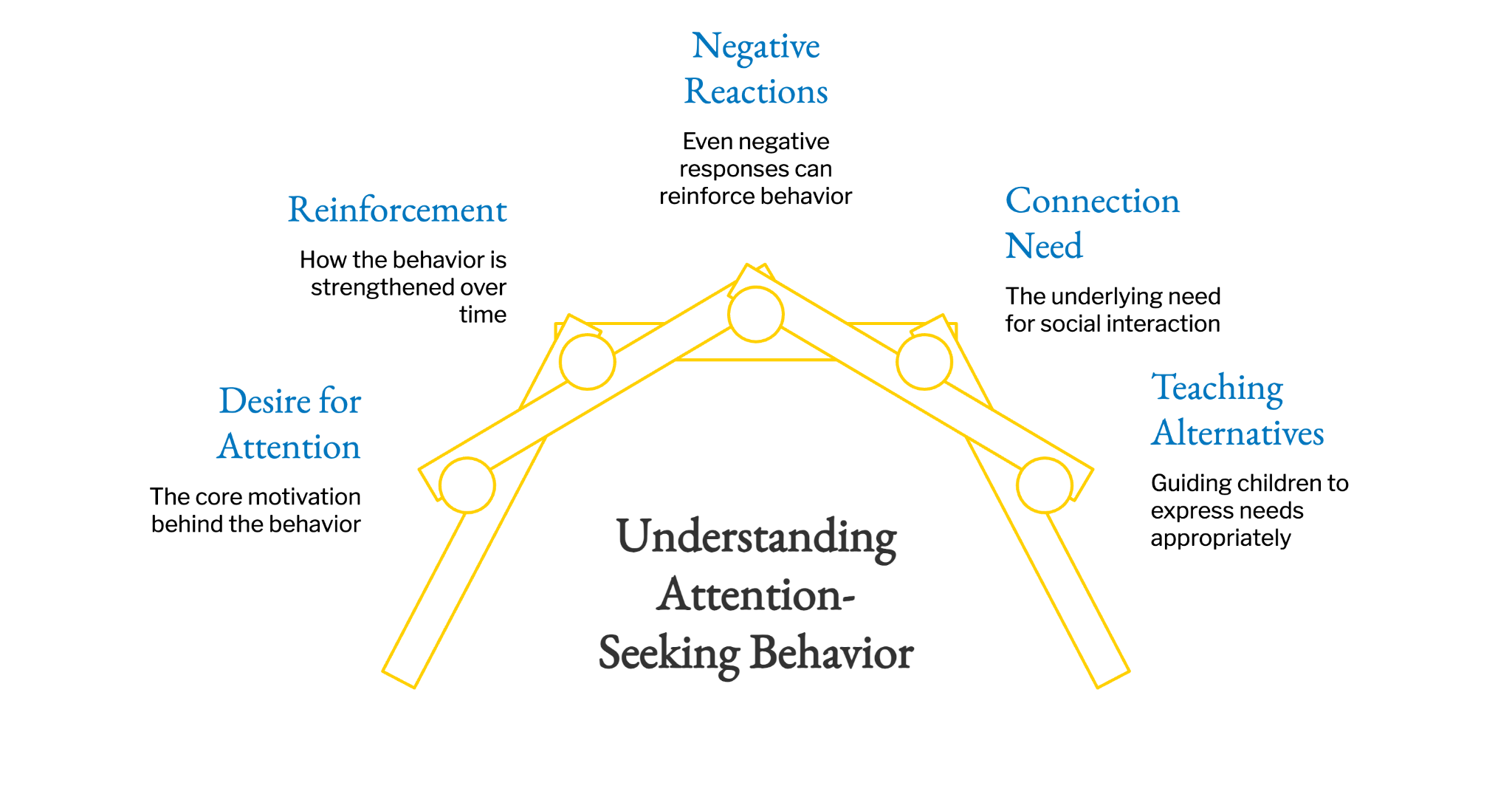
Understanding attention-seeking behavior.
Function 2: Escape or Avoidance
Another “why” behind behavior is to get out of something you don’t want to do or don’t like.
The behavior helps a person escape or avoid something they don’t want to do. When an unwanted task is terminated, a demand is delayed, or the demands are reduced, the behavior may be reinforced.
Here are a few examples:
Example 1: Your child doesn’t like to eat lunch in the cafeteria because it’s noisy and overstimulating. Each time they go to the cafeteria, they elope to a different location. Right after the behavior, their teacher lets them eat in a quiet location. The behavior successfully stops the undesired event from happening, and therefore works.
Example 2: Your child doesn’t like to wash their hands after using the bathroom. Each time you turn the water on for them to wash their hands, they have some big emotions. So, you allow them to use hand sanitizer spray instead. They tolerate this better, so, again, the behavior successfully stops the hand washing from happening.
When the behavior function is to escape, it usually means your child is communicating that something feels too hard or overwhelming.
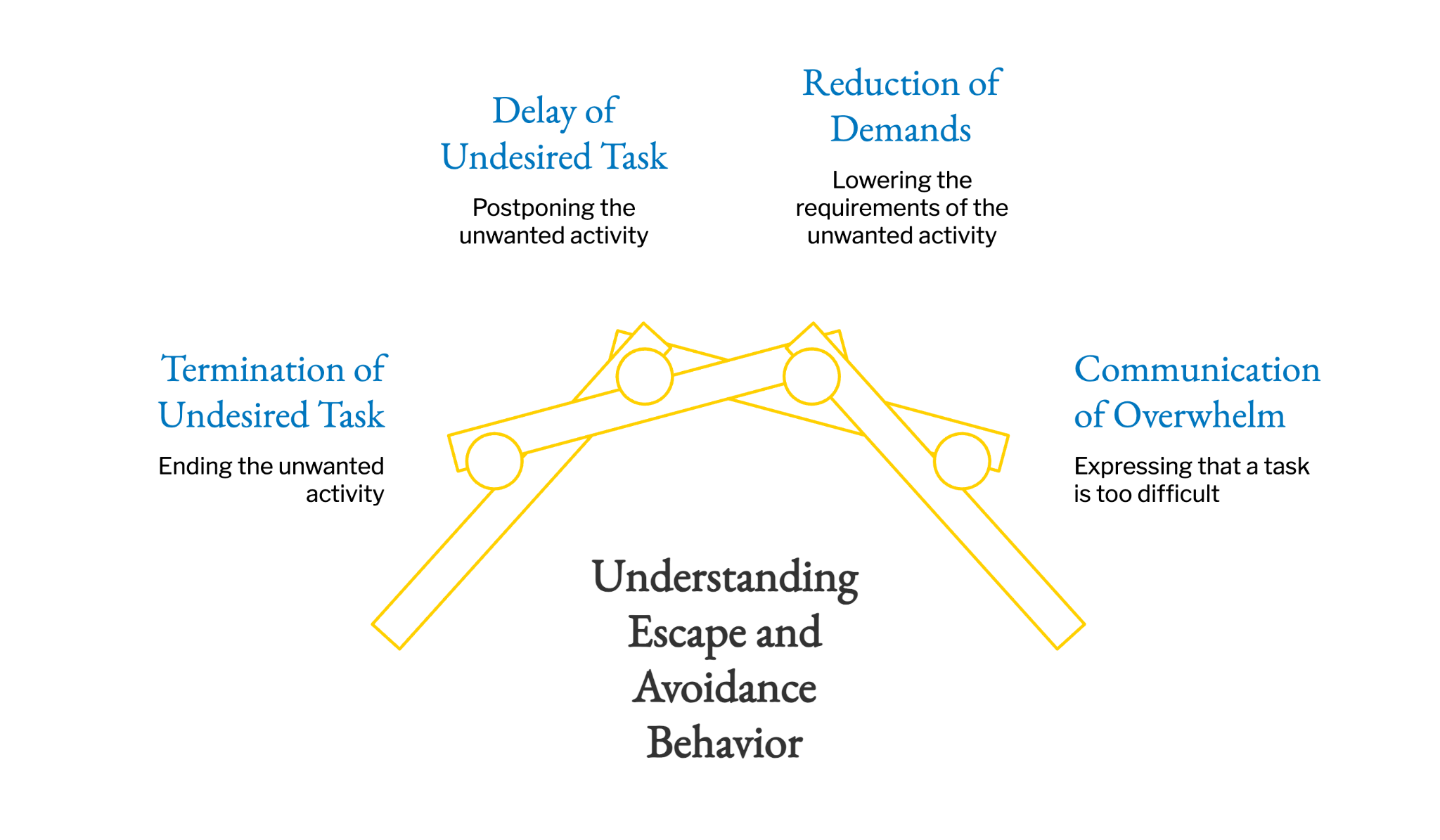
Understanding escape and avoidance as a function of behavior.
Function 3: Access to Tangibles
Another “why” behind behavior is to get a specific item or activity.
This is when a child’s behavior is rooted in gaining access to things like toys, snacks, devices, or special activities they want. When they gain access to these items or activities, the behavior is reinforced.
Here are a few examples:
Example 1: Your child has big emotions when it’s time to stop iPad time. To calm the situation, adults will frequently give back the tablet for a few more minutes. This reinforces the behavior each time the iPad comes out.
Example 2: Every morning, your child wants a fruit snack the minute they wake up. When told, “no,” they throw nearby items at you. To make the behavior stop, you give them a fruit snack. While this may bring immediate relief, the same pattern continues day after day.
When access to tangibles is the function of behavior, this doesn’t mean your child is manipulating you. They simply realize that this behavior can be used as a tool to gain what they want or need. Our job is to give them better tools to work with.
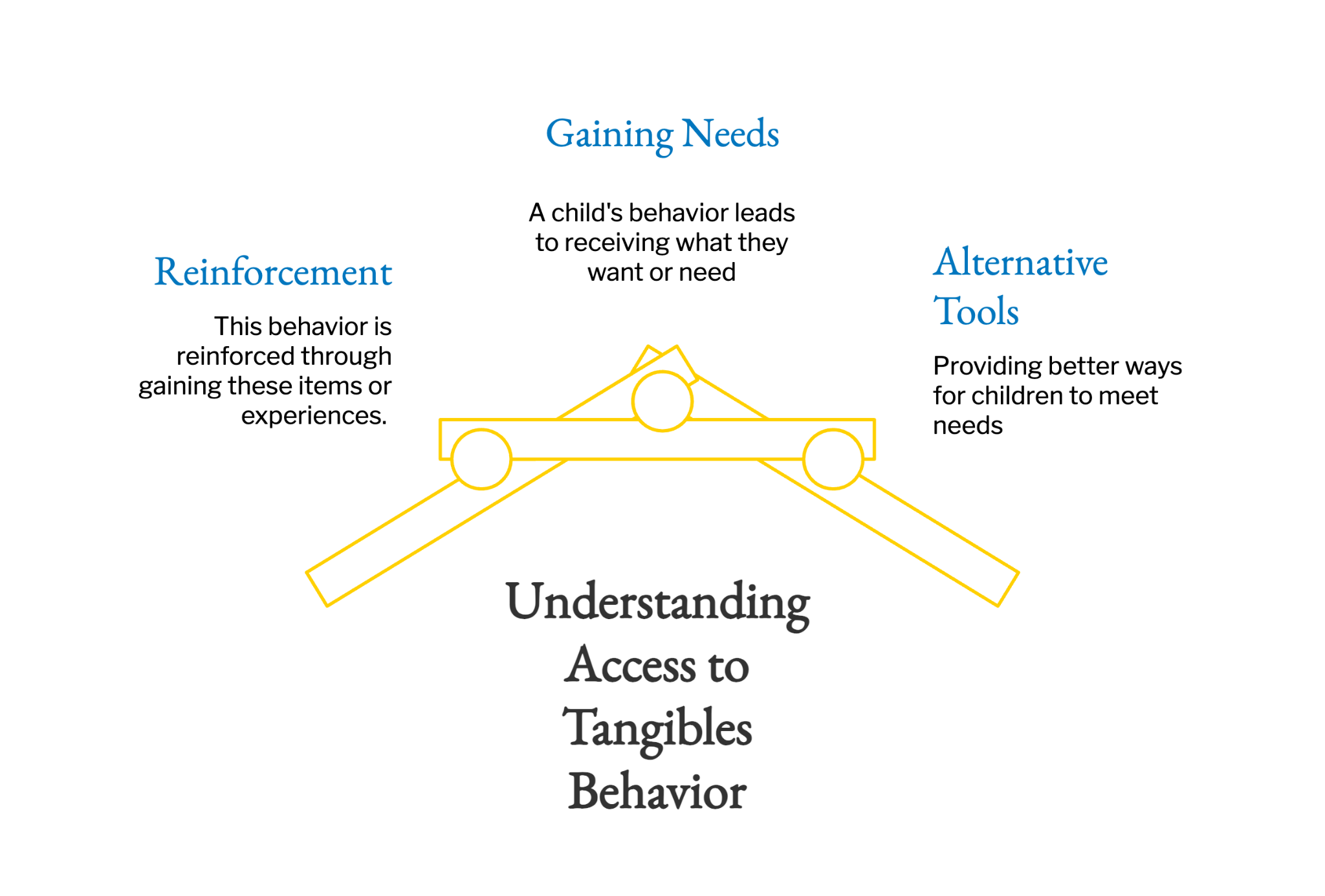
Understanding access to tangibles as a function of behavior.
Function 4: Automatic (Sensory) Reinforcement
Another “why” behind behavior is the sensory experience the behavior itself provides.
Automatic reinforcement refers to behavior maintained by the response itself—sensory stimulation, pain attenuation, or just a feeling the body seeks. No social consequence is needed for this behavior to keep going.
This function of behavior tends to confuse people. “With this function, the behavior is reinforcing all by itself, and it doesn’t depend on attention, escaping a task, or getting access to something,” Wimer says. “Because the behavior produces its own reinforcement, it can be much more challenging to reduce.”
Here are a few examples:
Example 1: While your child is alone, they rock and hum. No one reacts to it, and nothing external appears to to reinforce it. (This is also known as stimming).
Example 2: Your child loves to repeatedly open and close doors. They do this alone and without any input from external sources.
When automatic reinforcement is the function of behavior, it’s meeting a sensory need. That's not automatically a problem; plenty of these behaviors are harmless and don't need to change. Intervention becomes worth considering only when the behavior gets in the way of learning, safety, or your child's day-to-day life, and in those cases, the goal isn't to eliminate the need, but to find another way to meet it.
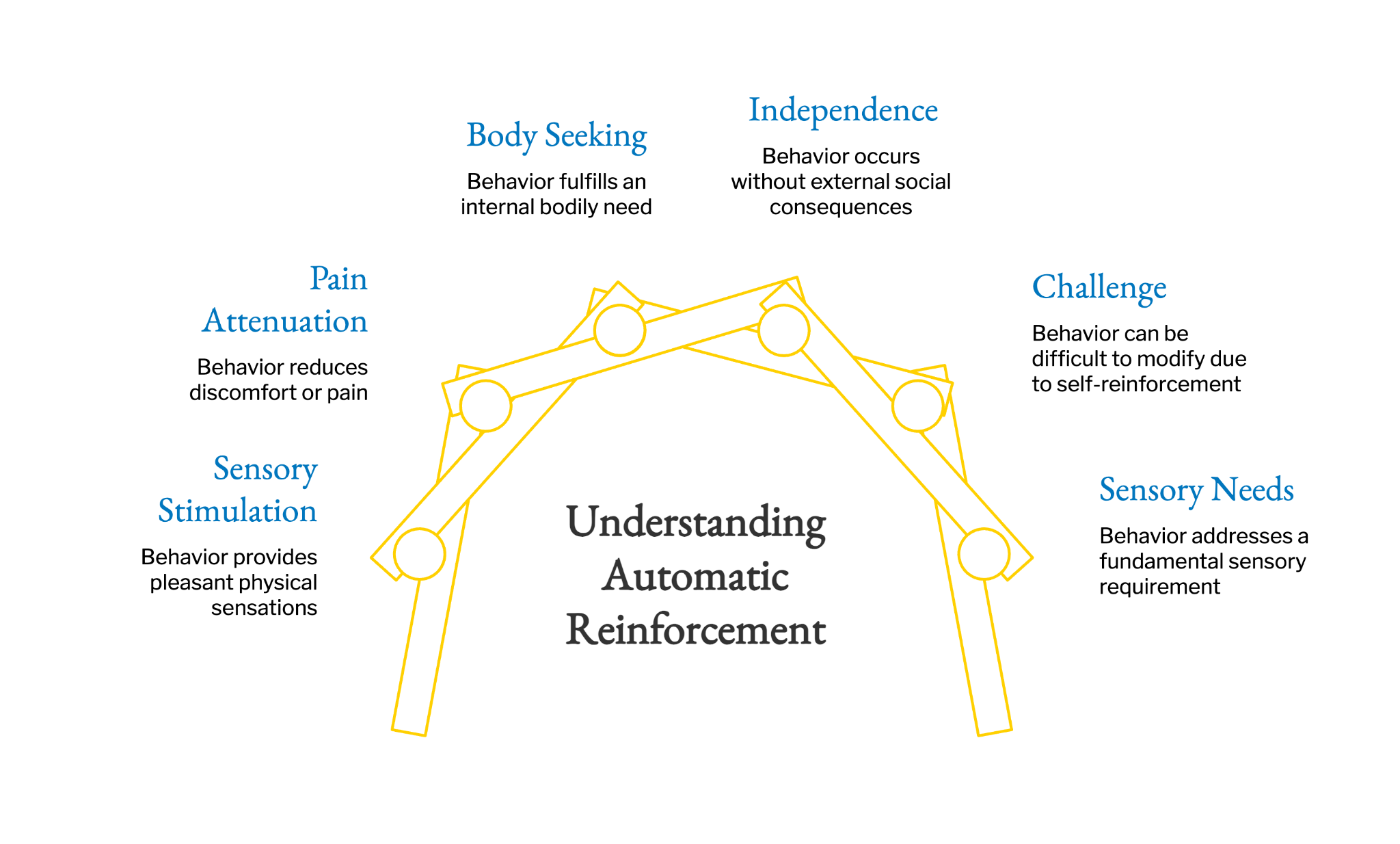
Understanding automatic reinforcement as a function of behavior.
These four functions have been uncovered through decades of peer-reviewed research on functional analysis, including foundational work by Iwata and colleagues published in the Journal of Applied Behavior Analysis.
We trust this research not only because it is supported by evidence, but because it truly works for the children we serve. Getting to the root of a behavior (its function) tells us the “why” behind it, and that changes everything about how we respond. Instead of reacting to the behavior itself, we can address what's actually driving it, which is what makes the difference between support that lasts and one that doesn't.
“Typically, parents use strategies that work in the moment because they stop the behavior temporarily,” says Kimberly Wimer, M.A., BCBA, Clinical Director at the Behavior Frontiers Autism Center in Rancho Cucamonga. “Once parents understand why the behavior is happening and begin using more effective strategies, they start to see real, lasting change.”
This is exactly why our BCBAs conduct a functional behavior assessment for every child who comes through our doors. We use the assessment to design a highly tailored behavior plan specifically for your child. Understanding functions of behavior is at the heart of effective ABA therapy, and it’s how we can help your kiddo’s life start to change in the best ways.
How We Build a Plan Around the Functions of Behavior
Knowing the function of behavior allows us to stop guessing. We can start building a plan that will set your child up for success.
Instead of using a one-size-fits-all plan, your child's BCBA designs a treatment plan matched directly to the function driving the behavior. Research shows that function-based treatments can reduce problem behavior more effectively than generic strategies.
And it makes sense: a plan built around the wrong function is unlikely to produce lasting change, no matter how well it is implemented.
Here’s what function-matched treatment looks like:
- Attention function: Instead of engaging with disruptive behavior, we teach your child to ask for attention in a way that works for everyone. A wave, a tap on the arm, or a simple "excuse me" can meet the same need.
- Escape function: Instead of removing a task when your child has big emotions, we teach them to request a break using a card, a word, or a gesture. The need is honored, but the behavior is replaced.
- Tangible function: Instead of giving in to grabbing, hitting, or screaming, we teach your child to ask for the preferred item in a way that still achieves what they want.
- Automatic function: Not every sensory behavior needs to change, but when one does get in the way of safety, learning, or daily life, we identify alternative sensory activities that meet the same need in a safer or more appropriate way. Because the behavior is driven from within, the solution needs to offer something that competes with what the behavior provides.
This is also why differential reinforcement of alternative behavior is one of the most powerful tools in ABA. It works because it is built around the function, not just a reaction to the behavior itself.
Knowing the “Why” Behind Behavior Changes Everything
When we find the “why” we discover the “how.”
“Once we know the function, we can teach a more appropriate replacement behavior that serves the same purpose,” Wimer says.
Meaning:
We can build a behavior plan around the right function, resulting in lasting change and transformation. This leads to less intrusive, more effective interventions.
At Behavior Frontiers, this is our starting point for everything we do with your child. Your child’s BCBA will always conduct a functional behavior assessment first. They will observe, gather data, and conduct interviews.
All progress is then tracked in real time through PrioraCare™, our made-from-scratch data platform, so programs can be refined as your child grows and their needs shift.
Caregiver training is built into every plan, because understanding why a behavior happens changes how everyone responds to it—at the center, at school, and at home.
Ready to take the first step into ABA therapy? Reach out to us. After a brief intake, you'll be connected with a Board Certified Behavior Analyst (BCBA) to begin building a plan designed around your child's unique needs.
Frequently Asked Questions
What are the main functions of behavior in applied behavior analysis?
The four main functions of behavior are attention, escape or avoidance, access to tangibles, and automatic or sensory reinforcement.
Can a behavior have more than one function?
Yes. When a behavior serves more than one function, it is called a multiply controlled behavior. For example, a child might engage in a behavior both to escape a task and to get attention from a caregiver. When this happens, treatment planning becomes more complex because it needs to address all of the maintaining functions. A thorough functional assessment helps identify every variable that is keeping the behavior going.
How does a BCBA identify the function of a behavior?
A BCBA identifies the function of a behavior through a functional behavior assessment, which typically includes:
- Direct observation of the child across different settings
- Interviews with parents and caregivers about what they are seeing at home
- Data collection on what happens before and after the behavior occurs
The results of that assessment inform every goal and strategy in your child's Behavior Intervention Plan.
What happens after the function of a behavior is identified?
Once the function is identified, the BCBA designs a function-matched treatment plan. The goal is always to teach a safer, more appropriate way for your child to meet the same need the behavior was meeting. Caregiver training is built into the process so families can support the same strategies at home. Consistency across environments is what makes the change last.
How do the functions of behavior apply to children with autism?
Children with autism use behavior to communicate, just like all children do. The difference is that they may not yet have the words, gestures, or tools to communicate their needs in ways others can easily understand. Understanding the function of a behavior helps the care team respond in ways that actually address the need rather than just reacting to the behavior on the surface.
Where can I find professional services for functional behavior assessment?
If you’re looking for a provider who conducts thorough, individualized functional behavior assessments, the most important thing to look for is a team led by Board Certified Behavior Analysts. BCBAs are specifically trained in functional assessment methodology and are qualified to design behavior plans based on what the assessment reveals.