

Stimming and Autism: What It Is, Why It Happens, and When to Support It

%2013.avif)

Have you noticed your child rocking, flapping their hands, or making the same sounds on repeat?
What you’re observing is called stimming. Stimming (short for self-stimulating behavior) refers to repetitive motions, sounds, or interactions with objects, and it’s far more common than you may think. In fact, close to 44% of people with autism engage in some form of stimming. It may also be a relief to know that most stimming actions are purposeful and most don’t need to be stopped at all — it’s simply how your child processes the world.
To keep your mind at ease, in this article we’ll cover: what stimming looks like, why your kiddo might be stimming, when stimming may become a concern, and how to respond to it.
What Does Stimming Look Like?
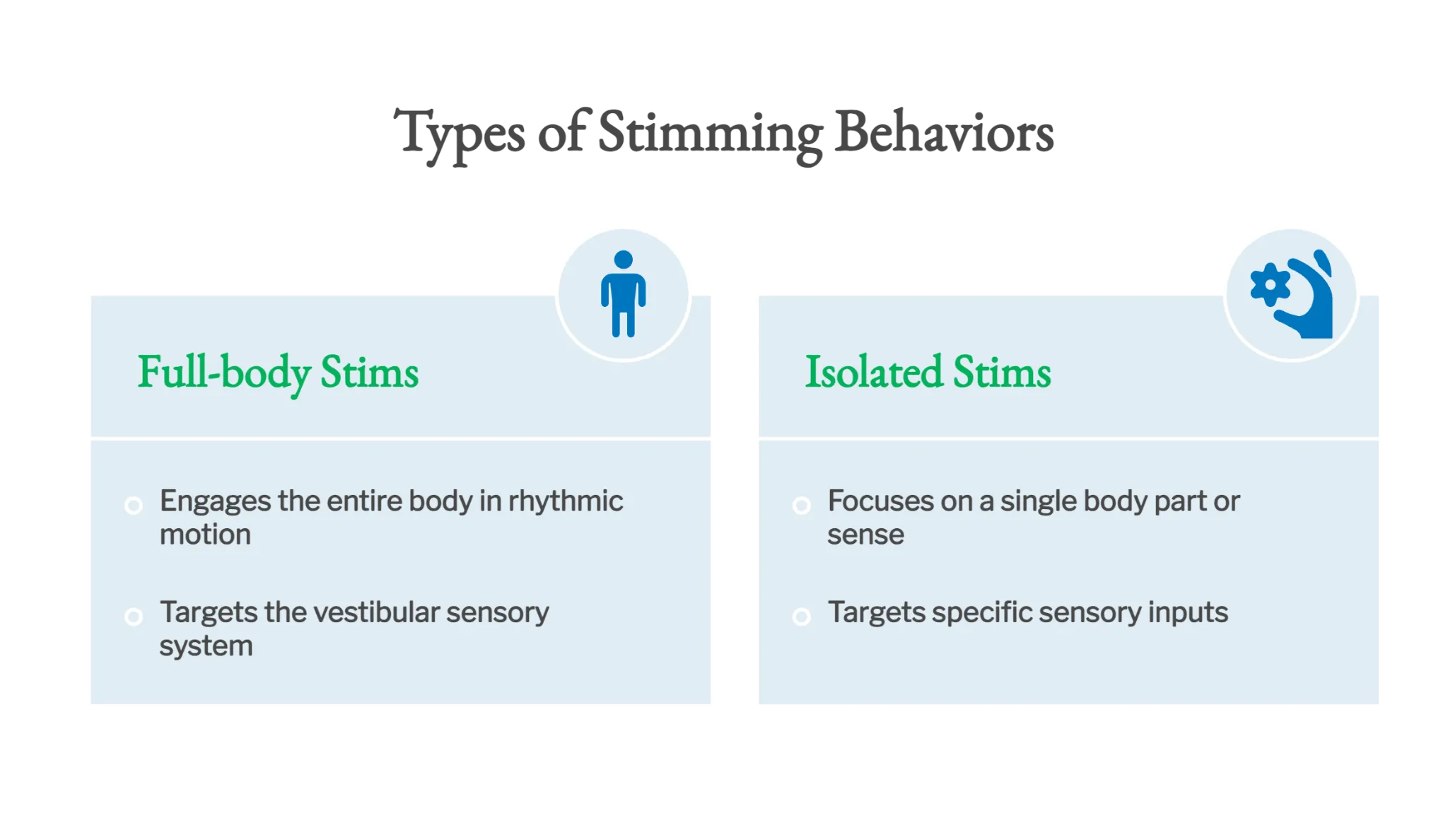
Stimming can show up in many different ways, and it can look quite unique from one kiddo to another. That said, most stimming behaviors tend to fall into one of two categories: full-body stims and isolated stims.
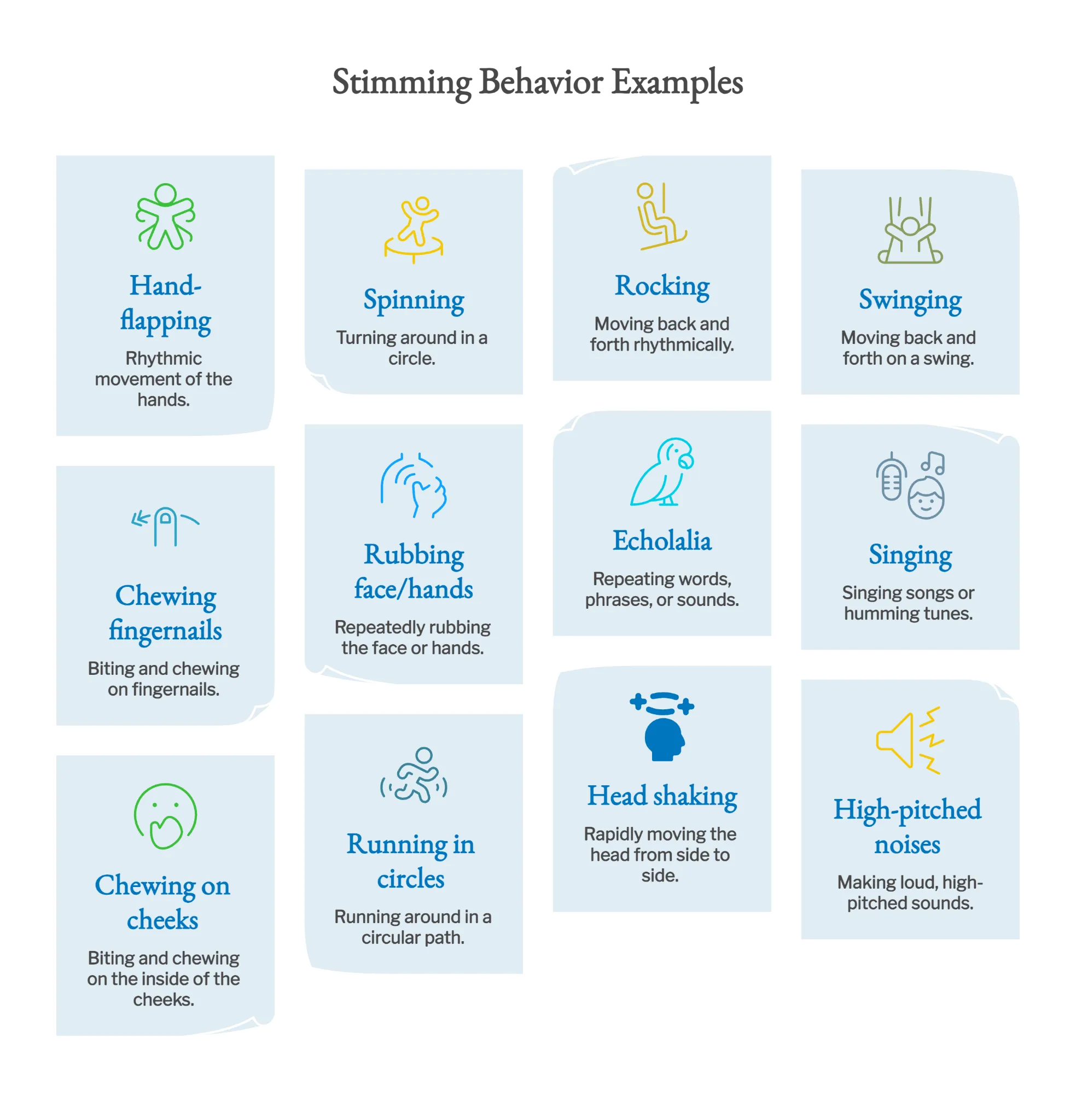
Full-body stims are movements that involve the entire body, like rocking back and forth or spinning. According to the Children’s Hospital of Philadelphia Research Institute, these motions affect the body's vestibular sensory system, which is responsible for balance and orientation.
Isolated stims, on the other hand, involve just one part of the body or a specific sense. This could be hand flapping, making repetitive vocalizations, rubbing certain textures, or smelling objects.
Stimming behaviors often begin by age 3 and tend to show up when a child is deeply focused on something, feeling excited, stressed, or even bored. And while stimming is often associated only with autism, neurotypical people stim too.
Have you ever tapped your foot when you’re impatient?
Drummed your fingers on the table?
Twisted your hair when you’re bored?
These are all forms of stimming. The key difference is that your child may engage in these behaviors more often and more noticeably.
Why Does Your Child With Autism Stim?
Stimming is rarely random. In almost every case, it’s serving a purpose for your child, even if that reason isn’t clear at first.
So, why do they do it?
According to the American Psychiatric Association, stimming behaviors help:
- Reduce anxiety
- Calm the nervous system
- Stimulate the sense
- Cope with sensory overload
- Express frustration
- Relieve physical discomfort
Because stimming is purposeful and effective for providing self-regulatory benefits, many children and adults with autism just continue to do it without harming themselves or other people. And that’s truly the case for most.
When Might Stimming Need a Closer Look?
Most of the time, stimming doesn't need to be addressed at all. But there are situations where it makes sense to take a closer look — specifically when it’s:
- Causing physical harm (like head banging or skin scratching)
- Significantly interfering with learning or daily functioning
- Leading to social isolation or noticeable distress
- Preventing your child from participating in things they need or want to do
So, how do you respond?
Punishment is never an effective or appropriate approach to stimming. Instead, if a behavior does need to be addressed due to the reasons above, the goal should be to gently and gradually support them with replacement behaviors. For example, this could be teaching more comfortable ways to meet the same need, using the stim itself as a motivational tool where possible, and building self-management skills over time.
How Should You Respond to Stimming Behaviors?
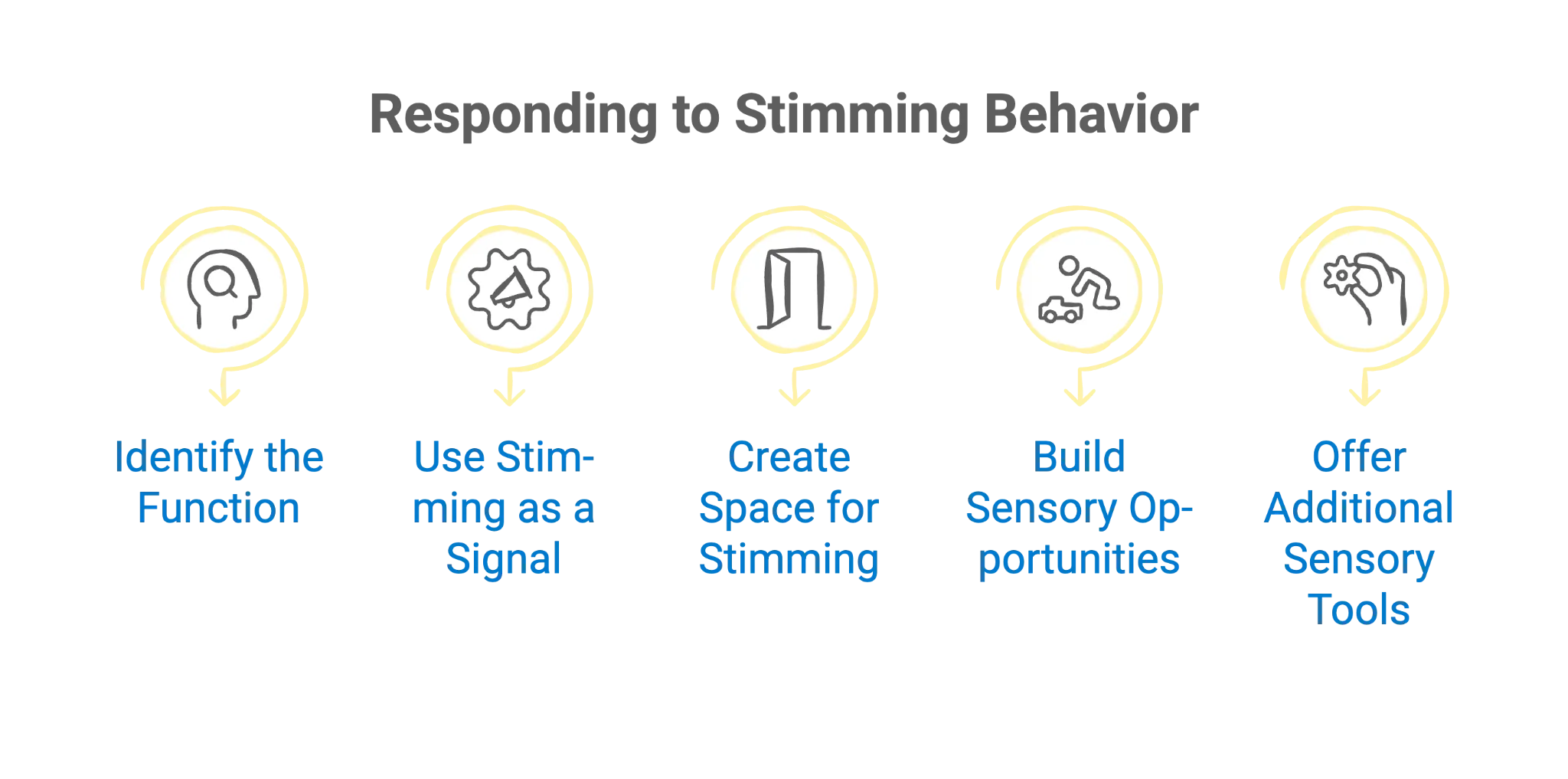
Supporting your kiddo with stimming starts with curiosity, not correction. If you reach a point where their stimming behaviors need to be addressed, there are effective ways to approach it:
- Identify the function of behavior. Before anything else, try to understand what's driving their stimming behaviors. If your child isn't able to express what they're feeling, your BCBA or behavior technician is a helpful guide in figuring that out.
- Use stimming as a signal. An increase in stimming behavior can be a clue your kiddo is feeling overwhelmed or dysregulated. For caregivers, this can be a cue to offer a break, reduce sensory input in the environment, or do a quick check-in.
- Create space for stimming. Stimming is a normal part of how your child processes the world, and there are plenty of everyday moments – at home, during downtime, or whenever they need to self-regulate – where it doesn't need to be changed or redirected at all.
- Build sensory opportunities into the day. Providing regular chances for sensory input (jumping on a trampoline, going for a walk, carrying weighted objects) can naturally reduce the urge to stim throughout the day.
- Offer additional sensory tools. Tools like fidget spinners and stress balls can offer a way for your child to meet their sensory needs in ways that feel more comfortable anywhere they go.
ABA Therapy Can Help With Understanding Stimming Behaviors
Most of the time, stimming behaviors are not anything to be concerned about. They’re often a useful coping strategy and a way for your kiddo to self-regulate. Finding a balance between your child’s daily needs and their ways of self-regulation is at the heart of this.
Your child's stimming behavior tells a story, and with the right support, you can learn to read it together.
If your child's stimming is impacting daily life or you're not sure which path to take, Applied Behavior Analysis (ABA) therapy can help you find a way forward.
Once you go through our intake process, one of our expert Board Certified Behavior Analysts (BCBA) will conduct a Functional Behavior Assessment to understand what's driving your child's stimming and build an individualized plan around it.
At Behavior Frontiers, our BCBAs work closely with families to understand the whole child, not just the behavior. And with our proprietary platform PrioraCare™, progress is tracked in real time so your child's plan can grow and shift right along with them.
If you're ready to take the next step, reach out to us! After a brief intake, you'll be connected with a BCBA who can help you understand your child's unique needs and build a plan that's made just for them.
Frequently Asked Questions
What are stimming behaviors?
Stimming is short for self-stimulatory behavior and refers to repetitive movements, sounds, words, or actions that people use to self-regulate, soothe themselves, or manage sensory input. It can include things like rocking, hand flapping, pacing, humming, or repeating words.
Are stimming and tics the same?
No. Stimming is usually described as repetitive behavior that serves a self-regulating purpose. Tics are generally involuntary movements or sounds and are often related to Tourette’s syndrome.
Why does stimming feel good?
Stimming can feel good because it may help reduce anxiety, release tension, block out overwhelming sensations, improve focus, and create a sense of calm and comfort.
Will stimming go away with age?
Not necessarily, and it differs from person to person. Stimming can begin in early childhood and into adulthood, although the behavior itself may evolve over time.