

9 Tips for Managing Tantrums for Your Child With Autism

%2013.avif)

Tantrums are a normal part of childhood, and most parents experience these moments when a simple "no," an unexpected change in plans, or a frustrating situation leads to big feelings.
For parents of children with autism, however, tantrums can sometimes look different, happen more frequently, or stem from challenges that aren't always obvious to others. When typical parenting advice doesn't seem to fit your child's needs, it can leave you feeling alone.
The good news is that understanding why tantrums happen can make them easier to navigate. Below, we'll share some tried-and-true ABA-based strategies that can help you respond in the moment, support your child's emotional regulation, and reduce the likelihood of future tantrums.
Why Do Tantrums Happen?
All children have tantrums from time to time, and learning to cope with disappointment, frustration, change, and unmet expectations is a normal part of development. While tantrums can feel sudden, they're often driven by underlying needs, challenges, or emotions that become easier to understand when we dig a little deeper.
For children with autism, tantrums may be connected to things like communication challenges, sensory sensitivities, difficulty with transitions, or feeling overwhelmed by a situation. In many cases, this specific behavior is a sign that something isn't working for your child at that moment.
Understanding the "why" behind a tantrum or meltdown is one of the most effective ways to respond with empathy and develop strategies that can help prevent similar situations in the future.
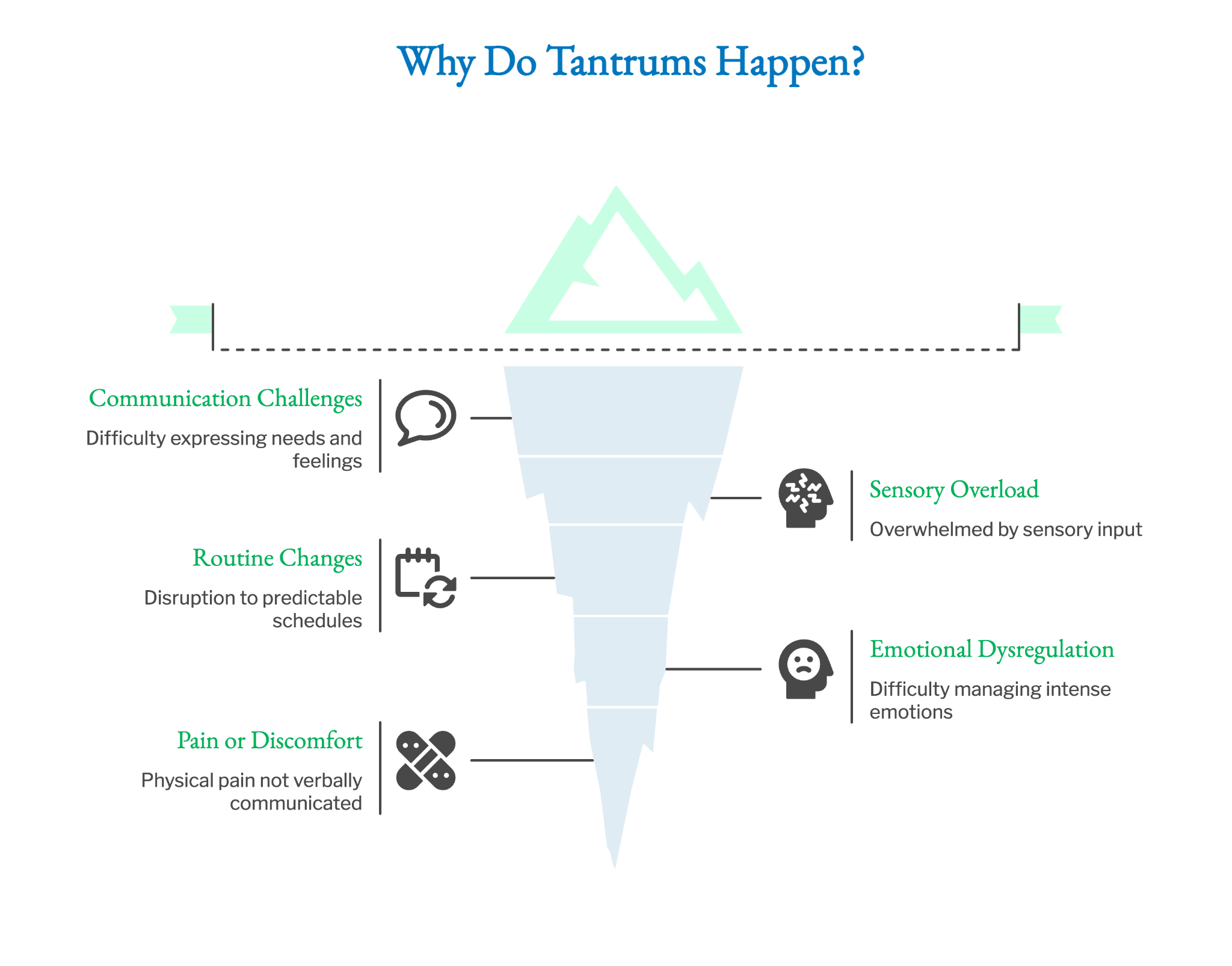
Here are some of the most common reasons children with autism experience tantrums or meltdowns:
- Communication challenges: Your child might not have the words to express what they need or how they're feeling. Frustration may build when they feel like they can't make themselves understood, and that frustration can come out as a tantrum.
- Sensory overload: Everyday experiences like bright lights, loud sounds, scratchy fabrics, or crowded spaces can cause your autistic child discomfort. When the sensory input becomes too much, meltdowns can be how their body responds.
- Routine changes: Lots of children thrive on predictability, but children with autism may rely on routines even more. Unexpected changes to plans, schedules, or familiar activities can create stress and uncertainty that may lead to a tantrum or meltdown.
- Emotional dysregulation: Managing big emotions is hard for all children, but it can be especially challenging for children with autism. When emotions feel too big to handle, a meltdown may become the outlet.
- Pain or medical discomfort: Sometimes a tantrum or meltdown can signal that something physically hurts. Ear infections, headaches, stomach pain, or other medical issues your child isn't able to express with words, might show up as a tantrum.
Tantrums vs. Meltdowns: Not the Same Thing
A lot of the time, you’ll hear these terms used interchangeably. But, there are important differences.
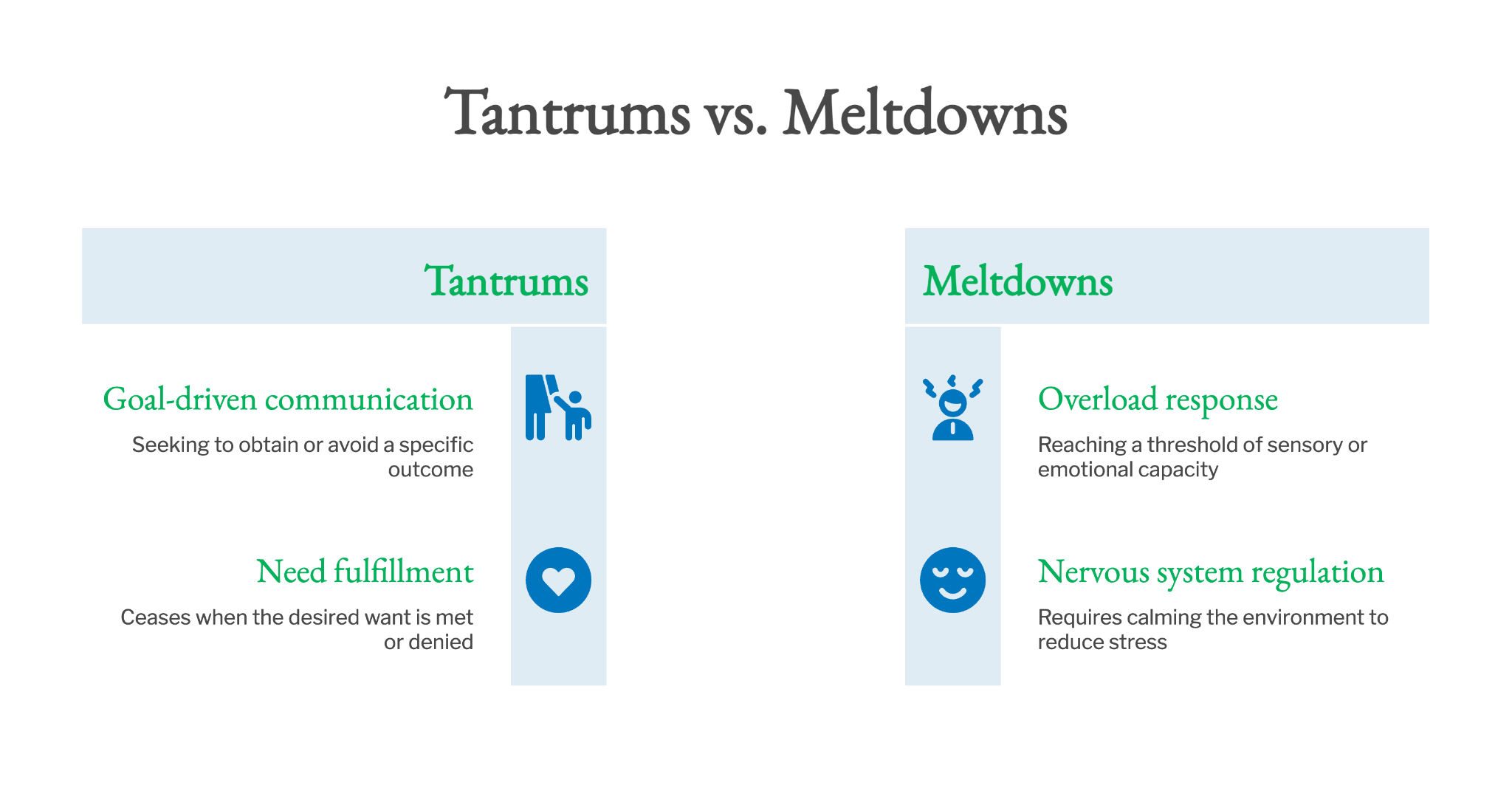
Tantrums are goal-driven. Your child wants something (or wants to avoid something), and they’re using the tantrum to communicate that. That’s why tantrums typically stop when their need or want is met, or when they realize it isn’t working.
Meltdowns, while similar, hold a different purpose. When your child has a meltdown, it’s an overload response. Meaning, sensory overload, big emotions, or stress becomes too much for their nervous system. For this one, your child isn’t trying to gain or avoid something, they’ve just hit their limit.
Knowing the "why" behind a tantrum or meltdown can help you de-escalate the situation, create a sense of safety for the child, and teach replacement skills at a time when your child is regulated and better able to learn.
9 Tips to Help Manage Autism Tantrums
Use these tips next time your child experiences a tantrum or a meltdown.
1. Identify the "Why" Behind It
Before you can prevent or manage tantrums effectively, you need to first understand what's at the root.
Start by asking:
- Why is this tantrum happening?
- What happened before the tantrum or meltdown occurred?
- What did your child say or do during the tantrum?
- What happened immediately after?
These questions can help you identify the “why” or the function of the tantrum. As you gather this information, you’ll likely gain a clearer understanding of the needs, challenges, or emotions driving the behavior, and what’s really underneath it.
2. Create a Tantrum Log and Track Patterns
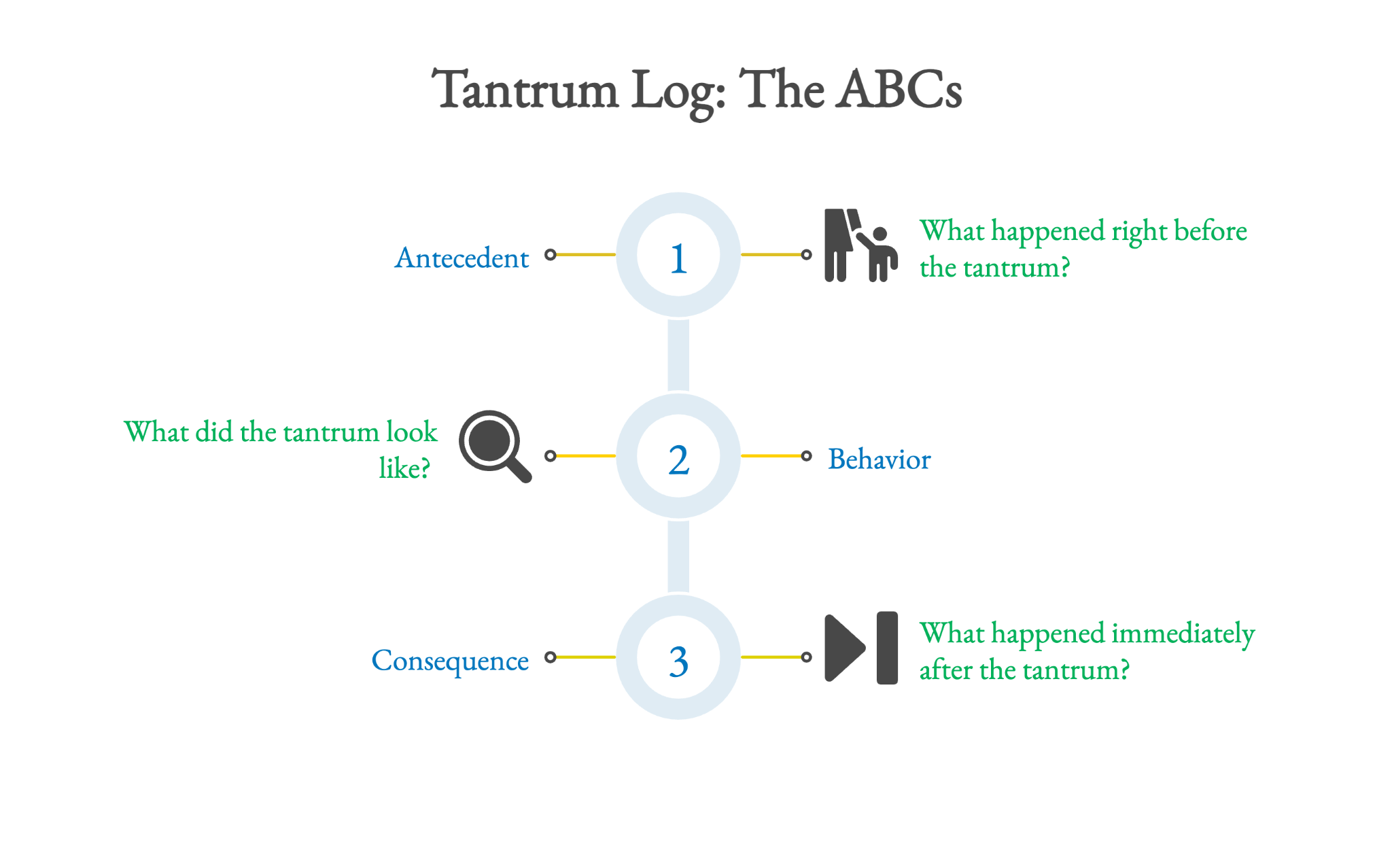
Keep a simple log of your child’s tantrums that captures the ABCs:
- A (Antecedent): What happened right before the tantrum?
- B (Behavior): What did the tantrum look like?
- C (Consequence): What happened immediately after?
Over time, you’ll find patterns. You might notice tantrums always happen before transitions, when your child is hungry, or in noisy places. These patterns point you toward how to de-escalate or navigate the situation.
3. Teach Replacement Behaviors
Tantrums often occur when a child doesn't yet have a more effective way to communicate a need, cope with a challenge, or navigate a difficult situation. The goal is to teach replacement skills that help your child get their needs met in a more successful (and oftentimes, safer) way.
Start by identifying replacement behaviors that match your child's needs, such as asking for help, requesting a break, using a communication card, or using a communication device. Practice these skills during calm, low-stress moments so they're easier to use when challenges arise.
4. Use Visual Schedules
Visual schedules can reduce anxiety about what's coming next. When your child can see the plan for the day, transitions feel more in their control.
Create a simple visual schedule using pictures, symbols, or words (depending on your child's understanding). Review it together in the morning and before transitions. This small tool can help prevent many tantrums rooted in uncertainty.
5. Offer Choices
Many tantrums happen when children with autism feel like things are happening to them rather than with them. Giving your child simple choices can foster a sense of control and autonomy, which can help reduce tantrums stemming from feeling a lack of control. The goal here is balance — offering unlimited choices may not work, but offering a choice between two acceptable choices can help reduce power struggles while also helping your child practice decision-making skills.
For example:
"Do you want to wear the red shirt or the blue shirt?"
"Do you want to brush your teeth before or after getting dressed?"
“Would you like honey or jam on your sandwich?”
With these choices, your child feels empowered. And then you get to move them toward what task, activity, or transition that needs to happen.
6. Try a Token System
A token system can help motivate your child to practice new skills and work through challenging situations. Instead of focusing on what not to do, token systems focus on recognizing what your child is doing well. Here’s how it works: each time your child uses an appropriate replacement behavior, follows directions, or handles a difficult moment, your child earns tokens (stickers, stars, checkmarks). After earning a certain number of tokens, they can exchange them for a preferred activity or reward.
Over time, this creates a positive feedback loop, building confidence, encouraging positive habits, and making that behavior more likely to happen again.
7. Prepare Your Child for Transitions
Transitions are common tantrum triggers for children with autism. Sudden shifts in routines (especially if moving away from preferred activities to non-preferred tasks) can feel a bit jarring or overwhelming for the child.
One way to make transitions easier is to provide advanced notice before transitions. For example:
"In 5 minutes, we're turning off the iPad."
Then you could follow this with a 2-minute and 1-minute reminder. This gives your child time to mentally prepare and wrap up what they're doing.
And you can always pair these reminders with visual timers so your child can see time passing. This makes abstract time concepts concrete and easier to understand.
8. Stay Calm During a Tantrum
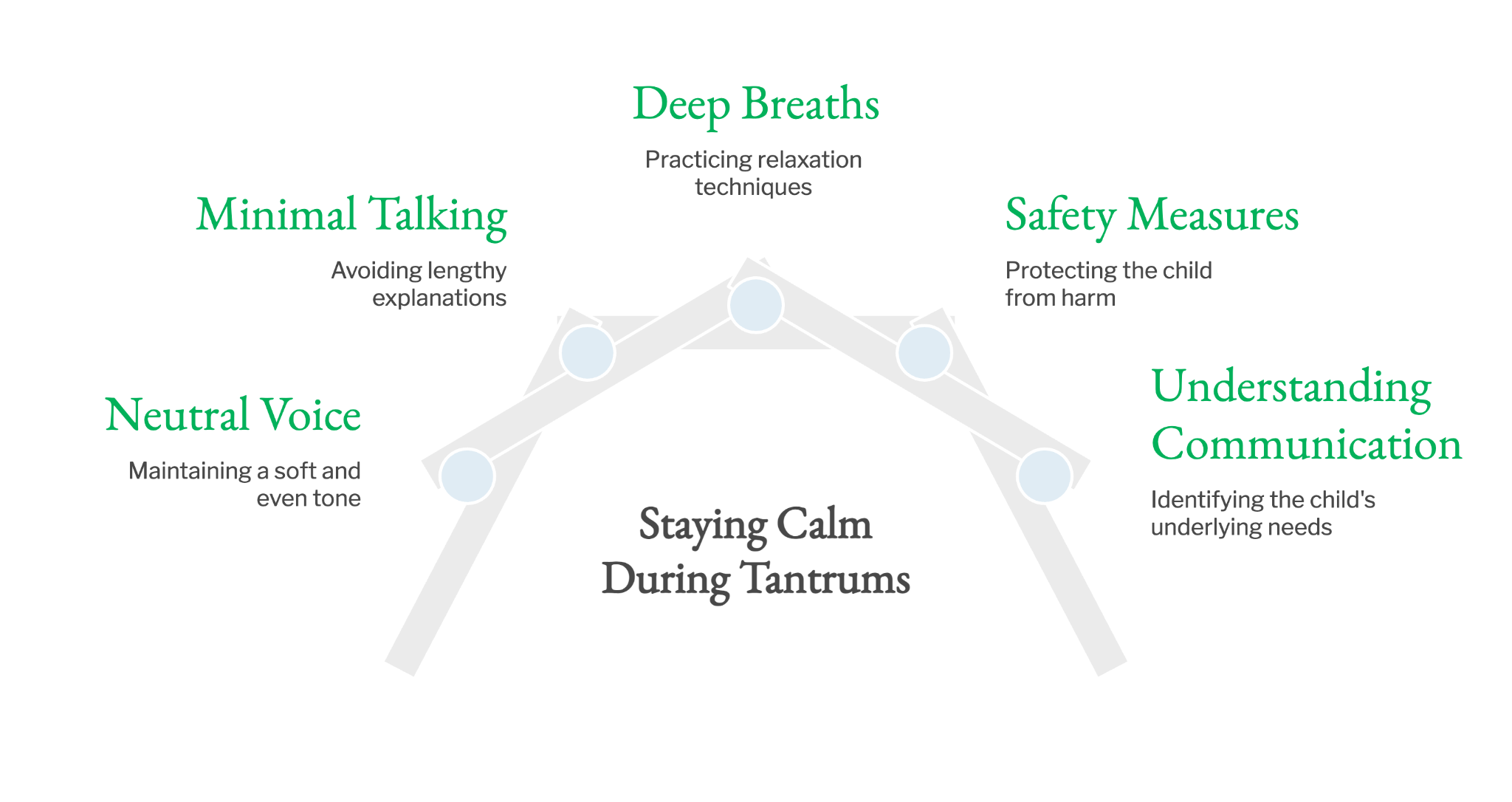
Your calm presence often helps your child regulate. You are their safe space. When you stay calm, you model emotional regulation and create a realm of safety for them when the tantrum is over.
Here’s what that can look like:
- Keep your voice neutral and soft.
- Minimize talking (long explanations will likely not help during tantrums).
- Take deep breaths.
- Block injury and aggression as needed to keep everyone safe.
- Ask: “What is my child trying to communicate right now?”
Your job during a tantrum isn't to fix it immediately or stop it as quickly as possible. Your job is to keep your child safe, stay regulated yourself, and support your child through the moment. Once they are calm, you’ll be in a much better position to teach, problem-solve, and build new skills together.
9. Use Positive Reinforcement
When your child is calm, look for opportunities to recognize and celebrate the skills you'd like to see more often. This might be asking for help, using words to express frustration, following a routine, or handling a difficult situation appropriately. The more those positive moments are noticed and reinforced, the more likely your child is to use those skills again in the future.
Positive reinforcement can include:
- Praise (“I love how you asked for a break!”)
- Access to preferred activities
- Tangible rewards, like a favorite toy or sticker
- Anything else that motivates your kiddo
Over time, positive reinforcement can help your child with autism learn which skills and behaviors are effective, building confidence and encouraging them to use those skills more often.
Behavior Frontiers Can Help With Autism Tantrums
Tantrums and meltdowns can be challenging for both children and parents. In the moment, it's easy to feel overwhelmed or unsure of what to do next. The important thing to remember is that understanding behavior takes time. As you learn more about your child's needs, triggers, and communication style, you'll be better equipped to support them through difficult moments and teach new skills along the way.
At Behavior Frontiers, we help families understand the "why" behind behaviors (like tantrums and meltdowns) and develop practical, compassionate strategies to address them.
We'll work alongside you, always. Whether that's in one of our centers, in your home, or out in the community. Through our data-driven approach tracked in real-time with PrioraCare™, we ensure strategies are actually working and adjust when they're not.
In other words, we're here to help you and your child find calmer, more connected ways forward.
Wondering if ABA therapy could help with autism tantrums? Reach out to us to get started! After a brief intake, you'll be connected with a Board Certified Behavior Analyst (BCBA) to begin your child's ABA journey and build a growth plan tailored to their unique needs.
FAQs About Autism Tantrums
Will the tantrums stop?
Tantrums typically improve when children with autism learn skills that help them communicate their needs, manage big emotions, tolerate frustration, and cope with challenging situations. These skills don't always develop on their own, and they often need to be taught, practiced, and reinforced over time (which is where ABA therapy comes in!). As these skills grow, tantrums often become less frequent, less intense, or easier to navigate. It's also important to remember that every child is different, so progress may look different from one family to another.
What should you do when tantrums seem uncontrollable?
If your child's tantrums or meltdowns involve aggression, self-injury, elopement, or situations where safety is at risk, prioritize keeping everyone safe first. Remove potentially dangerous objects, block aggressive behaviors gently but firmly, and create physical distance if needed.
Stay as calm as possible and wait for the intensity to decrease. During periods of intense distress, children are often not in a place to learn, problem-solve, or process lengthy explanations. Instead, prioritize safety, provide support (“I'm here. You're okay.”), and wait until your child is calm before discussing what happened or practicing new skills.
If severe tantrums or meltdowns happen frequently, it may be a sign that your child needs additional support with communication, emotional regulation, coping skills, or sensory needs. Identifying the underlying cause can help you develop strategies that reduce the likelihood of future escalations and support your child's long-term success. Contact us to learn more about ABA therapy and how it can help your child navigate big emotions with confidence.
How should I respond when my child with autism has a tantrum after not getting their preferred choice?
It's common for children with autism to become upset when a preferred item, activity, or choice isn't available. While it can be tempting to change your decision in the moment, consistency is important. If you do, it can unintentionally reinforce the tantrum behavior and make it harder for your child to learn how to cope with disappointment and flexibility.
Instead, acknowledge their feelings ("I know you wanted the blue cup"), hold the boundary calmly ("But we're using the red cup today"), and redirect to the choice they can make ("Do you want water or milk in your red cup?").
Over time, children can learn that it's okay to feel disappointed and that there are healthy ways to communicate those feelings. When your child accepts a boundary, uses words to express frustration, or recovers from disappointment appropriately, be sure to acknowledge and reinforce those moments.
Should you ignore tantrums or meltdowns to help them stop?
Not always. The best response depends on what's causing the behavior in the first place.
For example, if your child is overwhelmed by sensory input, frustrated because they can't communicate what they need, or struggling with a sudden change in routine, ignoring the behavior isn't likely to address the underlying challenge. In those situations, your child may need support, accommodations, or help using the skills they've been taught.
On the other hand, there may be situations where providing less attention to the tantrum while continuing to reinforce appropriate communication is part of the solution.
This is why understanding the "why" behind a tantrum is so important. Children with autism can have tantrums or meltdowns for many different reasons, and the most effective response depends on what they're experiencing in that moment. One of the core goals of ABA therapy is identifying those underlying causes and teaching children more effective ways to communicate, cope, and navigate challenging situations.