
Thoughtful Gift Ideas for Children with Autism


The holiday season is here, and it’s likely that you’re trying to find the perfect gifts for your loved ones. If one of those loved ones is a child with autism, selecting a gift requires a thoughtful approach that takes into account their unique needs and preferences. With that in mind, we have put together our 2023 gift guide to help you select the perfect presents for the children with autism in your life.
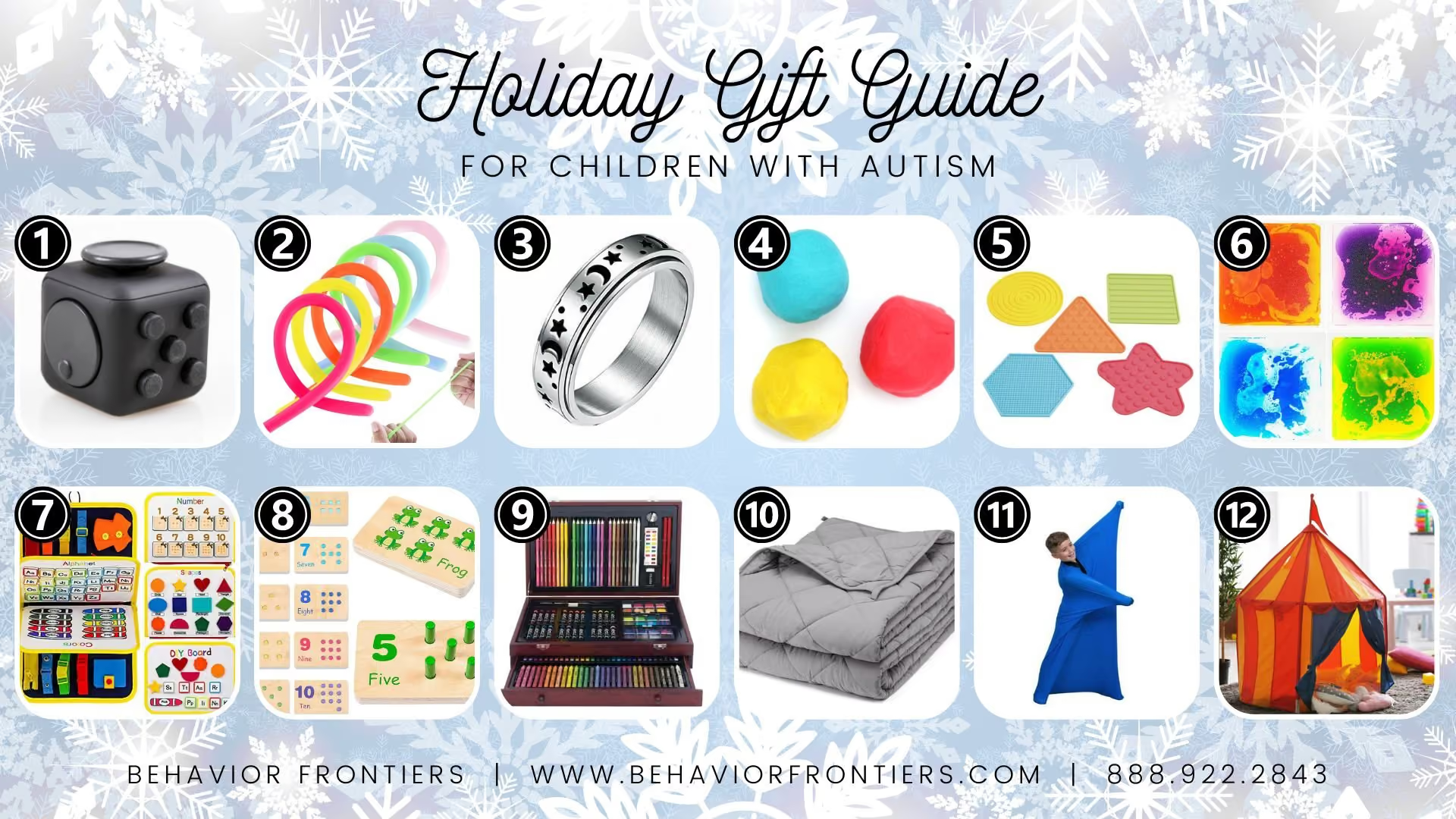
Sensory Toys and Fidgets: Sensory toys and fidgets are usually small and easily portable, meaning that they make great stocking stuffers! We love things like fidget cubes (1), because they provide several types of sensory feedback in one small item. Another fun option are stretchy noodle-type toys (2): they’re inexpensive, silent, and very easy to transport. Older children and teenagers may prefer something a bit less obvious, and this is where things like fidget rings (3) are extremely handy. They generally look just like a normal ring, but have built-in spinners or clicking elements.
Tactile Play: Tactile toys provide excellent sensory feedback for children. However, unlike fidgets, these are usually larger and occasionally messier, and would therefore more likely be “home toys”. The classic option in this category is therapy dough (4). These doughs are usually scented with calming smells, and are an excellent way to improve gross motor skills and hand strength. If your child enjoys feeling various textures, these silicone textured circles (5) are a great choice! Some sets come with small and large options, perfect for both hands and feet. Finally, liquid-filled tiles (6) are wonderful for children with autism. They feel great in the hand, and the liquid inside changes wildly with each press, making them a wonderful option for children who respond to visual stimuli.
Educational Toys: Educational toys are wonderful ways to introduce new concepts to your child. Above all though, they need to be fun! For this, we love busy books (7). Pages can be changed out to reflect what your child is currently focusing on, including things like fine and gross motor skills, sorting, colors, alphabet, and much more. Busy books are also great to take on the go! If you want a more classic option, wooden peg cards (8) are a great tool for learning counting and sorting. They can also just be used as regular blocks!
Arts and Craft Supplies: Encourage creativity and self-expression by gifting art and craft supplies. Items like colored pencils, markers, drawing pads, and modeling clay provide a means for children to express themselves and develop fine motor skills. Engaging in artistic activities can also serve as a therapeutic outlet. An all-in-one art kit (9) is a wonderful way to gift artistic fun for many months to come.
Personal Comfort Items: Help provide your child with sensory comfort year round! If you haven’t utilized a weighted blanket (10) yet, it would be well worth giving it a try. Weighted blankets provide a gentle, evenly distributed pressure that can have a calming effect. These blankets are available in various sizes and weights, so make sure to choose one that suits your child’s current weight. For sustained pressure without all the weight, sensory socks (11) are a good option. They are also very portable, making them a great choice to take on vacations or family visits. Finally, a pop-up play tent (12) is a perfect gift for a child with autism, space allowing. This allows the child with autism to have a private, quiet place, perfect for when things get too stimulating.
There are so many options for thoughtful gifts for children with autism, we can only begin to scratch the surface. What’s most important is to be mindful of the child’s unique preferences and sensitivities. By keeping these aspects in mind, you can be sure that you’re giving a gift that will be enjoyed and appreciated!